Mary Niemeyer’s family went first, in 1854, after her father Philipp, a farmer of Deisel, kept receiving letters from a brother who had settled in America. Mary, then nine, remembered them years later:
In this chapter
- Leaving Deisel, 1854
- Eight weeks at sea
- Baltimore
- The farewell song
- Who left the valley
- Leave to go
- The road and the railway, 1858
- November 1858
- Up the river
- 1859
- New York or New Orleans
- Why St. Louis?
- Notes
- About the pictures
- Where the emigrants settled: every name
- The emigrant trade, in full
- More of the chapter, as printed until 11 November 2026
- Leaving Hesse, c. 1858–1859: more from the sources
- Supplements
At this time my father was constantly receiving letters from his brother, who had settled in America, urging him to dispose of his property and emigrate with his family. … So after much consideration, and with some misgivings, they concluded at the expiration of four months to leave for America. (pp. 57–58)1
That year the district office released Philipp Niemeyer to go to America with his wife and children. He declared means of 960, probably thalers, but the district office’s own file gives 400.2
The day Charles left home and the road he took are not recorded. The Niemeyers’ journey, and Johannes Köster’s four years later, show the roads open to a man of his village.
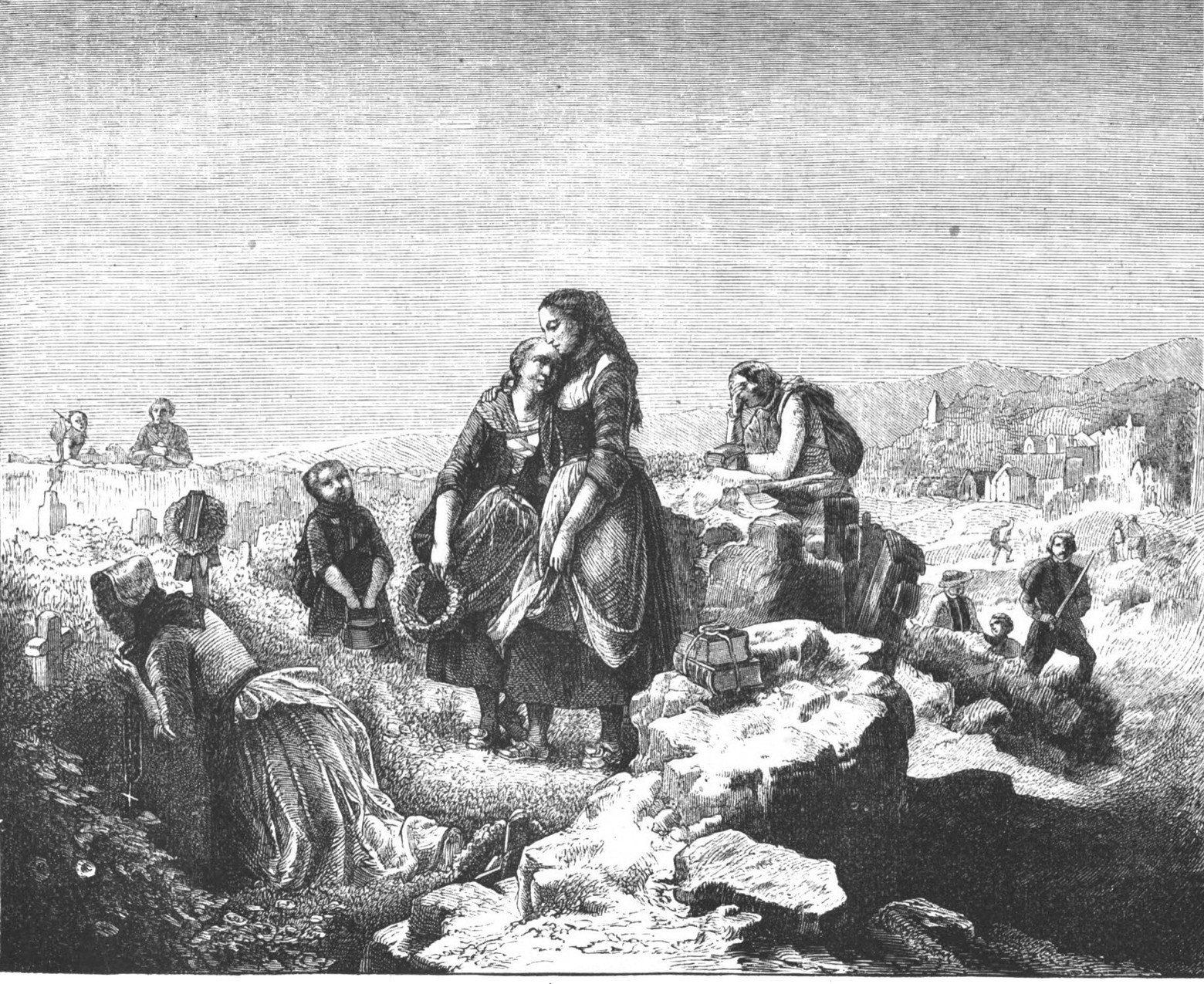
Leaving Deisel, 1854
Mary described the Niemeyers’ last days at Deisel. Her teacher, Mr. Uffelman, gave her and her sister a small farewell treat. He warned them that in America many parents, eager to grow rich, took their children out of school early to earn money. On the last day their playmates brought keepsakes, many of them in tears. Her mother asked her own sister to keep flowers growing on the new grave of Mary’s little brother Louis. (pp. 60–63)3
Mary remembered that “two days’ delightful travel brought us to Bremen.” (p. 67)4 She does not say which way the family went.
Most German emigrants to America embarked at Bremen, Mary wrote, and the large ships lay at Bremerhaven, near the mouth of the Weser. (p. 69) Mary’s father bought tickets “on the first ship out,” and Mary nearly missed it. She had gone home with a woman she met at their hotel, and he had to go back into the city to find her. By the time they reached the ship it had moved off from the shore, and a small boat carried the family out to it. (pp. 73–74)5 Charles possibly came five years later, in 1859.6
Eight weeks at sea
The Niemeyers crossed in the ship Weser. Mary remembered the voyage this way:
The ship in which we sailed was of the largest kind, and was named after the river Weser. There were on board between two and three hundred passengers, one-third of whom were Jews. … After four weeks of pleasant weather, our enjoyments were broken in upon by a severe storm, which lasted three days and nights. … When we had been eight weeks on the sea, we came in sight of land. (pp. 76–78, 83)7
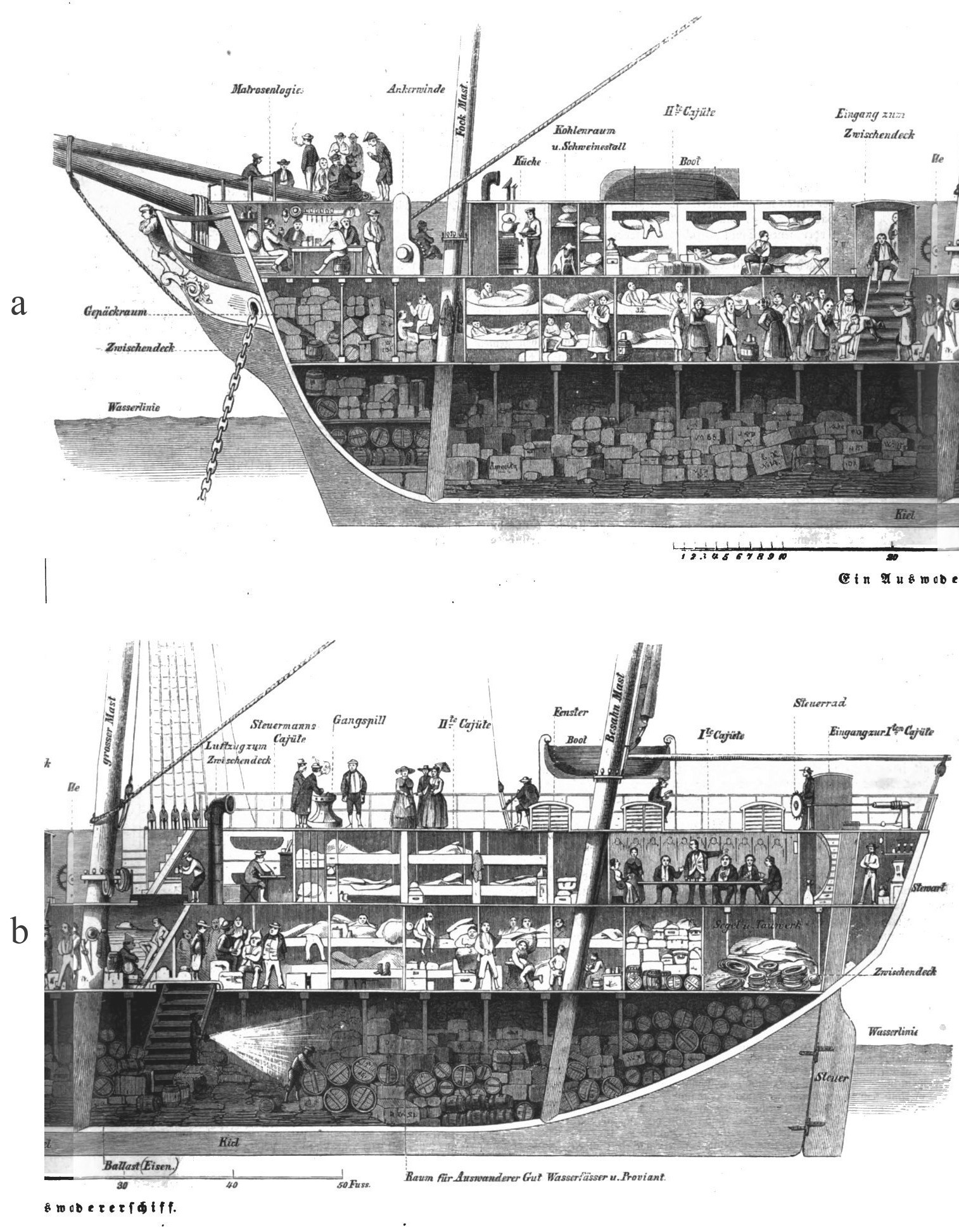
Nearly all of them were seasick, she wrote. As the ship rocked and plunged, “sometimes we felt that we would rather die than live.” (pp. 81–82)9 Charles crossed the same ocean to reach St. Louis.
Baltimore
Mary remembered the day the Weser came in:
Four days after our first sight of land, our vessel arrived safe in port. It was early on Sunday morning. As soon as we were on shore, we returned thanks to God, for His merciful preservation, and sang a hymn of praise. … We landed in Baltimore, a thriving, prosperous city, whose open port promised then to vie with those of older fame. (pp. 84–85)10
Mary’s brother Karl landed with the family at Baltimore from the Weser on 17 July 1854, listed as fourteen.11 Chapter 1 met him only as the son of “the soldier Philipp Niemeyer” in the Deisel register, which gives his birth as December 1840.12 Some time later Karl, whom Mary calls her brother Charles, left his place at Urbana, Maryland, without a word. He was no relation of Charles Gannsen. The family heard of him again only through Deisel:13
No pains were spared to learn his whereabouts, but without avail. His plans had been so made and carried out, that all search failed. … Four months had elapsed since we had heard of the disappearance of brother Charles. … Just when father had determined to make no further inquiry or search, he received a letter from my grandfather in Germany; and strange enough, this letter contained information relating to Charles. He had written from Baltimore to grandfather … (pp. 102–106)14
A young man from Charles’s valley could vanish even from his own family, and be heard of again only through the village at home. Letters home were common in the 1850s, though a letter was still costly for a laborer.15 If Charles wrote home, no letter of his has been found on either side of the ocean.
The farewell song
Deisel’s emigrants had their own farewell song. Martina Lüdicke published a study of emigration from the village in 1994. She writes that it was said to be sung on the evening before they left, when friends gathered to take leave of them. An article in the 1955 Hofgeismar district yearbook tells how it was sung for Ludwig Niemeyer, a boy of seventeen who left in 1854. As it grew dark, small groups of young men came up the Steinweg to the Fremder inn at the south end of the village. The guests, the article says, did not look very cheerful; Ludwig’s parents looked grave, and there were tears in his mother’s eyes. To cheer him a little, they all struck up the song. The next morning doors and windows opened along the street as the wagon passed, and the neighbors came out to shake his hand. His parents took him as far as Karlshafen; from there he was to go on by rail to Bremen.16
The Deisel words, as Lüdicke prints them, begin:
Das Schiff streicht durch die Wellen, Fridolin.
Auf, laßt die Segel schwellen, Fridolin.
Verschwunden ist der Strand –
In der Ferne. Ach, wie gerne
Wär ich noch im Heimatland.
Fridolin, Fridolin, Fridolin.
The ship cuts through the waves, Fridolin.
Up, let the sails swell, Fridolin.
The shore has vanished –
in the distance. Ah, how gladly
would I be still in the homeland.
Fridolin, Fridolin, Fridolin.
It is a local version of a boatman’s song that Joseph von Brassier wrote in 1819 and set to the Italian tune “O pescator dell’onde.” Its line “verschwunden ist der Strand” gave Lüdicke’s study its title.17 Ludwig Niemeyer was about Charles’s age. Whether anyone sang the song for Charles is not recorded.
Who left the valley
The Niemeyers were one family among many. The state’s emigration index abstracts the district offices’ release files. Counting each person once, it records releases, in all years, for about 248 people from Deisel, about 140 from Trendelburg and about 28 from Friedrichsfeld.18 They went in waves: from Deisel about seventy people are recorded in 1852–54 and about forty in 1857.19
Single men went in their late teens and twenties, many of them craftsmen rather than farmers: shoemakers, tailors, butchers and smiths.20 By the ages he later gave, Charles was of about that age in the late 1850s. At Deisel whole households went too: in January 1850 Ludwig Hillebrand’s family was released for North America with their children.21 Among them was Friedrich, the boy confirmed privately at Deisel that April, before the family left (see Chapter 1).22 By 1860 the family was living in Monroe Township, Ogle County, Illinois.23
Some went south. Three Deisel shoemakers were released for “South America.” For Ludwig Karl Fremder, at least, that meant the American South. He was naturalized at Charleston, South Carolina, on 10 June 1859.24
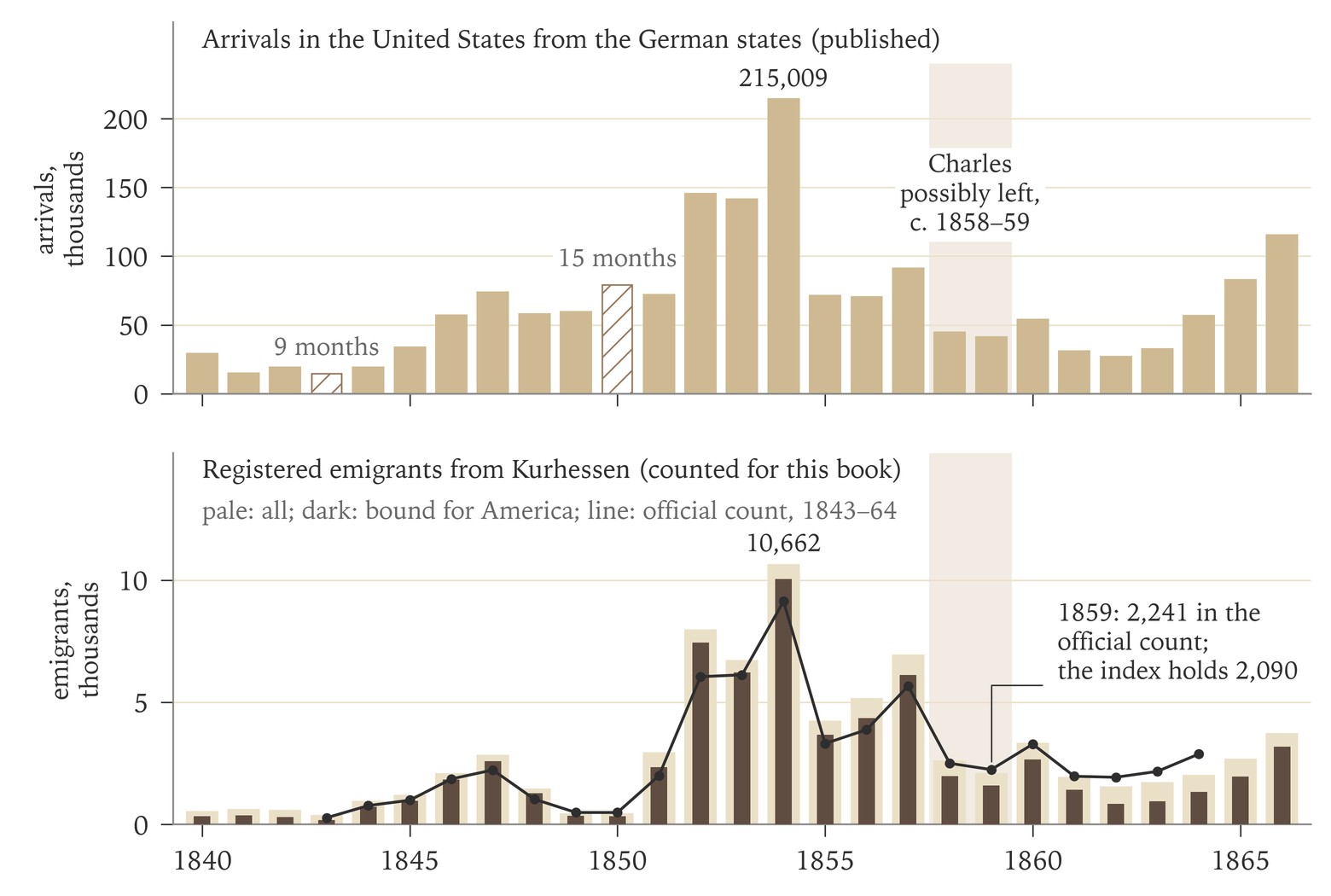
Letters from relatives already in America persuaded many to follow, a pattern historians call chain migration.26 In the hungry years 1846–49, between a third and a half of the people released from the eight villages of today’s Trendelburg carried a surname that had already left the same village.27 The Köster family of Deisel alone left in eight different years between 1833 and 1866, and the letters from Philipp Niemeyer’s brother worked in the same way. No such chain is known for Charles, and the index shows none for Gans or Konze in his years: the one Konze released, from Deisel in 1864, went to Frankfurt.28
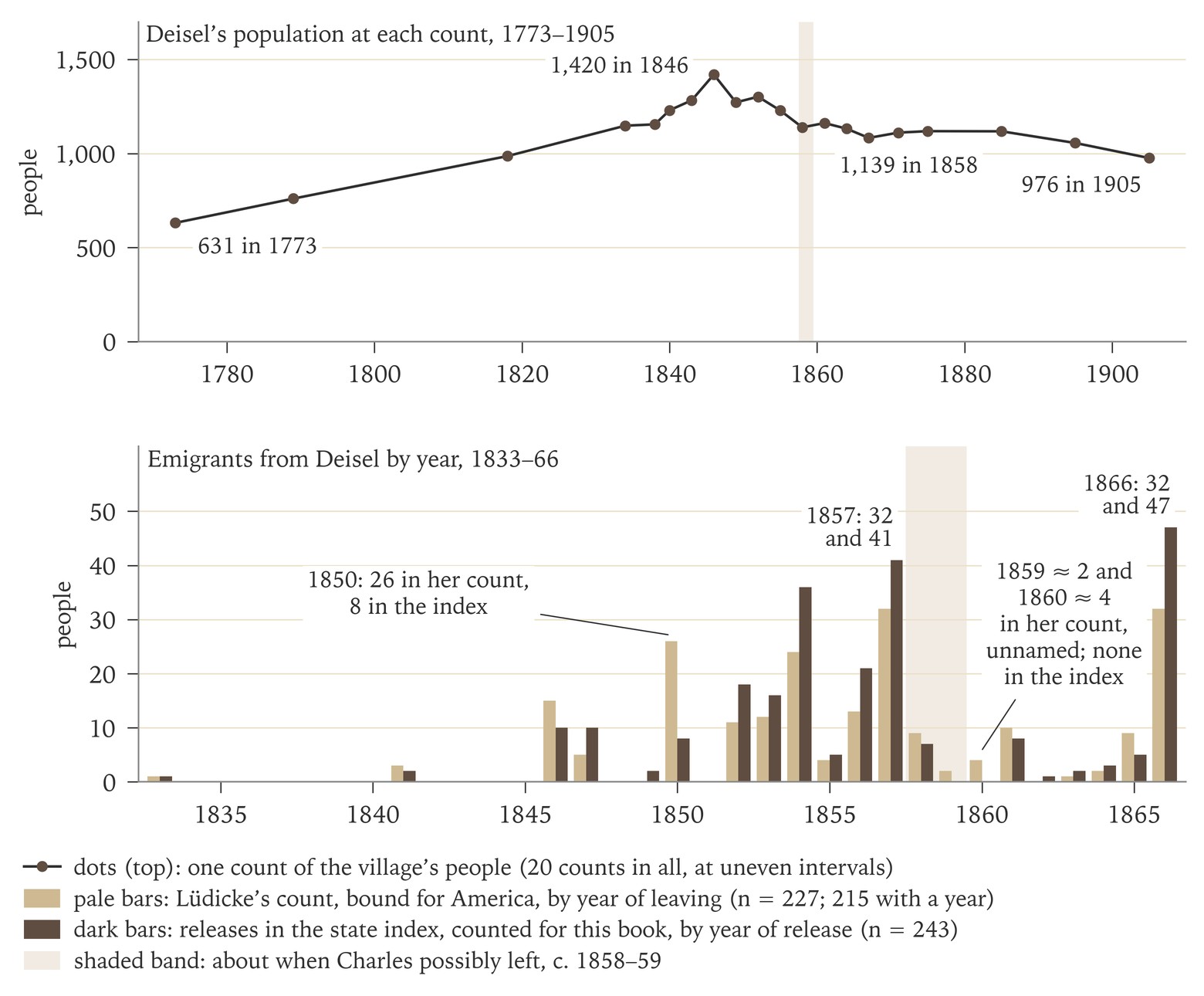
Deisel’s emigrants have been counted before: Lüdicke drew her 1994 study from the district files, the parish archive and letters, and her count agrees with this book’s count of the release index.29 Before 1850 most of them went as families; from 1852 most went alone. For 1859 she counted about two emigrants and for 1860 about four, and named none of them, so her study cannot show whether Charles was among them.30
Leave to go
Philipp Niemeyer had a release, the government’s formal permission to leave the country. A man who meant to settle abroad was supposed to ask for one. Such a man applied through the district office at Hofgeismar, and a man who was released ceased to be a Kurhessian subject.32 For a young man of Charles’s age, military service could stand in the way: once a man had been called to the muster, his release was in doubt.33 Many left without permission all the same,34 and by one estimate about as many people left Kurhessen without a release in the 1850s as with one.35
Johannes Köster, who sailed in November 1858, is not in the state’s emigration index at all.36 He was not unusual. By the late 1850s, the historian Kurt Günther found, careful emigrants from Kurhessen took a passport first and applied for their release only after they had settled, if they applied at all. A man who left that way and never applied never entered the release files, and the index built from them does not list him.37
The road and the railway, 1858
By 1858 the way out of the valley was quicker.
Charles gave Trendelburg as his birthplace when he enlisted.38 Trendelburg lay on the old overland road to Bremen.39 But the easier way to the port was by water, down the Weser. Karlshafen, where the Diemel runs into the Weser, had a river harbor, and from 30 March 1848 it was also the end of a railway that ran up the Diemel past Trendelburg.40
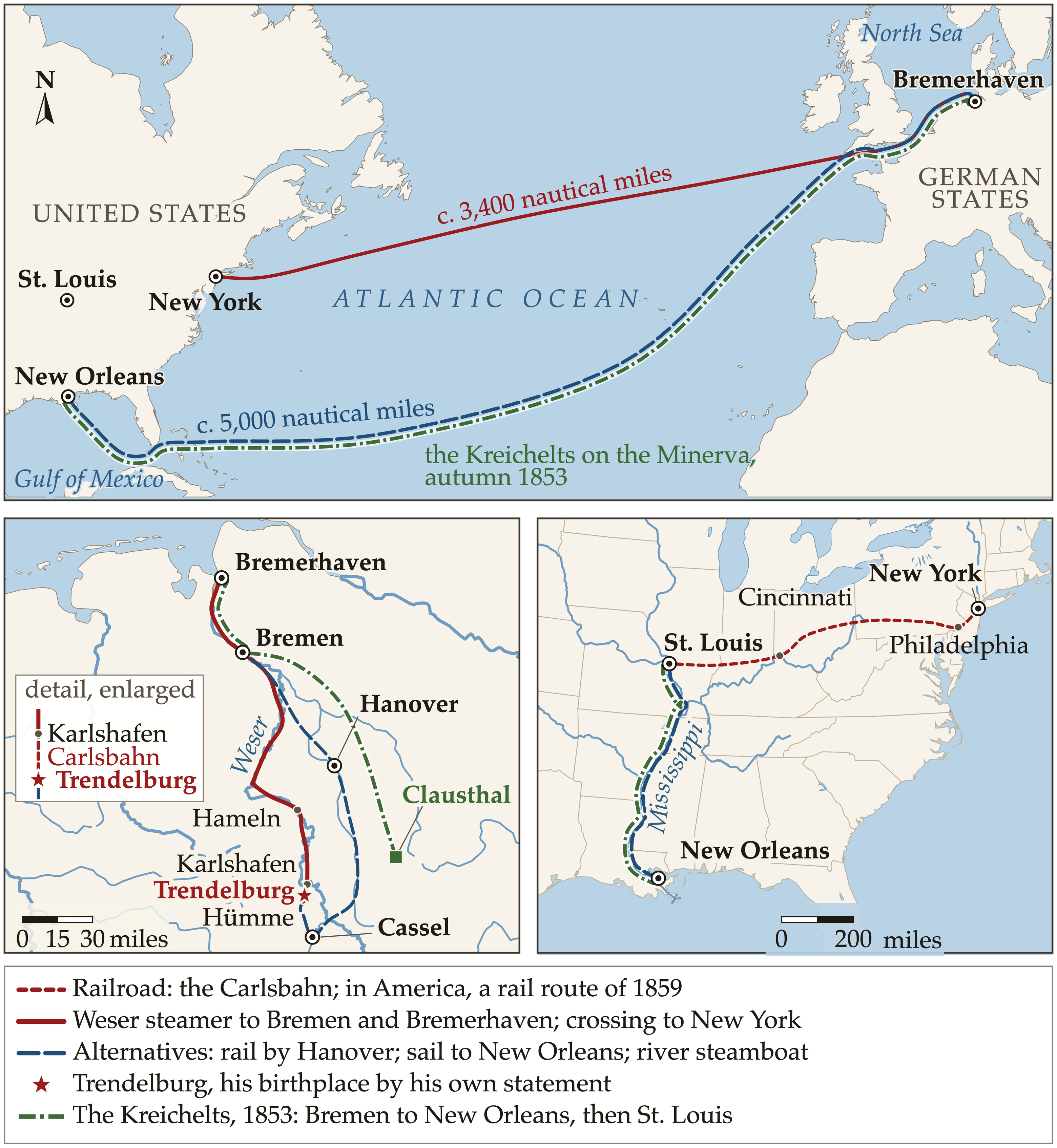
In April 1858 the railway company and the Norddeutscher Lloyd of Bremen announced a through service for emigrants to Bremen. They would travel by railway as far as Karlshafen and from there by the Lloyd’s steamboats, with night quarters at Karlshafen and at Hameln.41 The fare from Trendelburg station to Bremen was one thaler and two and a half silver groschen, at thirty groschen to the thaler.42 By the silver in the coins, that came to about seventy-five cents.43 A traveler from Deisel had about a mile and a half (2.3 km) to walk to Trendelburg.
If Charles left home in 1859, the nearest way out was that through-ticket from Trendelburg station: a train to Karlshafen, a Lloyd steamer down the Weser to Bremen, and a ship from Bremerhaven.44
Charles probably crossed under sail, and the fares show why. Many emigrants of these years crossed in steerage, the crowded and cheapest berths below deck. A handbook for emigrants printed Bremen’s tariff in 1853: 30 to 40 thalers in gold for an adult in steerage to New York or Baltimore, 40 to 50 to New Orleans, food on board included.45 Steerage on a steamer cost much more.46 A farm day laborer in one Kurhessen district earned about 7 or 8 silver groschen a day without meals in 1847, so a steerage fare was five to seven months’ pay.47 In 1852–57 the median male Hessian laborer or servant who emigrated was twenty-four, about Charles’s age, and carried 58 thalers: enough for a sail fare and the trip to the port, but not for a steamer berth.48
November 1858
In the autumn of 1858 the government at Kassel tried to make leaving harder for young men. In October it put a bill on Kurhessian nationality, dated 15 July 1858, before the estates, the Electorate’s parliament. The bill set out how a person gained or lost Kurhessian nationality, and who was allowed to emigrate. A November 1858 report from Kassel said that the bill on emigration then before the estates was meant above all to stop young men from emigrating before they could be called up for the army.49 By the ages he later gave, Charles was then between about seventeen and twenty-five, the age the bill aimed at.50
Four years after the Niemeyers, Johannes Köster of Deisel was at Bremen. On Saturday, 6 November 1858, he wrote a hurried note home from aboard ship in the harbor. The sailing had been put off a day, and the ship would now leave at eleven in the morning. The captain reckoned on seven to eight weeks to New Orleans, “since the ship sails very fast.” Köster hoped to be at St. Joseph, Missouri, by the end of January. He promised to send his diary, “from which everything day by day can be seen.” He closed: “You and my children, do not forget me, and stay with me as I shall stay with you, however far apart we are.”51 He was forty-three, and his ship was the Bremen ship Rubens.52 The Rubens was a full-rigged ship, with square sails on every mast.53
His letters never name the ship; the passenger list does. The Rubens sailed under its master (captain), Johann Seiler. The ship reached New Orleans on Sunday, 2 January 1859, eight weeks after leaving Bremen on 8 November, with eighty-five passengers. The master swore that no passenger had died on the voyage. Köster is passenger 16, aged forty-three years and five months, from Kurhessen. Wilhelmine Köster, directly below him, is passenger 17, aged nineteen years and four months, also from Kurhessen.55 She was Wilhelmine Grosbernd, a young woman of a Kassel family, and his letters home never mention her.56 Somewhere on the passage Köster was robbed, “auf der See bestohlen” (robbed at sea), and he reached America in debt.57
The largest group on the ship was Bohemian. Besides the two Kösters, listed as from Kurhessen, about eight passengers came from “Hessen,” most of them bound for Missouri, and none of them could be Charles.58
Up the river
From New Orleans most Germans went on upriver by steamboat.59 The passage up the Mississippi took about eight or nine days. A German party that left New Orleans on 1 November 1851 aboard the steamboat Glenco (so spelled in the letter) reached St. Louis on 9 November.60
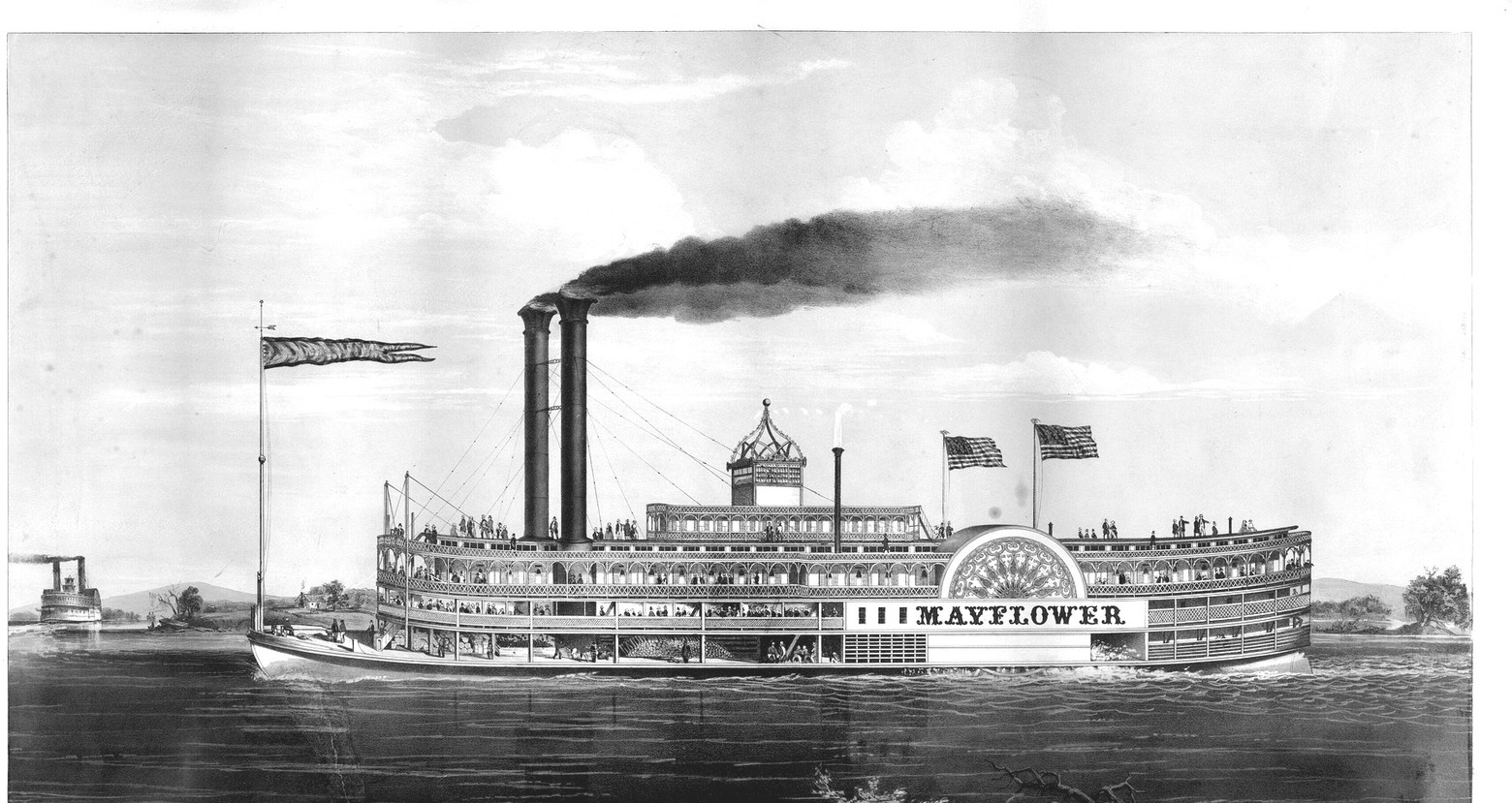
Köster went farther than St. Louis: by the end of February 1859 he was at St. Joseph, on the Missouri frontier. On his third day there a man he did not know stopped him in the street. The man was Ludwig Pfannkuche of Gottsbüren, a village near Deisel and Trendelburg, the places Charles’s records name, and he took Köster home and kept him.61 Köster had gone there because he had “pinned so much hope” on a man he called Bade, of Hümme, a village two miles south of Trendelburg. Bade was very probably Johannes Bode, once the village’s mayor, who had emigrated with his wife in 1854 and settled at St. Joseph.62 Bade turned out to own nothing but a mortgaged plank house and could not help even his own son-in-law.63
Köster’s first letter from America gave his family one piece of advice: “It is a misfortune to go to America without knowing anything of the language; mark that.”64 He had been offered teaching posts only on condition that he speak English. Even so, in April he made the case for America:
Whoever has breathed the free air here for only a few months has become incapable of living in a German, European slave-state. … Here there is free movement, free will. … To every man who means to go to America I give this advice: do it in his young years, so that he does not later, like me, have terribly to regret having squandered his best strength in a German slave-state and gained nothing for his future after all.65
The same day he admitted how hard his first weeks had been. Pfannkuche’s wife was having a baby, so there was no room for him in the house. He went into a boarding house without money and sold what he had to pay for it. He found work only on 18 April, at labor too heavy for him. Two years later he looked back on that summer: “sick, naked and wretched I dragged my body through the wilderness, and often near death from hunger.”66
By 1860 he was in St. Louis, teaching.67 It was the city where Charles enlisted in December 1862.68 In April 1862 Köster told his family in Kurhessen that he had written to everyone at Deisel before Christmas, but hoped for no answer. Then, quoting the Deisel farewell song, he wrote: “the shore has vanished, ah, how gladly in the distance, etc. The human heart can take in much, but forget far more still, etc. It seems to me as if, in our family, I had as good as gone to my grave.”69
Men from the parishes around Trendelburg, like Pfannkuche at St. Joseph, were already settled in Missouri in 1859. Köster had crossed at forty-three, educated and without English; Charles, if he came in 1859, was a young man of military age.70
1859
The 1900 census gives 1859 as the year Charles came.71 No other record found for Charles gives the year, so he possibly came in 1859.72
A war scare came that year. In the first half of 1859 Austria fought France in northern Italy, until the two agreed on a first, preliminary peace at Villafranca on 11 July.73 In December 1859 the emigrant newspaper looked back on the year and named Kurhessen. It wrote that whatever the governments decreed, “the threatening time around the middle of this year led many a youth over the sea.”74 For a Kurhessian man of military age, that is the most concrete reason for leaving in 1859 that the sources of the time give. By most of the ages he later gave, Charles was such a man, but his own reason is not known.
No release has been found for Charles, in any year, and the Deisel and Trendelburg release volumes do not cover 1859. The emigration index has no entry between 1850 and 1862 for a Konze, Kontze, Contze or Gans from Trendelburg, Deisel or the villages around them. It has none under any surname for a man who could be Charles.75
These facts allow three readings, each of them possible. In the first, Charles left in 1859 without a release, and so never appears in the release files.76 In the others, he left legally in another year, under a name not yet recognized as his, or he was released from a place farther away. The index is not a complete record of who left, as Köster’s absence from it shows.77
New York or New Orleans
Charles probably landed at New York, if he sailed from Bremen in 1859. Most Bremen emigrants went there,78 and from New York a German bound for St. Louis went west by rail.79
The village emigrants who have been traced changed ports over the decade. Before 1853 nearly all of them landed at Baltimore; from the mid-1850s most landed at New York. Neighbors sailed together: nine sailings each carried two or more parties from the villages.80
No passenger list or port record has been found for Charles under any spelling. No emigrant from Trendelburg or Deisel, and no Gans or Konze, who could be Charles appears on the surviving lists.81 Bremen’s own passenger lists of these years do not survive: in 1875 the Bremen emigration authority ordered the lists for 1832 to 1872 destroyed.82 So a Bremen emigrant of Charles’s years can be found only in the arrival lists kept by the American ports.83 The American lists usually give only “Hessen” or “Germany,” so a man from Deisel on them cannot be told from any other Hessian unless his name is recognized.84
A man who left without papers could also hide on the list itself. Heinrich Möller, a young shoemaker from Marköbel near Hanau who reached Maryland in 1865, had left without the release the law required. He sailed from Hamburg as “A. Möller, laborer,” from Braunschweig, probably because he had no papers to show that he had leave to go.85 Charles possibly did the same and sailed under another place of origin.
Why St. Louis?
Charles gave no reason, in any record, for going to St. Louis, and no record ties any relative of his to the city.
German writers had praised Missouri for thirty years before Charles came. Gottfried Duden, a Prussian lawyer, farmed about fifty miles west of St. Louis from 1824 to 1827. In 1829 he published his Bericht über eine Reise nach den westlichen Staaten Nordamerika’s (Report on a Journey to the Western States of North America). It praised “the great fertility of the soil,” “the mild climate” and “the splendid river connections,” and it led many Germans to emigrate and inspired the emigration societies of the 1830s.86 Friedrich Münch, one of the leaders of such a society, settled in 1834 on land next to Duden’s old property near Dutzow, Missouri.87 Many of the educated men among such settlers made their homes in St. Louis, not on the land.88 By the 1850s the city had German churches, schools, clubs and daily papers.89 Refugees of the revolutions of 1848–49, called the “Forty-Eighters,” edited much of its German press.90
St. Louis was easy to reach from either coast: from 1857 travelers could reach the city by rail from the eastern ports, as well as by river from New Orleans. The Ohio and Mississippi Railroad then ran from Cincinnati to East St. Louis, across the river from the city.91
St. Louis also had work for men without English. The city doubled in size in the 1850s, and nearly one person in three was German-born by 1860. Its building trades, breweries, mills, foundries and riverfront offered work, and a newcomer could work, shop and worship in his own language.92 This was the city Charles came to. The Niemeyers had found the opposite at Middletown, in Frederick County, Maryland, where the villagers “could not understand our language, nor we their’s,” though they helped the family all the same. Philipp Niemeyer placed his sons at trades at once. (pp. 88–90)93
Where they settled in America
Some villagers can be traced to where they settled, most of them through American census and index entries. These rest on name, age and a Hessian birthplace, so many of the identifications are graded only probably, not proven. Four of them can be placed in St. Louis. One is August Hermann Bötte of Deisel, proven by his army discharge.94 The barber Anton Wilhelm Konze and the schoolmaster Johannes Köster are very probably two more, and the tanner Conrad Albrecht is probably the fourth.95
Table 2.1 counts the places the emigrants of the three villages are known to have settled, a family counting once. Most of them cannot be followed: of some 150 emigrant parties in the release index for 1845–1866, between 118 and 123 cannot yet be placed.96 Thirty-five can be placed (seventeen graded probably, the rest very probably or proven), and the table shows where they went.97
A few of the valley’s emigrants went to St. Louis, where Charles enlisted in 1862, but fewer than went to New York or Charleston. Only four of the thirty-five parties that can be placed settled there (table 2.1). American records place Köster and Konze, since neither is in the release index.98 Kurhessians were plentiful in the city, as Köster complained in his letters, but those who can be placed came from other districts.
Table 2.1. Where the emigrants of the three villages settled, as far as traced
| Where they settled | Parties, proven to probably (no.) | Parties, possibly (no.) |
|---|---|---|
| New York State | 9 | |
| Charleston, South Carolina | 5 | |
| St. Louis, Missouri | 4 | 1 |
| Baltimore, Maryland | 3 | |
| Philadelphia and Camden | 2 | 1 |
| California | 2 | |
| Massachusetts | 2 | |
| Ohio | 2 | |
| New Jersey | 1 | 1 |
| Elsewhere, one party each (Illinois; Middletown, Maryland; Virginia; Washington, D.C.; Wisconsin) | 5 |
Sources: compiled by the author from the release index99 and the American records of each party100; dataset D3.
Four more parties are known only to have landed at Baltimore or New York and have not been traced further.
A single contact in America could decide where a man went before he chose his route.101 For Köster the chain broke at St. Joseph, and by 1860 he was in St. Louis.102 A man could come to St. Louis because it was the great German city at the end of the river, not because anyone was waiting for him there.
How Charles came to St. Louis is not recorded. He possibly came by the river road from New Orleans, through a contact, or by a longer road, as Köster came by way of St. Joseph. None can yet be preferred, because he is on no passenger list and no record connects him with Anton Wilhelm Konze, a barber in the city since 1856 and very probably born at Trendelburg.103
The one firm conclusion is a negative. People from his villages did live in St. Louis, but no family tie to him is proven, and none of them appears in any record of his life. That fits a young man who traveled alone and followed no one from his village. It also fits a man who left without a release, and so is missing from the records that show where the others went.104
Whichever road he took, it brought him to St. Louis. No record of Charles has been found between his landing and the end of 1862.
Notes
104 notes
- Mary A. Niemeyer, Light in Darkness, pp. 57–58, 60–63, 67–69, 73–74, 76–78, 81–85, 88–90, 102–107, 159. [NIEMLID]
- Landesgeschichtliches Informationssystem Hessen (LAGIS), Hessische Auswanderer, Nr. 128. The means are given without a unit; since accounts in Niederhessen were kept in thalers, they were probably thalers. [LAGIS59]
- Mary A. Niemeyer, Light in Darkness, pp. 57–58, 60–63, 67–69, 73–74, 76–78, 81–85, 88–90, 102–107, 159. [NIEMLID]
- Mary A. Niemeyer, Light in Darkness, pp. 57–58, 60–63, 67–69, 73–74, 76–78, 81–85, 88–90, 102–107, 159. [NIEMLID]
- Mary A. Niemeyer, Light in Darkness, pp. 57–58, 60–63, 67–69, 73–74, 76–78, 81–85, 88–90, 102–107, 159. [NIEMLID]
- 1900 U.S. census, City of St. Louis, Missouri, population schedule, Ward 9, ED 129, sheet 5-B (penned). [C1900]
- Mary A. Niemeyer, Light in Darkness, pp. 57–58, 60–63, 67–69, 73–74, 76–78, 81–85, 88–90, 102–107, 159. [NIEMLID]
- The ship is cut lengthwise, from Die Gartenlaube, in two halves: (a) the bow, with the sailors’ quarters, galley and the first steerage berths; (b) the stern, with more steerage, the cabins aft and the hold of baggage, water casks and provisions.
- Mary A. Niemeyer, Light in Darkness, pp. 57–58, 60–63, 67–69, 73–74, 76–78, 81–85, 88–90, 102–107, 159; Traugott Bromme, Traugott Bromme’s Hand- und Reisebuch für Auswanderer und Reisende nach Nord, p. 562. Bremen’s rules laid down what steerage passengers were to eat, and Bromme’s handbook for emigrants also printed them. Passengers were to have ship’s biscuit and fresh water every day. In the morning they were to have coffee with bread and butter, and later each grown man was to have a glass of brandy. At noon they were to have salt beef or pork, or smoked bacon, with peas, beans, barley, rice, potatoes or sauerkraut, and in the evening tea or coffee. This is what the rules required, not a record of what any one ship served. Allgemeine Auswanderungs-Zeitung, 22 Jan 1858, p. 4 (deaths at sea among emigrants to North America). Deutsches Zeitungsportal; Bayerische Staatsbibliothek, bsb10359740, image 20 (https://
www : accessed 14 November 2026); Harbert J. Keiser, letter of 6 Mar 1852, “Immigrant’s Voyage, Germany to Illinois, 1851,” Illinois State Museum, RiverWeb, https://.digitale-sammlungen .de/ en/ view/ bsb10359740 ?page =20 www : accessed 29 October 2026. By the late 1850s death at sea was a real risk but no longer a common one. In January 1858 the emigrant newspaper counted “a little over one in a thousand.” Small children were most at risk. [NIEMLID] [BROMME53] [AAZ58M] [KEISER].museum .state .il .us/ RiverWeb/ landings/ Ambot/ Archives/ vignettes/ people/ Immigrants_20Voyage-1851 .html - Mary A. Niemeyer, Light in Darkness, pp. 57–58, 60–63, 67–69, 73–74, 76–78, 81–85, 88–90, 102–107, 159. [NIEMLID]
- Index card, Carl Niemeyer, 14, male, last permanent residence “Deissel,” ship Weser, Baltimore, 17 Jul 1854; “Accompanied by” reads “Over” (the back of the card is not on the film); Index to Passenger Lists of Vessels Arriving at Baltimore, 1820–1897, NARA microfilm M327, roll 106; imaged, “Maryland, Baltimore Passenger Lists Index, 1820–1897,” FamilySearch (https://
www : accessed 7 November 2026), image 2339 of 4,327. [WESER54].familysearch .org/ ark:/ 61903/ 1:1:QV9F-KQT1 - Evangelische Kirchengemeinde Deisel (Deisel, Kreis Hofgeismar, Kurhessen), “Taufen 1830–1861” [Baptisms 1830–1861] (Archion register 218842), images 22–101. [DBAP]
- Mary A. Niemeyer, Light in Darkness, pp. 57–58, 60–63, 67–69, 73–74, 76–78, 81–85, 88–90, 102–107, 159. [NIEMLID]
- Mary A. Niemeyer, Light in Darkness, pp. 57–58, 60–63, 67–69, 73–74, 76–78, 81–85, 88–90, 102–107, 159. [NIEMLID]
- Walter D. Kamphoefner, Wolfgang Helbich, and Ulrike Sommer, eds., p. 27. For the cost of a letter, p. 28 n. 2. Some 250 to 300 million letters crossed from America to Germany between 1820 and 1914. [NEWSLAND]
- Martina Lüdicke, „Verschwunden ist der Strand…“: Studien zur Auswanderung nach Amerika aus Kurhessen in den Jahren 1831–1866, dargestellt am Beispiel des Dorfes Deisel (Kreis Hofgeismar), Die Geschichte unserer Heimat 14 (Hofgeismar: Verein für hessische Geschichte und Landeskunde, Zweigverein Hofgeismar, 1994), 18 (the consent of parents or guardian for a minor; illegal emigration in the 1850s about as large as legal, after Auerbach 1985, 21; the rule of 1853 sending home travelers without a release or an overseas passport, citing HStAM 180 Hofgeismar Nr. 640), 26 (population 1852–58; the mayor, Köster, in 1856, citing HStAM 180 Hofgeismar Nr. 57), 32–34 (249 emigrants, 1833–66; emigrants by year, figure 2 on p. 33; single persons and families), 43 (the military obligation from 1 January of the year a man reached the age of service, after Auerbach 1985, 20f.; Philipp Feuring, 1861, citing HStAM 180 Hofgeismar Nr. 116), 48–49 (Leimbach; Helwig Carl; the petition of 1862, citing HStAM 180 Hofgeismar Nr. 1998), 50 (places where the Deisel emigrants settled), 55–56 (farewells; Ludwig Niemeyer’s last evening and leaving, 1854, after Niemeyer 1955, 49–50), 57 (the Deisel emigrants’ song and its text; Köster’s letter of 15 April 1862, Briefe Köster 16), 78–79 (tables 3 and 5, population and births), 81 (tables 9 and 10: loss of population to emigration, and occupations of the emigrants, 1833–66), 86–89 (list of the emigrants, with none named for 1859 or 1860; its sources include HStAM 180 Hofgeismar Nr. 115) (the author’s translation). Pages 55–57, after the yearbook article (Niemeyer 1955, 49–50), which has not been seen; Ludwig’s age and birth date (13 May 1837) from the list on p. 86. Lüdicke calls him the Ludwig Niemeyer who emigrated in 1854. He is probably the shoemaker Heinrich Ludwig Niemeyer, born in 1837 and released in 1854, named below. [LUEDCTX]
- Martina Lüdicke, „Verschwunden ist der Strand…“: Studien zur Auswanderung nach Amerika aus Kurhessen in den Jahren 1831–1866, dargestellt am Beispiel des Dorfes Deisel (Kreis Hofgeismar), Die Geschichte unserer Heimat 14 (Hofgeismar: Verein für hessische Geschichte und Landeskunde, Zweigverein Hofgeismar, 1994), 18 (the consent of parents or guardian for a minor; illegal emigration in the 1850s about as large as legal, after Auerbach 1985, 21; the rule of 1853 sending home travelers without a release or an overseas passport, citing HStAM 180 Hofgeismar Nr. 640), 26 (population 1852–58; the mayor, Köster, in 1856, citing HStAM 180 Hofgeismar Nr. 57), 32–34 (249 emigrants, 1833–66; emigrants by year, figure 2 on p. 33; single persons and families), 43 (the military obligation from 1 January of the year a man reached the age of service, after Auerbach 1985, 20f.; Philipp Feuring, 1861, citing HStAM 180 Hofgeismar Nr. 116), 48–49 (Leimbach; Helwig Carl; the petition of 1862, citing HStAM 180 Hofgeismar Nr. 1998), 50 (places where the Deisel emigrants settled), 55–56 (farewells; Ludwig Niemeyer’s last evening and leaving, 1854, after Niemeyer 1955, 49–50), 57 (the Deisel emigrants’ song and its text; Köster’s letter of 15 April 1862, Briefe Köster 16), 78–79 (tables 3 and 5, population and births), 81 (tables 9 and 10: loss of population to emigration, and occupations of the emigrants, 1833–66), 86–89 (list of the emigrants, with none named for 1859 or 1860; its sources include HStAM 180 Hofgeismar Nr. 115) (the author’s translation). Page 57 (the author’s translation). [LUEDCTX]
- Landesgeschichtliches Informationssystem Hessen (LAGIS), Hessische Auswanderer, Nr. 128. [LAGIS59]
- Landesgeschichtliches Informationssystem Hessen (LAGIS), Hessische Auswanderer, Nr. 128. From Trendelburg the peaks were 1853–54 and 1856–57. The Deisel waves came after the twenty or so departures of the hunger years 1846–47, told in the last chapter. The index names some fifty to eighty people who left the eight villages of today’s Trendelburg in 1854 as heads of a party or traveling alone, leaving out their wives and children. It names about fifty such people in 1857, then about ten in 1858, one in 1859 and half a dozen in 1860. Konrad Friedrich Gustav Schweinsberg of Gottsbüren, born in 1834, is the one man the index names for 1859. He was released for North America in October 1859. A man of the same name, probably he, was released again in July 1861, this time for Prussia, so either he did not go in 1859 or he did not stay in America. Landesgeschichtliches Informationssystem Hessen (LAGIS), Hessische Auswanderer, Nr. 128; LAGIS, Hessische Auswanderer, single records read 17 Oct 2026: nos. 14577 and 14578, Ludwig Köster and Josef Hermann Fremder, Deisel, shoemakers, born 1839, released September 1858 for “Südamerika,” means 120 and 60, HStAM Best. 180 Hofgeismar Nr. 128, p. 404; no. 14654, Ludwig Karl Fremder, Deisel, shoemaker, born 1835, released August 1852 for “Südamerika,” Nr. 128, p. 74 (also HStAM 16 Nr. 3237, p. 324, and 18 Nr. 4264, p. 34); no. 14611, Georg Theodor Köster, Deisel, dyer, born 1825, released July 1857 for “Australien, Neuholland,” Nr. 128, p. 385 (also HStAM 16 Nr. 3239, p. 550), and not found in the Hamburg passenger lists of 1857 (Ancestry, https://
www ); nos. 17461 and 65004, Konrad Friedrich Gustav Schweinsberg, Gottsbüren, born 1834, released October 1859 for North America, HStAM 180 Hofgeismar Nr. 130, p. 143, and “Konrad Friederich Au.” Schweinsberg (so abbreviated), born 1835, released July 1861 for Prussia, Nr. 872, p. 18; nos. 115069, 117151, 117161 and 14534, the Bornemann (February 1853), Kersting (May 1857), Schlitzberger (April 1854) and Klapp (March 1854) releases. With FamilySearch historical-record indexes (U.S. censuses 1860–1880, passenger lists, deaths) searched by name for the Klapp, Kersting, Schlitzberger, Niemeyer and Köster emigrants, October 2026. Index entries, not checked against the files. Record pages: https://.ancestry .com lagis followed by the record number (e.g. https://.hessen .de/ resolve/ de/ ha/ lagis for Ludwig Köster), re-read 30 Oct 2026. [LAGIS59] [LAGIS59] [LAGISREC].hessen .de/ resolve/ de/ ha/ 14577 - Landesgeschichtliches Informationssystem Hessen (LAGIS), Hessische Auswanderer, Nr. 128. [LAGIS59]
- Landesgeschichtliches Informationssystem Hessen (LAGIS), Hessische Auswanderer, Nr. 128. [LAGIS59]
- Evangelische Kirchengemeinde Deisel (Deisel, Kreis Hofgeismar, Kurhessen), “Konfirmationen 1831–1926” [Confirmations 1831–1926] (Archion register 218836), 1850, image 938. [DCONF]
- 1860 U.S. census, Monroe Township, Ogle County, Illinois, Hillebrand household (indexed as “Hillabrand”), p. 221 (FamilySearch, https://
www ; page image https://.familysearch .org/ ark:/ 61903/ 1:1:MXHN-TMS www , image 225 of 590: accessed 7 November 2026). Read in the image: the father has no occupation; Fredrick is a carpenter, Theodore and Godfrey farm laborers. The Deisel register gives Friedrich’s birth as March 1836, and the emigration list gives 1837. The people named in the index were the craftsmen and farm laborers of the villages. In 1853 Johann Philipp August Bornemann, born 1835, a shoemaker’s son, left Trendelburg. In 1854 the brewer Karl Wilhelm Schlitzberger followed with his wife, children, and mother-in-law. In the same year the district office released the colonist Nikolaus Klapp to leave the colony of Friedrichsfeld with his wife and children, among them Erasmus, born 1835, and Karl Wilhelm Ludwig, born 1839. Some of these men can be followed to the American side. August Kersting of Trendelburg, aged twenty-six, a farmer, landed at Baltimore on the Leila in 1857. Conrad Albrecht of Trendelburg, aged nineteen, landed at Baltimore on the Marianne in 1855. The Schlitzberger family, listed as from “Trentelburg,” reached Baltimore from Bremen on the ship Anna in June 1854. An August Bornemann, eighteen, of Hesse, landed at Baltimore from Bremen in the spring of 1853. He was probably the Trendelburg shoemaker’s son released in February 1853. Landesgeschichtliches Informationssystem Hessen (LAGIS), Hessische Auswanderer, Nr. 128; Baltimore passenger lists, FamilySearch: Marianne, 1855, Conrad Albrecht, Trendelburg, 19 (image group number (IGN) 007066716, image 180, line 68); Leila, 1857, August Kersting, Trendelburg, 26, farmer (same IGN, image 555, line 43; indexed as “Wersting”); imaged, FamilySearch (https://.familysearch .org/ ark:/ 61903/ 3:1:33SQ-GYBT-7ZV www : accessed 10 October 2026), by the image group numbers and images given. Read in the image; Immigrant Ships Transcribers Guild, vol. 16, https://.familysearch .org immigrantships ; Baltimore passenger lists (NARA M255), 1853, August Bornemann, male, 18, from Hessen, sailed from Bremen; FamilySearch index QK6L-WZG7 (image group number (IGN) 007066715, image 638, line 41); arrival 3 May 1853 in the Germans to America index (FamilySearch KD91-HC6). The list was read in the image (https://.net/ v16/ 1800v16/ anna18540612 .html www ): no. 158, “August Bornemann, 18, male, farmer,” of the “dukedom Hessen”; the Germans to America index misreads his age as 10. Index entries: “Maryland, Baltimore Passenger Lists, 1820-1948,” database, FamilySearch (https://.familysearch .org/ ark:/ 61903/ 3:1:3QSQ-G97J-9X1S www : accessed 2 November 2026); “United States, Germans to America Index, 1850-1897,” database, FamilySearch (https://.familysearch .org/ ark:/ 61903/ 1:1:QK6L-WZG7 www : accessed 2 November 2026). [HILL] [LAGIS59] [BALT] [ISTG] [BORN53].familysearch .org/ ark:/ 61903/ 1:1:KD91-HC6 - U.S. District Court, District of South Carolina, “Aliens Admitted as Citizens, 1790–1860,” vol. 1, image 34 of 90: Ludwig Charles Fremder [indexed “Fremden”], age 24, admitted 10 June 1859, nation “Diesel Germany”; Records of District Courts of the United States, Record Group 21, National Archives; image in “South Carolina, U.S., Naturalization Records, 1868–1991,” Ancestry collection 2504, read 24 Oct 2026, with an independent second read; imaged, Ancestry (https://
www : accessed 7 November 2026); LAGIS, Hessische Auswanderer, single records read 17 Oct 2026. In September 1858 the district office released two Deisel shoemakers born in 1839, Josef Hermann Fremder and Ludwig Köster, together for “South America,” on the same page of its file. It had released Josef’s elder brother Ludwig Karl Fremder, also a shoemaker, for the same place in 1852. U.S. District Court, District of South Carolina. Ludwig Karl Fremder was naturalized at Charleston, South Carolina, on 10 June 1859, and the register gives his nation as “Diesel Germany.” Charleston, South Carolina, death certificate no. 298 (an earlier number struck through), “Mr H. J. Fremder” [second initial unclear], died 16 July 1866, Market Street, aged 26, clerk, native of Germany, ten years in Charleston, “Disease of Heart,” W. M. Fitch, M.D., Bethany Cemetery; image in “South Carolina, U.S., Death Records, 1821–1974,” Ancestry collection 8741, 1850–1874 > 1866 > Charleston, image 327 of 1400, citing South Carolina Department of Archives and History, Columbia; read 12 Nov 2026, with an independent second read; imaged, Ancestry (https://.ancestry .com/ imageviewer/ collections/ 2504/ images/ 31323_129677-00033 www : accessed 12 November 2026); indexed as “H.I. Fremder,” “South Carolina, Deaths and Burials, 1816–1990,” database, FamilySearch (https://.ancestry .com/ imageviewer/ collections/ 8741/ images/ VRDUSASC 1821 _089141 -00326 www : accessed 12 November 2026). Josef probably died at Charleston on 16 July 1866, a clerk aged 26. The certificate names “Mr H. J. Fremder,” a clerk and native of Germany, ten years in Charleston; the second initial is unclear. He died of “Disease of Heart” and was buried in Bethany Cemetery. In 1860 a Joseph Fremder, 21, a clerk, lived in Charleston. But the certificate gives the initials in the other order, and ten years in the city would place his arrival about 1856, two years before Josef’s release. No Joseph Fremder appears in the FamilySearch record indexes from 1866 to 1880. 1860 U.S. census, Charleston, South Carolina, 3rd Ward, population schedule: p. 32, enumerated 16 June 1860, dwelling 218, family 200, Joseph Fremder, 21, clerk, Germany, in the household of John F. Wittschen, baker (FamilySearch image 3:1:33S7-9BSX-SSY1, image 32 of 103; index MZTH-9XV); p. 51, enumerated 20 June 1860, dwelling 211, Charles Fremder, 24, Germany, in the household of Joseph Douglas (FamilySearch image 3:1:33S7-9BSX-S33K, image 51 of 103; index MZTH-9KL). Read in the images, with an independent second read, 24 October 2026; imaged, FamilySearch (https://.familysearch .org/ ark:/ 61903/ 1:1:HFPC-GWMM www and https://.familysearch .org/ ark:/ 61903/ 3:1:33S7-9BSX-SSY1 www : accessed 24 October 2026); Louis F. Koester of Charleston: 1860 U.S. census, Charleston, 6th Ward, Louis Koester, born 1835, Prussia (FamilySearch, https://.familysearch .org/ ark:/ 61903/ 3:1:33S7-9BSX-S33K www : accessed 9 November 2026); 1900 U.S. census, Charleston, Louis F. Koester, born January 1835, Germany, immigrated 1852 (https://.familysearch .org/ ark:/ 61903/ 1:1:MZTH-47S www : accessed 9 November 2026); South Carolina, Charleston City deaths, Louis F. Koester, died 3 May 1912, buried Bethany (https://.familysearch .org/ ark:/ 61903/ 1:1:M3RX-D5S www : accessed 9 November 2026). Ludwig Friedrich Köster was born at Deisel on 9 Jan 1835 (Dornette birth database). Theodore Koester, born 1832, Germany, 1860 census Charleston 3rd Ward with wife Amelia and children born in South Carolina from 1855 (https://.familysearch .org/ ark:/ 61903/ 1:1:HSST-F13Z www : accessed 9 November 2026), 1900 census born May 1833, immigrated 1850 (https://.familysearch .org/ ark:/ 61903/ 1:1:MZTH-MZN www : accessed 9 November 2026), died 12 Dec 1912 aged 80, buried Bethany (https://.familysearch .org/ ark:/ 61903/ 1:1:M3RD-MXK www : accessed 9 November 2026); William Koester, born 1835, Germany, died 29 May 1871 aged 36, buried Bethany (https://.familysearch .org/ ark:/ 61903/ 1:1:HSST-NMN2 www : accessed 9 November 2026); his gravestone at Bethany (Find a Grave, database with images (https://.familysearch .org/ ark:/ 61903/ 1:1:H9S6-F4PZ www : accessed 2 November 2026), memorial 165535086, photograph) reads “JUNE 4. 1835 / MAY 29. 1871” (read twice). Deisel baptism register (Archion 218842, image 44, no. 217): Wilhelm, born 4 June 1835. Dornette birth database: Theodor, born 14 May 1832, and Wilhelm, born 4 Jun 1835, sons of Johannes Köster, shoemaker, and Maria Elisabeth Schildknecht; a Wilhelm Köster of Deisel, born 1835, was released for North America in September 1853 (LAGIS 14660). No Ludwig or Louis Köster born about 1839 was found in the Charleston or other U.S. indexes searched. Index entries, not read in the image, except the Bethany gravestone and the Deisel register entry; imaged, Archion (https://.findagrave .com/ memorial/ 165535086 www : accessed 24 October 2026); citing Landeskirchliches Archiv der EKKW, Kassel. Ludwig Köster, released with Josef, has not been found in Charleston or elsewhere in America. Not every release was for America. In the early 1860s Trendelburg foundry and factory workers were released only for Prussia. In July 1857 a Deisel dyer was released for “Australia, New Holland.” Landesgeschichtliches Informationssystem Hessen (LAGIS), Hessische Auswanderer, Nr. 128; LAGIS, Hessische Auswanderer, single records read 17 Oct 2026; Louis F. Koester of Charleston. Other Deisel men had gone before them. Ludwig Friedrich Köster, born in January 1835 and released in 1853, was probably the Louis F. Koester who lived in Charleston from 1860 until his death in 1912 and is buried in Bethany Cemetery. The 1900 census gives his birth as January 1835, but his gravestone gives the year 1833. His American records were found in indexes and have not been read in the images. Mary A. Niemeyer, Light in Darkness, pp. 57–58, 60–63, 67–69, 73–74, 76–78, 81–85, 88–90, 102–107, 159. A Deisel family in Maryland knew him as kin. Mary Niemeyer, his cousin, wrote: “Father was frequently in receipt of letters from my cousin, Louis F. Koester, who had for some years been residing in Charleston, South Carolina. He had become wealthy, and desired brother Fred should live with him.” Two more Deisel men went the same way. The brothers Theodor and Wilhelm Köster were born in 1832 and 1835, sons of another Johannes Köster, a Deisel shoemaker, and his wife Maria Elisabeth Schildknecht. Wilhelm was very probably the William Koester who died in Charleston in 1871: his gravestone gives 4 June 1835, the birth date in the Deisel register. Theodor was probably the Theodore Koester who was raising a family in Charleston by 1855 and died there in 1912. Both are buried in Bethany Cemetery. [FREMNAT] [LAGISREC] [FREMNAT] [FREMD66] [CHS60] [CHSKOE] [LAGIS59] [LAGIS59] [LAGISREC] [CHSKOE] [NIEMLID].archion .de/ de/ viewer/ churchRegister/ 218842 - U.S. Bureau of the Census, Historical Statistics of the United States, Colonial Times to 1970, Bicentennial ed. (Washington, 1975), part 1, chap. C, series C 89–119, “Immigrants, by Country: 1820 to 1970,” series C 95 (Germany), p. 106 (1866 printed “1153892,” a typesetting slip for 115,892); checked year by year against Imre Ferenczi and Walter F. Willcox, International Migrations, vol. 1, Statistics (New York: National Bureau of Economic Research, 1929), United States, table I, p. 377. Before 1868 these are alien passengers arriving, from the ship manifests; 1843 covers nine months and 1850 fifteen. Imaged, U.S. Census Bureau, (https://
www : accessed 5 November 2026); p. 106 read in the page image; Landesgeschichtliches Informationssystem Hessen (LAGIS), “Hessische Auswanderer” (https://.census .gov/ library/ publications/ 1975/ compendia/ hist_stats_colonial-1970 .html lagis : accessed 5 November 2026), every record held in the Hessisches Staatsarchiv Marburg (the Kurhessian files) dated 1840–66, read through the index’s public search 4–5 November 2026 and counted for this book: 139,531 entries, 78,061 persons once counted by name, place and year; bound for America where the destination names America or an American place. The method reproduces the earlier full count for Kreis Hofgeismar, 1840–70, exactly (6,800 entries, 4,251 persons); Ludwig Metz, Statistische Beschreibung des Regierungs-Bezirks Cassel (Cassel: Kay, 1871), p. 43, sec. II.12, “Ein- und Auswanderungen”: emigrants from Kurhessen by year, 1843–64 (1854: 9,130; 1859: 2,241); imaged, Hochschul-, Landes- und Stadtbibliothek Fulda, Fuldaer Digitale Sammlungen, PPN32776516X, image 51 (https://.hessen .de/ de/ personen/ hessische-auswanderer nbn-resolving : accessed 5 November 2026); page number read on the page image. Charles Gannsen possibly left in a quiet spell between two great waves. The top series is arrivals as published from the ship lists, 1,764,941 in all (1843 covers nine months and 1850 fifteen). The bottom series is emigrants in the Hessian archives’ online index of release files, counted for this book, each person once by name, place and year: 78,061 in 1840–66, 65,269 of them (84 percent) bound for America. The index holds only those who asked for a release; young men who slipped away, some to escape conscription, are missing. The line is Kurhessen’s official count for 1843–64. The index runs above it in most years to 1857, when one person often appears in several files, and below it after 1861, when the files thin out; the two agree closely in 1858–61. For 1859 the official count is 2,241 and the index holds 2,090. The top and bottom series count different things, arrivals in America and releases at home, so they are not directly comparable. G. Fr. Kolb, Handbuch der vergleichenden Statistik der Völkerzustands- und Staatenkunde: Für den allgemein praktischen Gebrauch, 4th rev. ed. (Leipzig: Felix, 1865), p. 276, Kurhessen, “Sociales”: 2,241 emigrants in 1859, among them 492 men liable to service being prosecuted for leaving; imaged, ZBW, (https://.de/ urn: nbn: de: hebis: 66: fuldig -2783957 digi : accessed 5 November 2026), record 826042163, image 300; page number read on the page image. [HSUS75] [KURHLAGIS] [METZ71] [KOLB65].econbiz .de/ viewer/ image/ 826042163/ 300/ - Walter D. Kamphoefner, Wolfgang Helbich, and Ulrike Sommer, eds., p. 27, pp. 28–29. [NEWSLAND]
- Jed Johnson, comp., “Emigration releases of the eight villages of today’s Trendelburg, 1832–1866,” dataset compiled for this book. The eight villages are Trendelburg, Deisel, Eberschütz, Friedrichsfeld, Gottsbüren, Langenthal, Sielen and Stammen, each a separate community in Charles’s day. On 31 December 1970 they were joined into one town, Trendelburg. Stadt Trendelburg, “Kurzportrait & Geschichte,” https://
www (accessed 5 November 2026). That was more than the one in five the economist Simone Wegge found for Kurhessen as a whole. Simone A. Wegge, “Chain Migration and Information Networks,” Journal of Economic History 58, no. 4 (December 1998). [DSLAGIS] [TRDLTOWN] [WEGGE98C].trendelburg .de/ stadt-trendelburg/ kurzportrait-geschichte - Jed Johnson, comp., “Emigration releases of the eight villages of today’s Trendelburg, 1832–1866,” dataset compiled for this book. The shares for every period, by two rules of counting, are in the table of dataset D2, Appendix G. [DSLAGIS]
- Martina Lüdicke, „Verschwunden ist der Strand…“: Studien zur Auswanderung nach Amerika aus Kurhessen in den Jahren 1831–1866, dargestellt am Beispiel des Dorfes Deisel (Kreis Hofgeismar), Die Geschichte unserer Heimat 14 (Hofgeismar: Verein für hessische Geschichte und Landeskunde, Zweigverein Hofgeismar, 1994), 18 (the consent of parents or guardian for a minor; illegal emigration in the 1850s about as large as legal, after Auerbach 1985, 21; the rule of 1853 sending home travelers without a release or an overseas passport, citing HStAM 180 Hofgeismar Nr. 640), 26 (population 1852–58; the mayor, Köster, in 1856, citing HStAM 180 Hofgeismar Nr. 57), 32–34 (249 emigrants, 1833–66; emigrants by year, figure 2 on p. 33; single persons and families), 43 (the military obligation from 1 January of the year a man reached the age of service, after Auerbach 1985, 20f.; Philipp Feuring, 1861, citing HStAM 180 Hofgeismar Nr. 116), 48–49 (Leimbach; Helwig Carl; the petition of 1862, citing HStAM 180 Hofgeismar Nr. 1998), 50 (places where the Deisel emigrants settled), 55–56 (farewells; Ludwig Niemeyer’s last evening and leaving, 1854, after Niemeyer 1955, 49–50), 57 (the Deisel emigrants’ song and its text; Köster’s letter of 15 April 1862, Briefe Köster 16), 78–79 (tables 3 and 5, population and births), 81 (tables 9 and 10: loss of population to emigration, and occupations of the emigrants, 1833–66), 86–89 (list of the emigrants, with none named for 1859 or 1860; its sources include HStAM 180 Hofgeismar Nr. 115) (the author’s translation). [LUEDCTX]
- Martina Lüdicke, „Verschwunden ist der Strand…“: Studien zur Auswanderung nach Amerika aus Kurhessen in den Jahren 1831–1866, dargestellt am Beispiel des Dorfes Deisel (Kreis Hofgeismar), Die Geschichte unserer Heimat 14 (Hofgeismar: Verein für hessische Geschichte und Landeskunde, Zweigverein Hofgeismar, 1994), 18 (the consent of parents or guardian for a minor; illegal emigration in the 1850s about as large as legal, after Auerbach 1985, 21; the rule of 1853 sending home travelers without a release or an overseas passport, citing HStAM 180 Hofgeismar Nr. 640), 26 (population 1852–58; the mayor, Köster, in 1856, citing HStAM 180 Hofgeismar Nr. 57), 32–34 (249 emigrants, 1833–66; emigrants by year, figure 2 on p. 33; single persons and families), 43 (the military obligation from 1 January of the year a man reached the age of service, after Auerbach 1985, 20f.; Philipp Feuring, 1861, citing HStAM 180 Hofgeismar Nr. 116), 48–49 (Leimbach; Helwig Carl; the petition of 1862, citing HStAM 180 Hofgeismar Nr. 1998), 50 (places where the Deisel emigrants settled), 55–56 (farewells; Ludwig Niemeyer’s last evening and leaving, 1854, after Niemeyer 1955, 49–50), 57 (the Deisel emigrants’ song and its text; Köster’s letter of 15 April 1862, Briefe Köster 16), 78–79 (tables 3 and 5, population and births), 81 (tables 9 and 10: loss of population to emigration, and occupations of the emigrants, 1833–66), 86–89 (list of the emigrants, with none named for 1859 or 1860; its sources include HStAM 180 Hofgeismar Nr. 115) (the author’s translation). Her study ends at the German border. She counted 249 emigrants from Deisel in 1833–66, 227 of them bound for America; the index gives 243 and 224, so the two counts agree to within about three percent. They are compared in dataset D2, Appendix G. [LUEDCTX]
- Martina Lüdicke, „Verschwunden ist der Strand…“: Studien zur Auswanderung nach Amerika aus Kurhessen in den Jahren 1831–1866, dargestellt am Beispiel des Dorfes Deisel (Kreis Hofgeismar), Die Geschichte unserer Heimat 14 (Hofgeismar: Verein für hessische Geschichte und Landeskunde, Zweigverein Hofgeismar, 1994), 18 (the consent of parents or guardian for a minor; illegal emigration in the 1850s about as large as legal, after Auerbach 1985, 21; the rule of 1853 sending home travelers without a release or an overseas passport, citing HStAM 180 Hofgeismar Nr. 640), 26 (population 1852–58; the mayor, Köster, in 1856, citing HStAM 180 Hofgeismar Nr. 57), 32–34 (249 emigrants, 1833–66; emigrants by year, figure 2 on p. 33; single persons and families), 43 (the military obligation from 1 January of the year a man reached the age of service, after Auerbach 1985, 20f.; Philipp Feuring, 1861, citing HStAM 180 Hofgeismar Nr. 116), 48–49 (Leimbach; Helwig Carl; the petition of 1862, citing HStAM 180 Hofgeismar Nr. 1998), 50 (places where the Deisel emigrants settled), 55–56 (farewells; Ludwig Niemeyer’s last evening and leaving, 1854, after Niemeyer 1955, 49–50), 57 (the Deisel emigrants’ song and its text; Köster’s letter of 15 April 1862, Briefe Köster 16), 78–79 (tables 3 and 5, population and births), 81 (tables 9 and 10: loss of population to emigration, and occupations of the emigrants, 1833–66), 86–89 (list of the emigrants, with none named for 1859 or 1860; its sources include HStAM 180 Hofgeismar Nr. 115) (the author’s translation); Jed Johnson, comp., “Emigration releases of the eight villages of today’s Trendelburg, 1832–1866,” dataset compiled for this book. Deisel grew until 1846, then shrank unevenly for sixty years, and few people left in the years about 1859. The counts were taken at uneven intervals: 631 in 1773, a peak of 1,420 in 1846, 1,139 in 1858 and 976 in 1905. The pale bars are Martina Lüdicke’s count of people bound for America, by the year they left. The dark bars are the people released to emigrate in the state’s online index, to all places, by the year of release. The two counts are compared in dataset D2, Appendix G. [LUEDCTX] [DSLAGIS]
- Hessisches Staatsarchiv Marburg (HStAM), Arcinsys catalog, Nr. 128, 1833–1858, Nr. 841, 1861–1873, Nr. 155, 1832–1858, Nr. 850, 1860–1880, Nr. 843, 1853–1871, Nr. 56, 1825–1851, Nr. 640, 1852–1870, Nr. 59. The free emigration that the constitution of 1831 promised was “subject to the statutory provisions.” The German term for a release was Entlassung aus dem Unterthanenverband, a release from the bond of subjects. The district office, the Landratsamt at Hofgeismar, filed the applications village by village, in volumes headed “Entlassung von Unterthanen,” release of subjects. A man who was released and came back had to apply to be readmitted. The Hofgeismar district kept a separate file on returning emigrants from 1838 to 1875, and the town of Trendelburg kept one on the readmission of people who had come back from North America, 1858–63. Verfassungsurkunde für das Kurfürstentum Hessen, 5 Jan 1831; Hessisches Staatsarchiv Marburg (HStAM), Arcinsys catalog, Nr. 128, 1833–1858, Nr. 841, 1861–1873, Nr. 155, 1832–1858, Nr. 850, 1860–1880, Nr. 843, 1853–1871, Nr. 56, 1825–1851, Nr. 640, 1852–1870, Nr. 59. [ARC] [VERF31] [ARC]
- Kurt Günther, “Beiträge zum Problem der kurhessischen Auswanderung im 18. und 19. Jahrhundert, insbesondere nach Nordamerika” [Contributions to the problem of Kurhessian emigration in the 18th and 19th centuries, especially to North America], Zeitschrift des Vereins für hessische Geschichte und Landeskunde 75/76 (1964/65): 489–538, at 494 (“1860 hat sich bereits die feste Regel herausgebildet, daß vorsichtige Auswanderer zunächst Pässe beantragen und die Entlassung später bewirken”), 533 (from about 1855 many left first “probeweise” on a passport and applied for release after a longer stay) and 534 (release was doubtful only once the applicant had been called to the muster; in the 1850s men liable to service were released in special cases under the law of 1848); PDF, Verein für hessische Geschichte und Landeskunde, https://
www (accessed 4 November 2026). Under the recruiting law of 1848 even men liable to service could emigrate in special cases. The long lists of absent conscripts described in the last chapter named men whose service was not settled. The release files also record a man’s means: the money and property he declared. The state’s emigration index, which abstracts those files, gives for each person the place, the year, the destination, the occupation, the declared means, whether he left alone or with a family, and the file and page. An entry shows that a man was released, not that he went. Heinrich Ludwig Niemeyer of Deisel, a shoemaker born in 1837, was released for America in 1854, yet he either came back or never went. Which of the two is not known. On 14 May 1865 he married Maria Amalie Fremder at Deisel, as a master shoemaker, and his 1837 baptism entry notes the marriage. He stayed at Deisel, raised a family there and died there as a church elder. Niemeyer and Maria Amalie had children between 1866 and 1883, all born at Deisel except one, born at Hümme in 1874. He was the Heinrich Ludwig Niemeyer, church elder, who died at Deisel on 18 September 1904. Some men did come back. Two more rules shaped who could leave. A minor needed the written consent of his parents or, if they were dead, of his guardian. And from 1853 anyone found traveling to another German state without a release or an overseas passport was to be sent home. Kurt Günther, “Beiträge zum Problem der kurhessischen Auswanderung im 18. und 19. Jahrhundert, insbesondere nach Nordamerika” [Contributions to the problem of Kurhessian emigration in the 18th and 19th centuries, especially to North America], Zeitschrift des Vereins für hessische Geschichte und Landeskunde 75/76 (1964/65): 489–538, at 494 (“1860 hat sich bereits die feste Regel herausgebildet, daß vorsichtige Auswanderer zunächst Pässe beantragen und die Entlassung später bewirken”), 533 (from about 1855 many left first “probeweise” on a passport and applied for release after a longer stay) and 534 (release was doubtful only once the applicant had been called to the muster; in the 1850s men liable to service were released in special cases under the law of 1848); PDF, Verein für hessische Geschichte und Landeskunde, https://.vhghessen .de/ inhalt/ zhg/ ZHG_75_76/ Guenther_Auswanderung .pdf www (accessed 4 November 2026); Allgemeine Auswanderungs-Zeitung, 5 Nov 1858, p. 3, p. 195, p. 4, p. 204; Landesgeschichtliches Informationssystem Hessen (LAGIS), Hessische Auswanderer, Nr. 128; Evangelische Kirchengemeinde Deisel (Deisel, Kreis Hofgeismar, Kurhessen), “Trauungen 1830–1901” [Marriages 1830–1901] (Archion register 218860), image 1388, p. 95, Nro 319, 14 May 1865: Heinrich Ludwig Niemeyer, Schuhmachermeister, 27, son of the late Ackermann Ludwig Niemeyer and Louise Amalie geb. Temme, and Maria Amalie Fremder; imaged, Archion (https://.vhghessen .de/ inhalt/ zhg/ ZHG_75_76/ Guenther_Auswanderung .pdf www : accessed 17 October 2026) > Hessen > Landeskirchliches Archiv der Evangelischen Kirche von Kurhessen-Waldeck > Kirchenkreis Hofgeismar > Deisel > Trauungen 1830-1901; citing Landeskirchliches Archiv der Evangelischen Kirche von Kurhessen-Waldeck, Kassel. Read in the image; Evangelische Kirchengemeinde Deisel (Deisel, Kreis Hofgeismar, Kurhessen), “Taufen 1830–1861” [Baptisms 1830–1861] (Archion register 218842), image 59, p. 58, Nro 305: Heinrich Ludwig Niemeyer, born 13 May 1837 (“Mai der drei-/zehnte”; two independent reads, 31 Oct 2026; earlier read as 10 May), son of Ludwig Niemeyer, Ackermann, and Amalie Temme; remark “kirchl. getraut d. 14/5 65 mit Maria Amalie Fremder”; imaged, Archion (https://.archion .de/ de/ viewer/ churchRegister/ 218860 www : accessed 17 October 2026) > Hessen > Landeskirchliches Archiv der Evangelischen Kirche von Kurhessen-Waldeck > Kirchenkreis Hofgeismar > Deisel > Taufen 1830-1861; citing Landeskirchliches Archiv der Evangelischen Kirche von Kurhessen-Waldeck, Kassel. Read in the image; Database of births, deaths and marriages for Gottsbüren and the surrounding parishes (“Gottsbüren und Umgebung”), https://.archion .de/ de/ viewer/ churchRegister/ 218842 www ; Evangelische Kirchengemeinde Deisel (Deisel, Kreis Hofgeismar, Kurhessen), “Beerdigungen 1876–1956” [Burials 1876–1956] (Archion register 218854), image 109, p. 105, Nr 664: Heinrich Ludwig Niemeyer, “Kirchenältester u. Kastenmeister, Ackermann u. Postagent,” house no. 62¼, born at Deisel 13 May 1837, died 18 September and buried 21 September 1904; no spouse or parents named. “Taufen 1861–1906” [Baptisms 1861–1906] (Archion register 218845), image 325, p. 35, Nr 201, and image 432, p. 141, Nr 980: the shoemaker Heinrich Ludwig Niemeyer and Maria Amalie Fremder at house no. 62¼ in 1866 and 1883, and in 1883 “Schuhmachermeister und Kastenmeister.” His namesake was his elder brother: Heinrich Ludwig Niemeyer, Ackermann, born 3 May 1827, son of the same parents (“Kirchenbuch 1796–1831” [Church book 1796–1831], Archion register 218824, image 1737, p. 171, baptized 13 May 1827; “Trauungen 1830–1901” [Marriages 1830–1901], register 218860, image 1354, p. 61, Nr 215, married Elise Wilhelmine Meimbresse 2 April 1854, aged 26). He lived at house no. 64 in 1872 (register 218845, image 366, p. 76, Nr 484) and died at Deisel, house no. 93, on 3 April 1907, “Ackermann, Witwer von Elise Wilhelmine geb. Meimbresse,” born 3 May 1827 (register 218854, image 119, p. 115, Nr 711). The baptism gives the younger man’s birth as “Mai der dreizehnte,” 13 May 1837, as the burial does. Landeskirchliches Archiv der EKKW, Kassel, via Archion 26 and 31 Oct 2026; imaged, Archion (https://.archion .de/ de/ viewer/ churchRegister/ 218845 www : accessed 2 November 2026) > Hessen > Landeskirchliches Archiv der Evangelischen Kirche von Kurhessen-Waldeck > Kirchenkreis Hofgeismar > Deisel, by the register numbers given; citing Landeskirchliches Archiv der Evangelischen Kirche von Kurhessen-Waldeck, Kassel. Read in the images; each entry read twice; Martina Lüdicke, „Verschwunden ist der Strand…“: Studien zur Auswanderung nach Amerika aus Kurhessen in den Jahren 1831–1866, dargestellt am Beispiel des Dorfes Deisel (Kreis Hofgeismar), Die Geschichte unserer Heimat 14 (Hofgeismar: Verein für hessische Geschichte und Landeskunde, Zweigverein Hofgeismar, 1994), 18 (the consent of parents or guardian for a minor; illegal emigration in the 1850s about as large as legal, after Auerbach 1985, 21; the rule of 1853 sending home travelers without a release or an overseas passport, citing HStAM 180 Hofgeismar Nr. 640), 26 (population 1852–58; the mayor, Köster, in 1856, citing HStAM 180 Hofgeismar Nr. 57), 32–34 (249 emigrants, 1833–66; emigrants by year, figure 2 on p. 33; single persons and families), 43 (the military obligation from 1 January of the year a man reached the age of service, after Auerbach 1985, 20f.; Philipp Feuring, 1861, citing HStAM 180 Hofgeismar Nr. 116), 48–49 (Leimbach; Helwig Carl; the petition of 1862, citing HStAM 180 Hofgeismar Nr. 1998), 50 (places where the Deisel emigrants settled), 55–56 (farewells; Ludwig Niemeyer’s last evening and leaving, 1854, after Niemeyer 1955, 49–50), 57 (the Deisel emigrants’ song and its text; Köster’s letter of 15 April 1862, Briefe Köster 16), 78–79 (tables 3 and 5, population and births), 81 (tables 9 and 10: loss of population to emigration, and occupations of the emigrants, 1833–66), 86–89 (list of the emigrants, with none named for 1859 or 1860; its sources include HStAM 180 Hofgeismar Nr. 115) (the author’s translation). [GUENTHER65] [GUENTHER65] [AAZ58N] [LAGIS59] [LAGIS59] [NIEM65] [NIEMBAP] [Gottsbüren database (Dornette)] [NIEM04] [LUEDCTX].archion .de - Martina Lüdicke, „Verschwunden ist der Strand…“: Studien zur Auswanderung nach Amerika aus Kurhessen in den Jahren 1831–1866, dargestellt am Beispiel des Dorfes Deisel (Kreis Hofgeismar), Die Geschichte unserer Heimat 14 (Hofgeismar: Verein für hessische Geschichte und Landeskunde, Zweigverein Hofgeismar, 1994), 18 (the consent of parents or guardian for a minor; illegal emigration in the 1850s about as large as legal, after Auerbach 1985, 21; the rule of 1853 sending home travelers without a release or an overseas passport, citing HStAM 180 Hofgeismar Nr. 640), 26 (population 1852–58; the mayor, Köster, in 1856, citing HStAM 180 Hofgeismar Nr. 57), 32–34 (249 emigrants, 1833–66; emigrants by year, figure 2 on p. 33; single persons and families), 43 (the military obligation from 1 January of the year a man reached the age of service, after Auerbach 1985, 20f.; Philipp Feuring, 1861, citing HStAM 180 Hofgeismar Nr. 116), 48–49 (Leimbach; Helwig Carl; the petition of 1862, citing HStAM 180 Hofgeismar Nr. 1998), 50 (places where the Deisel emigrants settled), 55–56 (farewells; Ludwig Niemeyer’s last evening and leaving, 1854, after Niemeyer 1955, 49–50), 57 (the Deisel emigrants’ song and its text; Köster’s letter of 15 April 1862, Briefe Köster 16), 78–79 (tables 3 and 5, population and births), 81 (tables 9 and 10: loss of population to emigration, and occupations of the emigrants, 1833–66), 86–89 (list of the emigrants, with none named for 1859 or 1860; its sources include HStAM 180 Hofgeismar Nr. 115) (the author’s translation). [LUEDCTX]
- As in note 34. [LUEDCTX]
- Johannes Köster, letters to his wife Christiane Köster (born Gunkel) and children at Kassel, 6 Nov 1858 – 2 Dec 1862: aboard ship at Bremen, 6 Nov 1858 (typescript p. 1, image 0054); Landesgeschichtliches Informationssystem Hessen (LAGIS), Hessische Auswanderer, Nr. 128. By 1858 his wife and children lived at Kassel, so the Deisel volumes would not have listed him in any case; the index has no entry for him under any place. [KOESTER] [LAGIS59]
- Kurt Günther, “Beiträge zum Problem der kurhessischen Auswanderung im 18. und 19. Jahrhundert, insbesondere nach Nordamerika” [Contributions to the problem of Kurhessian emigration in the 18th and 19th centuries, especially to North America], Zeitschrift des Vereins für hessische Geschichte und Landeskunde 75/76 (1964/65): 489–538, at 494 (“1860 hat sich bereits die feste Regel herausgebildet, daß vorsichtige Auswanderer zunächst Pässe beantragen und die Entlassung später bewirken”), 533 (from about 1855 many left first “probeweise” on a passport and applied for release after a longer stay) and 534 (release was doubtful only once the applicant had been called to the muster; in the 1850s men liable to service were released in special cases under the law of 1848); PDF, Verein für hessische Geschichte und Landeskunde, https://
www (accessed 4 November 2026). The official figures were incomplete in other ways too. In November 1858 a report from Kassel in the emigrant newspaper said that the number of young men who left before they could be called up was “in fact unusually large.” It could be fairly well judged, the report said, from the courts’ yearly public summonses of absent conscripts. The release files did not show it. They covered only those who asked leave, and the government knew that young men left secretly to avoid military service. The state tried to count them too. Its lists for 1852–57 record about 3,500 men and more than 1,400 women who left without permission. The state’s emigration index marks no one from Deisel, Trendelburg or Friedrichsfeld as leaving without permission in 1850–60. Allgemeine Auswanderungs-Zeitung, 5 Nov 1858, p. 3, p. 195, p. 4, p. 204; Simone A. Wegge, “Occupational Self-Selection of European Emigrants,” European Review of Economic History 6, no. 3 (December 2002); Walter D. Kamphoefner, “Who Went South? The German Ethnic Niche in the Northern and Southern Hemispheres,” Social Science History 41, no. 3 (2017); Landesgeschichtliches Informationssystem Hessen (LAGIS), Hessische Auswanderer, Nr. 128. [GUENTHER65] [AAZ58N] [WEGGE02] [KAMPH17] [WEGGE02] [LAGIS59].vhghessen .de/ inhalt/ zhg/ ZHG_75_76/ Guenther_Auswanderung .pdf - Declaration of Recruit and Volunteer Enlistment, St. Louis, 2 Dec 1862. [ENL62]
- Georg Landau, Beschreibung des Kurfürstenthums Hessen (Kassel: Theodor Fischer, 1842). [LANDAU42]
- LAGIS, Historisches Ortslexikon, “Bad Karlshafen, Kassel”, read 10 Oct 2026; LAGIS, Historisches Ortslexikon, “Trendelburg, Kassel”, read 10 Oct 2026; Georg Landau, Beschreibung des Kurfürstenthums Hessen (Kassel: Theodor Fischer, 1842). Trendelburg lay on the old overland road to Bremen, “the Bremen road, which crosses the Diemel here,” in the words of the state archivist Georg Landau in 1842. LAGIS, Historisches Ortslexikon, “Trendelburg, Kassel”, read 10 Oct 2026. Karlshafen, where the Diemel runs into the Weser, had a river harbor, and from 30 March 1848 it was also the end of the Carlsbahn, Kurhessen’s first railway. The Carlsbahn ran up the Diemel past Helmarshausen and Trendelburg to Hümme, which lay on the line from Kassel to Warburg. Both lines belonged to the Kurfürst-Friedrich-Wilhelms-Nordbahn (the Elector Friedrich Wilhelm Northern Railway), a private company chartered in 1844. Viktor von Röll, ed., Enzyklopädie des Eisenbahnwesens [Encyclopedia of railways], 2nd ed., vol. 7 (Berlin and Vienna, 1915), “Kurfürst-Friedrich-Wilhelms-Nordbahn,” p. 42 (company chartered 1844 for the lines Warburg–Kassel–Gerstungen and Hümme–Karlshafen); , http://
www (accessed 11 November 2026). [LAGISK] [LAGIST] [LANDAU42] [LAGISK] [LAGIST] [ROELLNB].zeno .org/ Roell-1912/ A/ Kurf %C3 %BCrst -Friedrich -Wilhelms -Nordbahn - Allgemeine Auswanderungs-Zeitung, 16 Apr 1858, p. 4, p. 68. [AAZ58F]
- Allgemeine Auswanderungs-Zeitung, 16 Apr 1858, p. 4, p. 68. [AAZ58F]
- Vereinstaler of 1857 (16.67 g fine silver) and U.S. dollar (24.06 g fine silver, Coinage Act of 18 Jan 1837, 5 Stat. 136); the dollar value of a thaler is a calculation at silver parity, not a quoted rate. [MONEY]
- Allgemeine Auswanderungs-Zeitung, 16 Apr 1858, p. 4, p. 68. By the late 1850s there was also an all-rail route. An 1859 encyclopedia describes the Kurhessian Northern Railway (Nordbahn) as connecting with the Hanoverian Southern Railway (Südbahn). The line from Bremen up the Weser and the Aller by Verden to Hanover opened in 1847. A traveler from Kassel could go by train all the way to Bremen. In 1857 there was still no railway from Bremen to the seaport at Bremerhaven, farther down the Weser. An extension was then only being negotiated with Hanover. Pierer’s Universal-Lexikon, 4th ed., vol. 8 (Altenburg, 1859), pp. 323–328; Pierer’s Universal-Lexikon, 4th ed., vol. 3 (Altenburg, 1857), “Bremen,” pp. 265–269 (railway by Verden to Hanover opened 1847; extension to Bremerhaven being agreed with Hanover); , http://
www (accessed 8 November 2026). [AAZ58F] [PIERER] [PIERERB] [PIERERB].zeno .org/ Pierer-1857/ A/ Bremen+ %5B1 %5D - Traugott Bromme, Traugott Bromme’s Hand- und Reisebuch für Auswanderer und Reisende nach Nord, pp. 562–63 and 612. [BROMME53]
- Raymond L. Cohn and Simone A. Wegge, “Overseas Passenger Fares and Emigration from Germany in the Mid-Nineteenth Century,” Social Science History 41, no. 3 (Fall 2017): 393–413, at 400–401 (fares, 1846–57; table 2, average Hamburg steerage to New York, 34.8 thalers by sail and 60.8 by steam) and 402–3 (a farmhand’s cash pay, about 24 thalers a year with board) and 404 (steerage by steam from 1856; averaging 57.7 thalers through 1857, about 60 percent above sail), and the abstract. JSTOR (https://
www ), read 1 Nov 2026; Cambridge Core, https://.jstor .org/ stable/ 90017919 doi (accessed 8 November 2026). [COHNWEGGE17].org/ 10 .1017/ ssh .2017 .16 - Uwe Schmidt, “Die Hungersnot von 1846/47 in Kurhessen: Das Beispiel des oberhessischen Dorfes Josbach,” Zeitschrift des Vereins für hessische Geschichte und Landeskunde 109 (2004), 191–223, at 215–216: the report of the Kreisamt Kirchhain of 12 February 1847 (HStAM Best. 19 i Nr. 41) gives the day wage of adult male farm workers as 4–5 silver groschen with meals and 7–8 without (p. 215); at 280 working days a year, a figure Schmidt takes from Ulrich Möker, a man’s yearly earnings in 1847 came to at most 74 thaler 20 silver groschen without meals (p. 215); 1 thaler = 30 silver groschen (p. 194, n. 8). PDF on the website of the Verein für hessische Geschichte und Landeskunde (), read 31 Oct 2026. [SCHMIDT]
- Simone A. Wegge, “Occupational Self-Selection of European Emigrants,” European Review of Economic History 6, no. 3 (December 2002); Simone A. Wegge, “Chain Migration and Information Networks,” Journal of Economic History 58, no. 4 (December 1998). [WEGGE02] [WEGGE98C]
- Allgemeine Auswanderungs-Zeitung, 5 Nov 1858, p. 3, p. 195, p. 4, p. 204. The Kassel correspondence is in the issue of 19 November 1858, p. 4. A report from Kassel dated 9 December 1858 said that the ministry had tightened its earlier rules against seasonal emigration: no one would be given a passport for the summer unless he first proved that he could find no work at home. [AAZ58N]
- Allgemeine Auswanderungs-Zeitung, 17 Dec 1858, p. 3, p. 1. [AAZ58D]
- Johannes Köster, letters to his wife Christiane Köster (born Gunkel) and children at Kassel, 6 Nov 1858 – 2 Dec 1862: aboard ship at Bremen, 6 Nov 1858 (typescript p. 1, image 0054). [KOESTER]
- Passenger list of the ship Rubens, Johann Seiler, master, Bremen to New Orleans, roll 47. [RUBENS]
- Passenger list of the ship Rubens, Johann Seiler, master, Bremen to New Orleans, roll 47; Harbert J. Keiser, letter of 6 Mar 1852. One emigrant ship left the Weser near Bremerhaven on 8 September 1851 and reached New Orleans on the evening of 29 October, more than seven weeks later. [RUBENS] [KEISER]
- The full-rigged ship O. Thyen and the barks Mimi and Schlosser of Oldenburg off Dover, painted in 1855 by Carl Justus Fedeler of Bremerhaven. Johannes Köster crossed in 1858 in a full-rigged ship of this kind. This copy is a scan of a printed reproduction; its printing screen and the streaks in the sky were reduced digitally.
- Passenger list of the ship Rubens, Johann Seiler, master, Bremen to New Orleans, roll 47. [RUBENS]
- Rudolf Köster, “Die Briefe des Johannes Köster aus Amerika”, Hessische Familienkunde 21, pp. 163–164 and 211–214, images 0012–0017. Her maiden name: Julius Dietrich, Bloomington’s Deutsche in Wort und Bild (1893), notice of John Köster, p. 15 (Gotha image 0023). [KRK]
- Johannes Köster, letters to his wife Christiane Köster (born Gunkel) and children at Kassel, 6 Nov 1858 – 2 Dec 1862: aboard ship at Bremen, 6 Nov 1858 (typescript p. 1, image 0054). Letter of 25 February 1859, typescript p. 2, image 0055. [KOESTER]
- Passenger list of the ship Rubens, Johann Seiler, master, Bremen to New Orleans, roll 47. The list has been read name by name: no one on it came from Deisel’s neighboring villages. Köster gave his destination as Louisiana, not Missouri. P. M. Warden, “Ungesund: Yellow Fever, the Antebellum Gulf South, and German Immigration,” Southern Spaces (2017); Allgemeine Auswanderungs-Zeitung (Rudolstadt), 19 Feb 1858, p. 4, advertisement of Herm. Dauelsberg, successor to F. W. Bödeker, Bremen. Deutsches Zeitungsportal (https://
www : accessed 18 November 2026). A German bound for St. Louis could also land at New Orleans and go up the river. German arrivals there avoided the yellow-fever months of summer and early fall, and the Bremen brokers sent ships to New Orleans only in spring and fall. Passenger list of the ship Rubens, Johann Seiler, master, Bremen to New Orleans, roll 47. The Rubens, leaving Bremen in November and landing in the first days of January, kept to that rule. [RUBENS] [WARDEN] [AAZ58B] [RUBENS].deutsche -digitale -bibliothek .de/ newspaper/ item/ G 4WYJ 3UP 4MQIJHIWX 3WOFXMFXEKBEWMB - P. M. Warden, “Ungesund: Yellow Fever, the Antebellum Gulf South, and German Immigration,” Southern Spaces (2017). About forty-five in every hundred who landed in those years went on to the St. Louis region. About 60 percent of the Germans who landed at New Orleans went on upriver by steamboat. Of those, about 75 percent went to St. Louis and its surroundings and just over 23 percent to the Ohio valley. [WARDEN]
- Harbert J. Keiser, letter of 6 Mar 1852. [KEISER]
- Johannes Köster, letters to his wife Christiane Köster (born Gunkel) and children at Kassel, 6 Nov 1858 – 2 Dec 1862: aboard ship at Bremen, 6 Nov 1858 (typescript p. 1, image 0054). Letter of 25 February 1859, typescript pp. 1–2, images 0054–0055. [KOESTER]
- The identification of Köster’s “Bade of Hümme”: Ev. Kirchengemeinde Hümme, “Trauungen 1830–1891” [Marriages 1830–1891] (Archion register 219547), image 475, p. 55, no. 152, April 1849 (Marie Philippine Bode, daughter of the Bürgermeister Johannes Bode and Wilhelmine Rödde, married Johann Heinrich Christoph Lockemann of Wülmersen); Hessische Auswanderer (LAGIS), Johannes Bode, Hümme, born 1803, Ackermann, to North America July 1854 with his family, and his wife Maria Wilhelmine, born 1801 (HStAM 180 Hofgeismar Nr. 140; 16 Nr. 3238); 1860 U.S. census, St. Joseph, 3rd Ward, Buchanan County, Missouri, NARA M653 roll 609, p. 566, “J Bode, 57, laborer, Germany” and “W [Bode], 60,” read in the image; imaged, Archion (https://
www : accessed 23 October 2026) > Hessen > Landeskirchliches Archiv der Evangelischen Kirche von Kurhessen-Waldeck > Kirchenkreis Hofgeismar > Hümme > Trauungen 1830-1891; citing Landeskirchliches Archiv der Evangelischen Kirche von Kurhessen-Waldeck, Kassel. The typed copy of Köster’s letter spells him “Bade”; the handwritten original has not been seen. Bode’s daughter had married a miller of Wülmersen in 1849, the son-in-law Köster mentions. [BODE].archion .de/ de/ viewer/ churchRegister/ 219547 - Johannes Köster, letters to his wife Christiane Köster (born Gunkel) and children at Kassel, 6 Nov 1858 – 2 Dec 1862: aboard ship at Bremen, 6 Nov 1858 (typescript p. 1, image 0054). Letter of 25 February 1859, typescript p. 2, image 0055. [KOESTER]
- As in note 63. [KOESTER]
- Johannes Köster, letters to his wife Christiane Köster (born Gunkel) and children at Kassel, 6 Nov 1858 – 2 Dec 1862: aboard ship at Bremen, 6 Nov 1858 (typescript p. 1, image 0054). Letter of 24 April 1859, typescript pp. 5–6, images 0058–0059. [KOESTER]
- Johannes Köster, letters to his wife Christiane Köster (born Gunkel) and children at Kassel, 6 Nov 1858 – 2 Dec 1862: aboard ship at Bremen, 6 Nov 1858 (typescript p. 1, image 0054). Letter of 10 September 1861, typescript p. 19, image 0072. [KOESTER]
- Johannes Köster, letters to his wife Christiane Köster (born Gunkel) and children at Kassel, 6 Nov 1858 – 2 Dec 1862: aboard ship at Bremen, 6 Nov 1858 (typescript p. 1, image 0054). Letter of 12 December 1860, typescript p. 10, image 0063. Rudolf Köster, “Die Briefe des Johannes Köster aus Amerika”, Hessische Familienkunde 21, pp. 163–164 and 211–214, images 0012–0017. [KOESTER] [KRK]
- Declaration of Recruit and Volunteer Enlistment, St. Louis, 2 Dec 1862. [ENL62]
- Johannes Köster, letters to his wife Christiane Köster (born Gunkel) and children at Kassel, 6 Nov 1858 – 2 Dec 1862: aboard ship at Bremen, 6 Nov 1858 (typescript p. 1, image 0054). Letter of 15 Apr 1862, typescript image 0091: “verschwunden ist der Strand, ach wie gerne in der Ferne pp.–: das menschliche Herz kan[n] viel aufnehmen, aber noch weit mehr vergessen pp es kom[m]t mir vor, als wäre ich in unserer Familie so ziemlich zu Grabe gegangen pp” (the doubling bar over n and m expanded). Lüdicke quotes the same passage on p. 57. [KOESTER]
- Johannes Köster, letters to his wife Christiane Köster (born Gunkel) and children at Kassel, 6 Nov 1858 – 2 Dec 1862: aboard ship at Bremen, 6 Nov 1858 (typescript p. 1, image 0054). Letter of 25 February 1859, typescript p. 2, image 0055. Declaration of Recruit and Volunteer Enlistment, St. Louis, 2 Dec 1862. [KOESTER] [ENL62]
- 1900 U.S. census, City of St. Louis, Missouri, population schedule, Ward 9, ED 129, sheet 5-B (penned). — Probable. [C1900]
- His death certificate gives his “length of residence (in city or town)” as forty years, which would place him in St. Louis from about 1863. It is a round figure, and it counts years in the city, not in the United States. Others supplied it after his death. So it does not contradict 1859. City of St. Louis, certificate of death, burial permit no. 10619 (register no. 4166). [DC03]
- Meyers Großes Konversations-Lexikon, 6th ed., vol. 20 (Leipzig, 1909), “Villafranca,” p. 165 (preliminary peace between the Emperor of Austria and Napoleon III, 11 Jul 1859); , http://
www (accessed 11 November 2026). [MEYVILLA].zeno .org/ Meyers-1905/ A/ Villafranca - Allgemeine Auswanderungs-Zeitung, 23 Dec 1859, p. 1, review of the year. Deutsches Zeitungsportal (https://
www : accessed 12 November 2026); quotation read in the page image (Bayerische Staatsbibliothek, bsb10359741, image 207). [AAZ59D].deutsche -digitale -bibliothek .de/ newspaper/ item/ YKFV 7GR 2S 4G 5RBLZDZY 2JRFISRTRZU 6H - Landesgeschichtliches Informationssystem Hessen (LAGIS), Hessische Auswanderer, Nr. 128; Hessisches Staatsarchiv Marburg (HStAM), Arcinsys catalog, Nr. 128, 1833–1858, Nr. 841, 1861–1873, Nr. 155, 1832–1858, Nr. 850, 1860–1880, Nr. 843, 1853–1871, Nr. 56, 1825–1851, Nr. 640, 1852–1870, Nr. 59. The district’s emigration file of 1852–1870 has not yet been read. The provincial gazette that printed summonses of missing conscripts survives only on microfilm at Kassel; a paid search of it is under way. The Hofgeismar district paper does not survive before 1867. The release volumes for the places Charles named survive at the state archive in Marburg. The Deisel volumes run 1833–58 and 1861–73, the Trendelburg volumes 1832–58 and 1860–80. For 1858, 1859 and 1860 the government at Kassel reported to the Ministry of the Interior only district totals, not names. For those years names survive only where the district office’s own files record them. For 1859 the government counted sixty-four people from Kreis Hofgeismar who left with a release. Forty-two of them were heads of families or men and women traveling alone. It counted only five who left without a release. Hessisches Staatsarchiv Marburg (HStAM), Arcinsys catalog, Nr. 128, 1833–1858, Nr. 841, 1861–1873, Nr. 155, 1832–1858, Nr. 850, 1860–1880, Nr. 843, 1853–1871, Nr. 56, 1825–1851, Nr. 640, 1852–1870, Nr. 59; “Periodische Übersichten über die stattgefundenen Auswanderungen” [Periodic summaries of the emigrations that took place], vol. 4 (1858–1861), image 69, fol. 68, https://
digitalisate-he , https://.arcinsys .de/ hstam/ 16/ 3243/ hstam_16_nr_3243_0069 .jpg digitalisate-he . [LAGIS59] [ARC] [ARC] [H3243].arcinsys .de/ hstam/ 16/ 3243/ hstam_16_nr_3243_0267 .jpg - The official counts show few men leaving without a release, but the officials counted only the departures they knew of. Allgemeine Auswanderungs-Zeitung, 5 Nov 1858, p. 3, p. 195, p. 4, p. 204. The Kassel correspondence is in the issue of 19 November 1858, p. 4 (printed p. 204). “Periodische Übersichten über die stattgefundenen Auswanderungen” [Periodic summaries of the emigrations that took place], vol. 4 (1858–1861), image 69, fol. 68. [AAZ58N] [H3243]
- Landesgeschichtliches Informationssystem Hessen (LAGIS), Hessische Auswanderer, Nr. 128. [LAGIS59]
- Allgemeine Auswanderungs-Zeitung, 13 Jan 1860, p. 8, Bremen emigration in 1859 by destination (12,559 of 21,708 passengers to New York, in 64 of 128 ships). Deutsches Zeitungsportal (https://
www : accessed 11 November 2026). [AAZ60J].deutsche -digitale -bibliothek .de/ newspaper/ item/ XLVQBAVP 6RXD 4JTQBNVL 6MTQCZAX 7GKZ - J. Thomas Scharf, History of Saint Louis City and County (Philadelphia: Louis H. Everts, 1883), vol. 2, p. 1179 (route surveyed from Cincinnati to St. Louis, 1848), p. 1182 n. 1 (last spike 15 Aug 1857), and p. 1183 (all-rail shipment from the East, 1859; road from East St. Louis to Vincennes). [OMRR]
- Jed Johnson, comp., “Emigrants of the eight villages of today’s Trendelburg on passenger lists, 1848–1865,” dataset compiled for this book. [DSSHIPS]
- Place-keyed passenger-list searches: Hamburg (“Hamburg Passenger Lists, 1850-1934,” Ancestry, https://
www , exact mode), NARA AAD dt 3160 (https://.ancestry .com/ search/ collections/ 1068/ aad ), FS New York/Baltimore/New Orleans (https://.archives .gov/ aad/ fielded-search .jsp ?dt =3160 www , https://.familysearch .org/ search/ collection/ 1849782 www and https://.familysearch .org/ search/ collection/ 2018318 www ), NY 1858–60; all accessed 11 November 2026. The surviving lists have been searched in two ways: by name, under every spelling of his surname, and by place of origin, for every emigrant from Trendelburg, Deisel and the villages around them. The place search took in the whole Hamburg emigrant index for Hessian-resident Carls and Ludwigs born 1833–41 who left in 1855–63, the National Archives’ Germans to America data village by village, and the New York, Baltimore and New Orleans indexes. [PASS2].familysearch .org/ search/ collection/ 1916009 - Staatsarchiv Bremen, Leitfaden Auswanderungsquellen (guide to emigration sources, 2026), on the ordinance of 1 Oct 1832, the Nachweisungsbureau für Auswanderer of 1851, and the lists kept only a few years for lack of space, https://
www (accessed 6 November 2026); and the introduction to Staatsarchiv Bremen, Bestand 4.57/5 (Statistisches Landesamt, Passagierlisten 1907–1908), Archivportal-D, https://.staatsarchiv .bremen .de/ sixcms/ media .php/ 13/ Leitfaden %2BAuswanderungsquellen %2B2026-02-27 .pdf www (accessed 6 November 2026; the source for the destruction of 1875 and the two-year rule: “1875 wurden die Listen von 1832 – 1872 auf Beschluss der Behörde für das Auswanderungswesen vernichtet,” with a two-year retention period thereafter; revised only in 1907). In 1859 and 1860 together, more than three hundred emigrant ships sailed from Bremen and Hamburg for American ports. The ships that brought Germans to New Orleans, Baltimore and New York in those two years have some 133,000 indexed passenger entries. None of them has been identified as Charles. Every likely man on those lists was checked by first name, age and origin as well as by surname, and seven of the lists have also been read through, page by page, in the original. The Galveston, Philadelphia, and Boston lists were searched by name only, and the Charleston lists not at all. [STAB].archivportal-d .de/ item/ RMQ 7S 2OPT 7GU 6SOFJ 5W 327XM 4QOJTMCN - Allgemeine Auswanderungs-Zeitung, 13 Jan 1860; Achter Bericht über die Wirksamkeit des Nachweisungs-Bureau für Auswanderer in Bremen während der Jahre 1859 und 1860 [Eighth report on the work of the information bureau for emigrants at Bremen in the years 1859 and 1860] (Bremen, 1861; 92 pp.), as reported in the Augsburger Postzeitung, 3 Apr 1861 (1859: 104 sailing ships and 16 steamers, 22,098 passengers; 1860: 134 sailing ships and 10 steamers, 30,128 passengers), and the Preußisches Handels-Archiv, 15 Mar 1861 (passengers by year, 1832–1860). Deutsches Zeitungsportal. The report itself has not been seen; “Die 1859er Auswanderung über Hamburg” [The emigration of 1859 by way of Hamburg], Allgemeine Auswanderungs-Zeitung, 20 Jan 1860, p. 3, table of every direct sailing (12,534 passengers); ships counted by destination for this book; imaged, Deutsches Zeitungsportal (https://
www : accessed 13 November 2026); Allgemeine Auswanderungs-Zeitung, 4 Jan 1861, p. 4, Hamburg emigration in 1860 (73 ships, 21 steamers and 52 sailing ships, 14,649 emigrants direct, 11,950 of them to New York), and 11 Jan 1861, p. 3, table of every direct sailing; ships counted by destination for this book. Deutsches Zeitungsportal. [AAZ60J] [NWB61] [AAZ60H] [AAZ61H].deutsche -digitale -bibliothek .de/ newspaper/ item/ JEBFF 5OLOQ 465O 2ZX 6JU 6EMBLWDRXS 3M - The Appendix D list “Passenger Lists Searched, 1853–1862,” which lists the ships read in the image and the indexes searched. The lists do record men from his district on the move in these years, and they show what such entries look like. Carl Stald of Karlshafen, aged eighteen, a merchant, landed at New York from Bremen on the steamer New York on 5 April 1859. Joseph Dannenberg of Trendelburg, nineteen, a merchant, probably of the town’s Jewish Dannenberg family, landed from the same steamer on another voyage on 30 May 1859. Ludwig Nimeyer of Deisel, nineteen, a shoemaker, crossed from Bremen to New York on the Hanoverian bark Aristides early in 1862. He was a younger man than the shoemaker Heinrich Ludwig Niemeyer, born in 1837 and released in 1854, who married at Deisel in 1865; whether the two were related is not known. National Archives, Access to Archival Databases, Germans to America passenger data (data files 3160 and 3279), searched by place of departure; Carl Stald, steamer New York, Bremen via Southampton to New York, 5 Apr 1859 (image read: NARA M237, roll 190, line 312); Joseph Dannenberg, same steamer, 30 May 1859; Ludwig Nimeyer, bark Aristides, Bremen to New York, list sworn 1 Feb 1862 (image read: M237, roll 217, line 6; FamilySearch, image 145 of 489, https://
www : accessed 11 November 2026). AAD: https://.familysearch .org/ ark:/ 61903/ 3:1:939V-R3SH-3R aad and https://.archives .gov/ aad/ fielded-search .jsp ?dt =3160 aad : accessed 11 November 2026. [PASS] [AAD].archives .gov/ aad/ fielded-search .jsp ?dt =3279 - Walter D. Kamphoefner, Wolfgang Helbich, and Ulrike Sommer, eds., p. 27, p. 205 n. 11. [NEWSLAND]
- Gottfried Duden, Bericht über eine Reise nach den westlichen Staaten Nordamerika’s und einen mehrjährigen Aufenthalt am Missouri (in den Jahren 1824, 25, 26 und 1827) [Report on a journey to the western states of North America and a stay of several years on the Missouri (in the years 1824, 25, 26 and 1827)] (Elberfeld: Sam. Lucas, 1829), 231, letter 31, March 1827; digital images, Internet Archive (https://
archive : accessed 1 November 2026), University of Pittsburgh copy. Same text in the 2nd ed. (Bonn: Eduard Weber, 1834), 256 (https://.org/ details/ berichtbereine00dude/ page/ n250/ mode/ 1up archive ). English translation: Report on a Journey to the Western States of North America, ed. James W. Goodrich et al. (Columbia: State Historical Society of Missouri and University of Missouri Press, 1980). Read in the page images; Siegmar Muehl, “Shock of the New: Advising Mid-Nineteenth-Century German Immigrants to Missouri,” Yearbook of German-American Studies 33 (1998): 85–102, at 85, 87 and 91, https://.org/ details/ berichtbereinere01dude journals . [DUDEN] [MUEHL98].ku .edu/ ygas/ article/ view/ 19140 - Siegmar Muehl, “Shock of the New: Advising Mid-Nineteenth-Century German Immigrants to Missouri,” Yearbook of German-American Studies 33 (1998): 85–102, at 85, 87 and 91, https://
journals ; Friedrich Münch, Der Staat Missouri; Siegmar Muehl, “Shock of the New: Advising Mid-Nineteenth-Century German Immigrants to Missouri,” Yearbook of German-American Studies 33 (1998): 85–102, at 85, 87 and 91, https://.ku .edu/ ygas/ article/ view/ 19140 journals . Münch later wrote a guidebook of his own, Der Staat Missouri, published early in 1859 to draw Germans to Missouri. It told newcomers that “everywhere here the German worker is valued and sought after.” Münch wrote “Ueberall wird hier der teutsche Arbeiter geschätzt und gesucht.” He was advising craftsmen who settled in the smaller towns of Missouri, not in St. Louis. [MUEHL98] [MUENCH59] [MUEHL98].ku .edu/ ygas/ article/ view/ 19140 - Carolyn L. Wright Whitton, “German Settlement in Missouri” (St. Louis Genealogical Society, 2021), sections IV.B and IV.E, https://
stlgs (accessed 8 November 2026). [WHITTON].org/ media/ pdf/ mo -german -settlement -whitton -2021 .pdf - Audrey L. Olson, St. Louis Germans, 1850–1920, pp. 2–3. [OLSON]
- Steven Rowan, ed. and trans. Germans for a Free Missouri: Translations from the St. Louis Radical Press, 1857–1862 (Columbia: University of Missouri Press, 1983), p. vii. [ROWAN]
- J. Thomas Scharf, History of Saint Louis City and County, vol. 2. [OMRR]
- Audrey L. Olson, St. Louis Germans, 1850–1920, pp. 2–3; James Neal Primm, Lion of the Valley, p. 206. [OLSON] [PRIMM]
- Mary A. Niemeyer, Light in Darkness, pp. 57–58, 60–63, 67–69, 73–74, 76–78, 81–85, 88–90, 102–107, 159. [NIEMLID]
- National Archives, RG 94, Compiled Service Records of Volunteer Union Soldiers … State of Missouri (microfilm M405), roll 509. [CSRBOE]
- Compiled from the emigration index (LAGIS Hessen, Auswanderer aus Hessen) and these American records: U.S. censuses 1850–1900 and naturalization, death and burial indexes on FamilySearch and Ancestry (https://
www ) (index level unless stated); Anton Wilhelm Konze, born 12 Sep 1806 at Trendelburg (Archion register 220096, image 1059, p. 151, baptized 17 Sep 1806); St. Paul’s Evangelical Church, St. Louis, baptisms 1860, p. 11; Baltimore passenger lists, FamilySearch. Two places drew clusters of people from the same villages. One was Charleston, South Carolina, where several Deisel men went from the early 1850s. The other was Canajoharie, on the Mohawk River in New York. Canajoharie was a settlement of people from Kurhessen. Two Trendelburg men of 1858, Theodore Martini and Julius Friedrichs, very probably went there. So, very probably, did the Deisel shoemaker Philipp Wilhelm Köster, and probably Johann Heinrich Rode of Trendelburg. None of them appears among Charles’s witnesses, sponsors, neighbors, or comrades. Landesgeschichtliches Informationssystem Hessen (LAGIS), Hessische Auswanderer, Nr. 128. [VILLUS] [AWK] [STPAUL60] [BALT] [VILLUS] [LAGIS59].ancestry .com - Landesgeschichtliches Informationssystem Hessen (LAGIS), Hessische Auswanderer, Nr. 128. The count is a range because some traced parties have not yet been matched to an index entry. [LAGIS59]
- Compiled from the emigration index (LAGIS Hessen, Auswanderer aus Hessen) and these American records: U.S. censuses 1850–1900 and naturalization, death and burial indexes on FamilySearch and Ancestry (https://
www ) (index level unless stated). [VILLUS].ancestry .com - St. Paul’s Evangelical Church, St. Louis, baptisms 1860, p. 11; Compiled from the emigration index (LAGIS Hessen, Auswanderer aus Hessen) and these American records: U.S. censuses 1850–1900 and naturalization, death and burial indexes on FamilySearch and Ancestry (https://
www ) (index level unless stated); The 336 people named as principals in the release index for Deisel. The parties placed here are only about a fifth of those who left. Most of the valley’s emigrants have not been traced, so the table shows where some of them went, not where most of them did. [STPAUL60] [VILLUS] [COLONY].ancestry .com - Landesgeschichtliches Informationssystem Hessen (LAGIS), Hessische Auswanderer, Nr. 128. [LAGIS59]
- Compiled from the emigration index (LAGIS Hessen, Auswanderer aus Hessen) and these American records: U.S. censuses 1850–1900 and naturalization, death and burial indexes on FamilySearch and Ancestry (https://
www ) (index level unless stated). [VILLUS].ancestry .com - Willi Paul Adams, The German-Americans: An Ethnic Experience, trans. LaVern J. Rippley and Eberhard Reichmann (Indianapolis: Max Kade German-American Center, 1993), chapter 3, on chain migration (“emigrants from the same village tended to follow each other to neighboring townships and counties in the New World”), and table 4, “Distribution of German-born, 1850-1960 (In percent),” after Kathleen Neils Conzen, “Germans” (1980), 412; online text, https://
library : accessed 7 November 2026. [ADAMS].indianapolis .iu .edu/ static/ collections/ kade/ adams/ chap3 .html - Johannes Köster, letters to his wife Christiane Köster (born Gunkel) and children at Kassel, 6 Nov 1858 – 2 Dec 1862: aboard ship at Bremen, 6 Nov 1858 (typescript p. 1, image 0054). Letters of 24 April 1859, typescript pp. 8–9, images 0061–0062, and 12 December 1860, p. 10, image 0063. Rudolf Köster, “Die Briefe des Johannes Köster aus Amerika”, Hessische Familienkunde 21, pp. 163–164 and 211–214, images 0012–0017. [KOESTER] [KRK]
- The Appendix D list “Passenger Lists Searched, 1853–1862,” which lists the ships read in the image and the indexes searched; Anton Wilhelm Konze, born 12 Sep 1806 at Trendelburg (Archion register 220096, image 1059, p. 151, baptized 17 Sep 1806). Konze is weighed in the chapter “Where and When He Was Born.” The army enrolled Charles there in December 1862 as a farmer. Declaration of Recruit and Volunteer Enlistment, St. Louis, 2 Dec 1862. [PASS] [AWK] [ENL62]
- The 336 people named as principals in the release index for Deisel; Compiled from the emigration index (LAGIS Hessen, Auswanderer aus Hessen) and these American records: U.S. censuses 1850–1900 and naturalization, death and burial indexes on FamilySearch and Ancestry (https://
www ) (index level unless stated). Lüdicke traced Deisel emigrants to Newark, Utica, New York City, St. Louis, Charleston, Germantown and Baltimore, and to California and Colorado. They went where people they knew had gone before them. The official statistician of the district said the same in 1871: news of how well relatives and friends who had gone to America earlier were doing decided where emigrants went. Martina Lüdicke, „Verschwunden ist der Strand…“: Studien zur Auswanderung nach Amerika aus Kurhessen in den Jahren 1831–1866, dargestellt am Beispiel des Dorfes Deisel (Kreis Hofgeismar), Die Geschichte unserer Heimat 14 (Hofgeismar: Verein für hessische Geschichte und Landeskunde, Zweigverein Hofgeismar, 1994), 18 (the consent of parents or guardian for a minor; illegal emigration in the 1850s about as large as legal, after Auerbach 1985, 21; the rule of 1853 sending home travelers without a release or an overseas passport, citing HStAM 180 Hofgeismar Nr. 640), 26 (population 1852–58; the mayor, Köster, in 1856, citing HStAM 180 Hofgeismar Nr. 57), 32–34 (249 emigrants, 1833–66; emigrants by year, figure 2 on p. 33; single persons and families), 43 (the military obligation from 1 January of the year a man reached the age of service, after Auerbach 1985, 20f.; Philipp Feuring, 1861, citing HStAM 180 Hofgeismar Nr. 116), 48–49 (Leimbach; Helwig Carl; the petition of 1862, citing HStAM 180 Hofgeismar Nr. 1998), 50 (places where the Deisel emigrants settled), 55–56 (farewells; Ludwig Niemeyer’s last evening and leaving, 1854, after Niemeyer 1955, 49–50), 57 (the Deisel emigrants’ song and its text; Köster’s letter of 15 April 1862, Briefe Köster 16), 78–79 (tables 3 and 5, population and births), 81 (tables 9 and 10: loss of population to emigration, and occupations of the emigrants, 1833–66), 86–89 (list of the emigrants, with none named for 1859 or 1860; its sources include HStAM 180 Hofgeismar Nr. 115) (the author’s translation); Ludwig Metz, Statistische Beschreibung des Regierungs-Bezirks Cassel (Cassel: Kay, 1871). [COLONY] [VILLUS] [LUEDCTX] [METZ71].ancestry .com
Also on this page
About the pictures
The printed captions of these pictures were shortened on 25 October 2026. Their full text is kept here.
Two ways to St. Louis: the routes open to Charles, 1858–59, and the Kreichelts’ crossing, 1853. How Charles traveled is not known; these are the routes open to a man from his district. From April 1858 a single ticket bought at Trendelburg station covered the Carlsbahn to Karlshafen and a Lloyd steamer down the Weser to Bremen. The alternative overland route ran by rail through Cassel, Göttingen and Hanover. Bremen ships sailed from Bremerhaven, most of them to New York; a smaller number went to New Orleans, sailing only in spring and autumn. From New Orleans most Germans went up the Mississippi by steamboat; from New York, by one of several rail routes. The green line is the crossing of Auguste's family five years earlier: in September 1853 the miner Georg Kreigelt (Kreichelt) left Clausthal, in the Upper Harz in the Kingdom of Hanover, for St. Louis by way of Bremen and New Orleans, and on 28 November 1853 he and four of the children landed at New Orleans from the Bremen ship Minerva. How they reached Bremen is not recorded, and his wife Henriette's own crossing, which brought her to St. Louis by April 1854, is not known and is not drawn. All lines are generalized.
An emigrant sailing ship cut lengthwise, from an article “Ein Auswandererschiff” (An Emigrant Ship) in the family weekly Die Gartenlaube in 1854: the cabin passengers aft, the steerage, the Zwischendeck, with its tiers of wooden berths running the length of the ship between the upper deck and the hold, and the water casks and cargo below. This was the accommodation a steerage fare bought. Wood engraving in Die Gartenlaube (Leipzig), 1854, p. 450, via Wikimedia Commons. Public domain.
Where the emigrants settled: every name
The printed chapter gives the places and the counts. This is the full table, with every emigrant party placed so far; it is regenerated from the research data with each build.
Where the emigrants of Deisel, Trendelburg and Friedrichsfeld settled, as far as traced
This table counts the places the emigrants of the three villages are known to have settled, a family counting once. The release index lists some 150 emigrant parties for 1845–1866, and between 118 and 123 of them cannot yet be placed. The count is a range because some traced parties have not yet been matched to an index entry. Of the thirty-five parties that can be placed (seventeen graded probably, the rest very probably or proven), nine settled in New York State, five in Charleston, South Carolina, and four in St. Louis.
| Where they settled | Proven to probably | Possibly | Who |
|---|---|---|---|
| New York State | 9 | Heinrich Hofeditz, Deisel (Flushing, Queens (New York City)); Andreas Birbe and family, Deisel (New York City, later Oneida County); Grosberend, Trendelburg (New York City); Johann Heinrich Bernhard Theodor Martini (Theodore Martini), Trendelburg (Canajoharie); Johann Heinrich Rode, Trendelburg (Canajoharie); Philipp Wilhelm Köster, Deisel (Canajoharie); Henrich Julius Friedrichs, Trendelburg (Canajoharie); Hellwig Karl and family, Deisel (Brooklyn); Andreas Arend and family, Deisel (Buffalo) | |
| Charleston, South Carolina | 5 | Ludwig Karl Fremder, Deisel; Josef Hermann Fremder, Deisel; Ludwig Friedrich Köster, Deisel; Wilhelm Köster, Deisel; Theodor Köster, Deisel | |
| St. Louis, Missouri | 4 | 1 | Johannes Köster, Deisel; August Hermann Bötte, Deisel; Anton Wilhelm Konze, Trendelburg; Conrad Albrecht, Trendelburg; possibly Carl Ludwig Martini, Trendelburg |
| Baltimore, Maryland | 3 | Georg Villmar, Deisel; Theodor Bötte, Deisel; Ludwig Villmar, Deisel (Henrico Co., Va. (1860), then Baltimore) | |
| Philadelphia and Camden | 2 | 1 | Meier Meierhof, Deisel; Philipp Lösse, Deisel (Philadelphia (Camden, N.J., 1860)); possibly Johann Christian Schindehütte, Deisel |
| California | 2 | Wilhelm Theodor Breitwieser, Friedrichsfeld (Alameda County); Henrich Karl Birbe, Deisel (San Francisco) | |
| Massachusetts | 2 | Johannes Herwig and family, Trendelburg (Plymouth); Meerkamm, Trendelburg (Plymouth) | |
| Ohio | 2 | Steitz, Deisel; Georg Karl Quentin, Friedrichsfeld (Cincinnati) | |
| New Jersey | 1 | 1 | Theodor Hillebrand (of Friedrich Hillebrand's family), Deisel (Hoboken); possibly Friedrich August Wichard and family, Trendelburg (Riverside, Burlington Co.) |
| Illinois | 1 | Ludwig Hillebrand and family, Deisel (Ogle County, later Rockford) | |
| Middletown, Maryland | 1 | Philipp Niemeyer and family, Deisel (Middletown, Frederick Co. (landed Baltimore)) | |
| Virginia | 1 | Wilhelm Heinrich Bonhagen, Deisel (Norfolk) | |
| Washington, D.C. | 1 | Johann Georg Ludwig Riefkogel, Friedrichsfeld | |
| Wisconsin | 1 | Gottlieb Lösse and family, Deisel (Milwaukee) | |
| Landed at Baltimore or New York, not traced further | – | – | Henrich Schäfer, Deisel (New York City); Karl Wilhelm Schlitzberger and family, Trendelburg; August Kersting, Trendelburg; August Bornemann, Trendelburg |
The emigrant trade, in full
Three sections of the printed chapter, “Bremen and Bremerhaven,” “Ships and fares” and “New York or New Orleans,” were shortened on 31 October 2026 to the sentences that bear on Charles. The paragraphs that stood in the book are kept here.
Bremen and Bremerhaven
Bremen had set rules for the emigrant trade earlier than any other German port. An ordinance of 1 October 1832 required the owners of emigrant ships to keep passenger lists. In 1851 Bremen set up an information office for emigrants, the Nachweisungsbureau, and captains had to hand their lists to it. In 1875 the Bremen emigration authority ordered those lists, for 1832 to 1872, destroyed, when it thought a two-year retention period sufficient. [STAB] The emigrants of those years can be found only in the arrival lists kept by the American ports.
At Bremerhaven emigrants waiting for their ship could lodge in a large emigrant house, the Auswandererhaus, which had its own health inspection. [AAZ58W]
The traffic through the port rose and fell sharply in the 1850s, from 49,370 emigrants in 1857 to 23,127 in 1858. [AAZ59J] Bremen shipped 35,688 emigrants in 1856. The 49,370 of 1857 sailed in 213 ships, the 23,127 of 1858 in 143. In 1859 it shipped 21,708 emigrants, less than half the figure of two years before. Nearly three in five of them went to New York, and fewer than one in five to New Orleans. [AAZ60J]
Ships and fares
Most emigrants of the 1850s crossed under sail, and the Bremen shipbrokers advertised their ships in the emigrant newspapers. In February 1858 Hieronymus Dauelsberg, successor to the firm of F. W. Bödeker, offered “fast-sailing, copper-fastened three-masted ships of the first class.” They left every two weeks from 1 March for New York, Philadelphia and Baltimore, and for New Orleans and Galveston, “to the latter two ports only in spring and autumn.” He also booked passengers on the monthly Bremen–New York steamers. [AAZ58B] The ships that carried the people of these villages were of every size. The Rubens, which carried Köster, was a full-rigged ship. Other Bremen sailings of these years were barks and brigs carrying from about ninety to more than four hundred people. [RUBENS] [ISTG] The sailing ships took seven or eight weeks to cross. [RUBENS] [KEISER]
Steam was new on the Bremen route. In January 1858 the American Vanderbilt Line advertised mail steamers from Bremen to New York, at 130 thaler in gold for first cabin and 80 for second, and the Norddeutscher Lloyd’s first steamer, the Bremen, sailed from Bremerhaven on 19 June 1858. [AAZ58V] [AAZ58L]
New York or New Orleans
Most Bremen emigrants went to New York. From 1855 New York State received immigrants at Castle Garden, an old fort at the tip of Manhattan, where each arrival was examined, registered and could buy a railway ticket west. [NPS] [KAPP] From New York a German bound for St. Louis went west by rail.
A German bound for St. Louis could also land at New Orleans and go up the river. The German Society of New Orleans counted 233,374 German immigrants landing there between 1847 and 1860. [WARDEN] German arrivals avoided the yellow-fever season. Only 5 percent of the German arrivals came in July, August and September, and 65 percent avoided the months from the end of May to the beginning of November altogether, as the society advised. [WARDEN] The Bremen brokers likewise sent ships to New Orleans only in spring and fall, probably for the same reason. [AAZ58B] The Rubens, leaving Bremen in November and landing in the first days of January, kept to that rule. [RUBENS]
Sources for this section
- STAB Staatsarchiv Bremen, Leitfaden Auswanderungsquellen (guide to emigration sources, 2026), on the ordinance of 1 Oct 1832, the Nachweisungsbureau für Auswanderer of 1851, and the lists kept only a few years for lack of space, https://www.staatsarchiv.bremen.de/sixcms/media.php/13/Leitfaden%2BAuswanderungsquellen%2B2026-02-27.pdf; and the introduction to Staatsarchiv Bremen, Bestand 4.57/5 (Statistisches Landesamt, Passagierlisten 1907–1908), Archivportal-D, https://www.archivportal-d.de/item/RMQ7S2OPT7GU6SOFJ5W327XM4QOJTMCN (the source for the destruction of 1875 and the two-year rule: “1875 wurden die Listen von 1832 – 1872 auf Beschluss der Behörde für das Auswanderungswesen vernichtet,” with a two-year retention period thereafter; revised only in 1907).
- AAZ58W Allgemeine Auswanderungs-Zeitung, 10 Dec 1858, pp. 1–2, review (continued) of Dr With, Vorschläge zu verbesserter Einrichtung der Passagierschiffe, on the emigrant house at Bremen. Deutsches Zeitungsportal, https://www.deutsche-digitale-bibliothek.de/newspaper/item/BFGDINLNUZHGP4SQOUIIZRPF2OVD4XP7 : accessed 30 Oct 2026.
- AAZ59J Allgemeine Auswanderungs-Zeitung, 7 Jan 1859, p. 4, Bremen emigration in 1856–1858, after the Bremen Deutsche Auswanderer-Zeitung. Deutsches Zeitungsportal.
- AAZ60J Allgemeine Auswanderungs-Zeitung, 13 Jan 1860, p. 8, Bremen emigration in 1859 by destination (12,559 of 21,708 passengers to New York, in 64 of 128 ships). Deutsches Zeitungsportal.
- AAZ58B Allgemeine Auswanderungs-Zeitung (Rudolstadt), 19 Feb 1858, p. 4, advertisement of Hieronymus Dauelsberg, successor to F. W. Bödeker, Bremen. Deutsches Zeitungsportal (ZDB 2405291-7).
- RUBENS Passenger list of the ship Rubens, Johann Seiler, master, Bremen to New Orleans, list dated 3 Jan 1859; NARA M259, roll 47, list 2; transcribed in Immigrant Ships Transcribers Guild, vol. 21 (https://immigrantships.net/v21/1800v21/rubens18590103.html : accessed 29 Oct 2026). Sailing and arrival: The Times-Picayune (New Orleans), 3 Jan 1859, p. 1, “Arrived on Sunday”: “Rubens, Seiler, fm Bremen 8th Nov.” (Newspapers.com image 25829406, https://www.newspapers.com/image/25829406/ : accessed 30 Oct 2026); New-Orleans Commercial Bulletin, 3 Jan 1859, p. 1, “Arrived” (Newspapers.com image 1316828587, https://www.newspapers.com/image/1316828587/ : accessed 30 Oct 2026).
- ISTG Immigrant Ships Transcribers Guild, vol. 16 (Bremen departures, transcribed from the U.S. arrival lists, NARA M237, M255 and M259), including the ship Anna, Bremen to Baltimore, June 1854 (M255, roll 10).
- KEISER Harbert J. Keiser, letter of 6 Mar 1852, “Immigrant’s Voyage, Germany to Illinois, 1851,” Illinois State Museum, RiverWeb, https://www.museum.state.il.us/RiverWeb/landings/Ambot/Archives/vignettes/people/Immigrants_20Voyage-1851.html : accessed 29 Oct 2026.
- AAZ58V Allgemeine Auswanderungs-Zeitung, 15 Jan 1858, p. 4, advertisement for the Vanderbilt Line steamers from Bremen to New York. Deutsches Zeitungsportal.
- AAZ58L Allgemeine Auswanderungs-Zeitung, 11 Jun 1858, p. 6, and 18 Jun 1858, p. 4, advertisements of Carl Pokrantz & Co. Bremen, for the Norddeutscher Lloyd steamers. Deutsches Zeitungsportal.
- NPS National Park Service, Castle Clinton National Monument, “Castle Garden Emigrant Depot,” nps.gov. For the dates only.
- KAPP Friedrich Kapp, Immigration, and the Commissioners of Emigration of the State of New York (New York: The Nation Press, 1870), chapter “Castle Garden,” pp. 106–114 (medical officer; registering department, “names, nationality, former place of residence, and intended destination”; railroad companies’ agents; baggage room; exchange brokers at a rate “set forth in a conspicuous place”); Internet Archive, https://archive.org/details/commemigrant00kapprich : accessed 30 Oct 2026. Describes the depot as it ran about 1869–70.
- WARDEN P. M. Warden, “Ungesund: Yellow Fever, the Antebellum Gulf South, and German Immigration,” Southern Spaces (2017). Context only.
More of the chapter, as printed until 11 November 2026
Who left the three parishes: the chain-migration figures
This passage of the printed chapter was shortened on 11 November 2026 so that the chapter stays with Charles (engagement read of build 28). The text that stood in the book is kept here; the bracketed keys are those of the book’s sources.
Read together, the lists show who left this valley in the 1850s. Most legal emigrants went to North America. Families often went together, the children listed after the parents, though in 1852–57 about half of all emigrants from Kurhessen were recorded as traveling alone. [WEGGE17P] Single men went in their late teens and twenties, many of them craftsmen rather than farmers: shoemakers, tailors, butchers, and smiths. [LAGIS59]
Letters from relatives already in America did more than anything else to draw others after them. Historians call this chain migration. [NEWSLAND] The economist Simone Wegge, who studied the Hessian emigration files, found that the share of Hessian emigrants who left from a village that an emigrant of the same surname had already left rose from 7 percent in 1840 to 22 percent in 1848 and 43 percent in 1857. Such emigrants needed less money to go. More than 85 percent of the licensed emigrants of 1832–57 went to North America. [WEGGE98C] The village clusters at Charleston and Canajoharie, counted in the table of where they settled, show the same pull on a small scale. Not everyone was equally likely to go. Comparing more than ten thousand Hessian emigrants with those who stayed, Wegge also found craftsmen over-represented among those who left and farmers and laborers under-represented. [WEGGE02] The letters from Philipp Niemeyer’s brother were a pull of that kind.
The release index of the eight villages shows the same pull, and more strongly. In the hungry years 1846–49, between a third and a half of the people released carried a surname that had already left the same village, more than the one in five Wegge found for Kurhessen as a whole. After 1858 between nearly a half and nearly two-thirds followed someone of their surname. The Köster family of Deisel alone left in eight different years between 1833 and 1866. The index shows no such chain for Gans or Konze in Charles’s years: the one Konze released, from Deisel in 1864, went to Frankfurt. [DSLAGIS] [WEGGE98C]
Sources for this section
- WEGGE17P Simone A. Wegge, “Different Profiles, Different Choices: Mid-Nineteenth Century Hessians Who Emigrated to the Southern Hemisphere,” Social Science History 41, no. 3 (Fall 2017): 415–44, at 417 (the data set) and 430 (table 5A: traveling alone, all destinations, 1852–57, 51.4 percent), https://www.jstor.org/stable/90017920. Read in the page image, 1 Nov 2026.
- LAGIS59 Landesgeschichtliches Informationssystem Hessen (LAGIS), Hessische Auswanderer, all records for the eight places of today’s Stadt Trendelburg (place codes 633025010–080), with the detail of each record, retrieved 10 Oct 2026; the index abstracts HStAM 180 Hofgeismar Nr. 128, 155, 841, 843 and 850 and the ministry lists HStAM 16 Nr. 3237–3239 and 18 Nr. 4262–4304. Index entries, not checked against the files. Single records: https://lagis.hessen.de/resolve/de/ha/ followed by the record number; for example, Friedrich Hildebrandt of Deisel, released January 1850, 109266 (accessed 4 November 2026); for Philipp Niemeyer of Deisel, 1854, 147110 (means 960) and 14628 (means 400) (accessed 8 November 2026); for the two Trendelburg men of April 1858, Johann Henrich Bernhard T. Martini, 117106, and Henrich Julius Friedrichs, 115053 (accessed 7 November 2026); for the farm laborer of 1857, August Konrad Kersting of Trendelburg, 45779 (means 25; accessed 8 November 2026); for Konrad Friedrich Gustav Schweinsberg of Gottsbüren, 1859, 17461 (accessed 8 November 2026).
- NEWSLAND Walter D. Kamphoefner, Wolfgang Helbich, and Ulrike Sommer, eds., News from the Land of Freedom: German Immigrants Write Home, trans. Susan Carter Vogel (Ithaca, N.Y.: Cornell University Press, 1991), p. 27 (the number of letters from America, 1820–1914), p. 28 n. 2 (the cost of a letter before about 1860), pp. 28–29 (letters and the emigration that followed them), pp. 319–22 and 334 (Carl Berthold of Arolsen); p. 17 and n. 20 (St. Louis Germans in the 1858 city census); pp. 203–6 and nn. 11–12 (Heinrich Möller of Marköbel); p. 288 (German occupations in St. Louis, 1850 and 1880). Internet Archive lending copy, read 1 Nov and 2 Nov 2026.
- WEGGE98C Simone A. Wegge, “Chain Migration and Information Networks: Evidence from Nineteenth-Century Hesse-Cassel,” Journal of Economic History 58, no. 4 (December 1998): 957–86, at 972–73 (about 50,000 licensed emigrants, 1832–57; share related to an earlier emigrant of the same surname and village 7 percent in 1840, 22 percent in 1848, 43 percent in 1857; over 85 percent to North America), 975 (Bremen fares, 1839–57), 973 (the data end in 1857), 984 (such emigrants needed less money), https://www.jstor.org/stable/2566846. Read in the PDF (JSTOR through Utah Valley University), 1 Nov 2026.
- WEGGE02 Simone A. Wegge, “Occupational Self-Selection of European Emigrants: Evidence from Nineteenth-Century Hesse-Cassel,” European Review of Economic History 6, no. 3 (December 2002): 365–94, at 365 (artisans over-represented among emigrants, farmers and laborers under-represented), 369 n. 16 (villages paying for paupers to emigrate), 373 n. 28 (permission to emigrate; young men leaving to evade military service), 378 (median yearly cash wage of male farmhands, 23 thalers), table 3, p. 384 (median age of male laborers, 1852–57: 24), table 4 and n. 66, p. 387 (emigrants without permission, 1852–57: 3,468 men; more than 1,400 women), and table 5, p. 388 (median cash of male laborers and servants: 58 thalers); JSTOR, https://www.jstor.org/stable/41377929, read 1 Nov 2026.
- DSLAGIS Jed Johnson, comp., “Emigration releases of the eight villages of today’s Trendelburg, 1832–1866,” dataset compiled for this book, version of 29 October 2026, in this book, appendix “The Data Behind This Book,” dataset D2, https://charles-research.netlify.app/data/lagis-releases-eight-villages.csv; from Landesgeschichtliches Informationssystem Hessen (LAGIS), “Hessische Auswanderer” (https://lagis.hessen.de/de/personen/hessische-auswanderer : accessed 7 November 2026), abstracting Hessisches Staatsarchiv Marburg, Best. 180 Hofgeismar; index only.
Ships and fares, and what the money meant
This passage of the printed chapter was shortened on 11 November 2026 so that the chapter stays with Charles (engagement read of build 28). The text that stood in the book is kept here; the bracketed keys are those of the book’s sources.
Steam was new on the Bremen route. In January 1858 the American Vanderbilt Line advertised mail steamers from Bremen to New York at 80 thalers in gold for second cabin, the class between first cabin and steerage, the crowded and cheapest berths below deck. [AAZ58V] Many emigrants of these years crossed in steerage on a sailing ship. According to a study of emigrants from Westphalia, the usual steerage fare on a sailing ship to North American ports between 1840 and 1860 was 30 to 40 thalers, and children under ten paid half. [SIEV90] Bremen’s own tariff, as Traugott Bromme’s handbook for emigrants printed it in 1853, asked 30 to 40 thalers in gold for an adult in steerage to New York or Baltimore and 40 to 50 to New Orleans, food on board included. The sea passage to New Orleans cost more, but from there a deck passage up the Mississippi to St. Louis cost only $2 to $3½. [BROMME53] (Pages 562–63 and 612.) Fares did not fall over the 1850s as a whole. From Bremen they rose above 50 thalers in 1854 and were back at 28 to 34 by 1857. Steerage on a steamer cost much more. On the Hamburg–New York route one study gives an average of 60.8 thalers, against 34.8 by sail. [WEGGE98C] [COHNWEGGE17] The Hamburg-American Line began carrying steerage passengers by steam only in 1856, and through 1857 a steerage berth on a steamer averaged about 58 thalers, some 60 percent above sail. [COHNWEGGE17] In 1852–57, the last years in the Hessian emigrant files, the median male Hessian laborer or servant who emigrated was twenty-four and carried 58 thalers. That was enough for a sail fare and the trip to the port, but not for a steamer berth. Charles was about the same age and probably crossed under sail. [WEGGE02] [WEGGE98C]
What the money meant
The sums in the advertisements can be compared with what emigrants wrote home. Economic historians who studied the fares advertised in the emigrant newspapers find that unskilled German workers could not easily afford the passage. [COHNWEGGE17] In April 1859 Köster wrote from Missouri that a girl in service there earned ten to twelve dollars a month, which he reckoned at fourteen to seventeen thalers. He himself had been paid two dollars for a day's heavy labor. [KOESTER] (His own reckoning, about seven-tenths of a dollar to the thaler, agrees with the silver value of the coins.) [MONEY] Most single men among the legal emigrants of Trendelburg and Deisel in the 1850s declared means of between 20 and 400, probably thalers. A farm laborer of 1857 declared means of 25. [LAGIS59] If those were thalers, that was less than one steerage fare by sail. A farm day laborer in one Kurhessen district earned a day wage of about 7 or 8 silver groschen without meals in 1847, and 30 groschen made a thaler. At that rate a steerage fare was five to seven months' pay, and a second-cabin ticket more than a year's. [SCHMIDT] A farmhand hired by the year, with board, was paid only about 24 thalers a year in cash in an average Kurhessian village of the late 1850s, less than one steerage fare. A young laborer could leave only with savings, an inheritance, his family’s help, or his village’s. [COHNWEGGE17] [WEGGE02]
Sources for this section
- AAZ58V Allgemeine Auswanderungs-Zeitung, 15 Jan 1858, p. 4, advertisement for the Vanderbilt Line steamers from Bremen to New York. Deutsches Zeitungsportal.
- SIEV90 Karl Sieveking, “Die Auswanderer aus den Ämtern Bünde, Rödinghausen, Kirchlengern und Gohfeld-Mennighüffen,” Wittekindsland, Heft 3, Amerikaauswanderer aus den Ämtern Bünde, Rödinghausen, Kirchlengern und Gohfeld-Mennighüffen im 19. Jahrhundert (Herford: Kreisheimatverein Herford, 1990), 7–24, at 17–18: “Im Durchschnitt wurden zwischen 1840 und 1860 auf Seglern im Zwischendeck Preise zwischen 30 und 40 Talern gezahlt” (p. 17); children under ten paid half (p. 17); emigrants “wie viele andere Deutsche … im Zwischendeck eines Seglers” (p. 18). PDF, Kreisheimatverein Herford (https://s7a18fc907f58870e.jimcontent.com/download/version/1730364858/module/12208362895/name/Band%203%20Amerikaauswanderer%20aus%20den%20%C3%84mtern%20B%C3%BCnde%2C%20R%C3%B6dinghausen%2C%20Kirchlengern%20udn%20Gohfeld-Mennigh%C3%BCffen.pdf : accessed 8 November 2026).
- BROMME53 Traugott Bromme, Traugott Bromme’s Hand- und Reisebuch für Auswanderer und Reisende nach Nord-, Mittel- und Süd-Amerika, 7th ed. (Bamberg: Buchner, 1853), 562–63, “Bremen”: the Bremen rules for emigrant ships, the daily ration of steerage passengers and the tariff of steerage fares “für Ueberfahrt und Beköstigung” (passage and board); 612, the deck fare from New Orleans to St. Louis; and 655–56, “St. Louis”: the notice of the German Society of St. Louis (“Bekanntmachung der deutschen Gesellschaft in St. Louis”) and an extract from its agent’s report (the author’s translation); imaged, Internet Archive, bub_gb_DZoLAAAAIAAJ (https://archive.org/details/bub_gb_DZoLAAAAIAAJ : accessed 4 November 2026).
- WEGGE98C Simone A. Wegge, “Chain Migration and Information Networks: Evidence from Nineteenth-Century Hesse-Cassel,” Journal of Economic History 58, no. 4 (December 1998): 957–86, at 972–73 (about 50,000 licensed emigrants, 1832–57; share related to an earlier emigrant of the same surname and village 7 percent in 1840, 22 percent in 1848, 43 percent in 1857; over 85 percent to North America), 975 (Bremen fares, 1839–57), 973 (the data end in 1857), 984 (such emigrants needed less money), https://www.jstor.org/stable/2566846. Read in the PDF (JSTOR through Utah Valley University), 1 Nov 2026.
- COHNWEGGE17 Raymond L. Cohn and Simone A. Wegge, “Overseas Passenger Fares and Emigration from Germany in the Mid-Nineteenth Century,” Social Science History 41, no. 3 (Fall 2017): 393–413, at 400–401 (fares, 1846–57; table 2, average Hamburg steerage to New York, 34.8 thalers by sail and 60.8 by steam) and 402–3 (a farmhand’s cash pay, about 24 thalers a year with board) and 404 (steerage by steam from 1856; averaging 57.7 thalers through 1857, about 60 percent above sail), and the abstract. JSTOR (https://www.jstor.org/stable/90017919), read 1 Nov 2026; Cambridge Core, https://doi.org/10.1017/ssh.2017.16 (accessed 8 November 2026).
- WEGGE02 Simone A. Wegge, “Occupational Self-Selection of European Emigrants: Evidence from Nineteenth-Century Hesse-Cassel,” European Review of Economic History 6, no. 3 (December 2002): 365–94, at 365 (artisans over-represented among emigrants, farmers and laborers under-represented), 369 n. 16 (villages paying for paupers to emigrate), 373 n. 28 (permission to emigrate; young men leaving to evade military service), 378 (median yearly cash wage of male farmhands, 23 thalers), table 3, p. 384 (median age of male laborers, 1852–57: 24), table 4 and n. 66, p. 387 (emigrants without permission, 1852–57: 3,468 men; more than 1,400 women), and table 5, p. 388 (median cash of male laborers and servants: 58 thalers); JSTOR, https://www.jstor.org/stable/41377929, read 1 Nov 2026.
- KOESTER Johannes Köster, letters to his wife Christiane Köster (born Gunkel) and children at Kassel, 6 Nov 1858 – 2 Dec 1862: aboard ship at Bremen, 6 Nov 1858 (typescript p. 1, image 0054); St. Joseph, 25 Feb 1859 (pp. 1–5, images 0054–0058); St. Joseph, 24 Apr 1859, first sheet (pp. 5–8, images 0058–0061) and second sheet (pp. 8–9, images 0061–0062; seven original leaves of this letter in his hand, images 0113–0119); headed “Louisville, 17/4 61,” written at St. Louis (pp. 13–17, images 0066–0070); 10 Sep 1861 (pp. 18–21, images 0071–0074); St. Louis, 6 Nov 1862 (p. 50, image 0103). Deutsche Auswandererbriefsammlung [German emigrant letter collection], series Köster/Köster (NABS Ordner 74); Forschungsbibliothek Gotha der Universität Erfurt, Gotha, typed transcription submitted by Dr Rudolf Köster, images 0053–0110. Translations by Jed Johnson. The typescript (image 0054) and Köster’s Personalkarte (image 0010) spell the St. Joseph friend “Ludwig Pfangkuche aus Gottsbühren”; the text uses the usual forms, Pfannkuche and Gottsbüren.
- MONEY Vereinstaler of 1857 (16.67 g fine silver) and U.S. dollar (24.06 g fine silver, Coinage Act of 18 Jan 1837, 5 Stat. 136); the dollar value of a thaler is a calculation at silver parity, not a quoted rate.
- LAGIS59 Landesgeschichtliches Informationssystem Hessen (LAGIS), Hessische Auswanderer, all records for the eight places of today’s Stadt Trendelburg (place codes 633025010–080), with the detail of each record, retrieved 10 Oct 2026; the index abstracts HStAM 180 Hofgeismar Nr. 128, 155, 841, 843 and 850 and the ministry lists HStAM 16 Nr. 3237–3239 and 18 Nr. 4262–4304. Index entries, not checked against the files. Single records: https://lagis.hessen.de/resolve/de/ha/ followed by the record number; for example, Friedrich Hildebrandt of Deisel, released January 1850, 109266 (accessed 4 November 2026); for Philipp Niemeyer of Deisel, 1854, 147110 (means 960) and 14628 (means 400) (accessed 8 November 2026); for the two Trendelburg men of April 1858, Johann Henrich Bernhard T. Martini, 117106, and Henrich Julius Friedrichs, 115053 (accessed 7 November 2026); for the farm laborer of 1857, August Konrad Kersting of Trendelburg, 45779 (means 25; accessed 8 November 2026); for Konrad Friedrich Gustav Schweinsberg of Gottsbüren, 1859, 17461 (accessed 8 November 2026).
- SCHMIDT Uwe Schmidt, “Die Hungersnot von 1846/47 in Kurhessen: Das Beispiel des oberhessischen Dorfes Josbach,” Zeitschrift des Vereins für hessische Geschichte und Landeskunde 109 (2004), 191–223, at 215–216: the report of the Kreisamt Kirchhain of 12 February 1847 (HStAM Best. 19 i Nr. 41) gives the day wage of adult male farm workers as 4–5 silver groschen with meals and 7–8 without (p. 215); at 280 working days a year, a figure Schmidt takes from Ulrich Möker, a man’s yearly earnings in 1847 came to at most 74 thaler 20 silver groschen without meals (p. 215); 1 thaler = 30 silver groschen (p. 194, n. 8). PDF on the website of the Verein für hessische Geschichte und Landeskunde (vhghessen.de), read 31 Oct 2026.
Leaving Hesse, c. 1858–1859: more from the sources
This passage was cut from the printed chapter on 16 November 2026. It is background, not evidence about Charles. It is given as it stood, with its source.
1.
From “Why St. Louis?”, under “Where they settled in America,” the paragraph that begins “A single contact in America could decide where a man went before he chose his route”: what the contact cost Heinrich Möller. Möller is the young shoemaker from Marköbel near Hanau who reached Maryland in 1865; the print edition still tells, under “New York or New Orleans,” how he sailed without a release.
The contact could also cost him. When Möller reached Maryland, a family from his village, the Lottigs, had arranged his place. Conrad Lottig, a beer-saloon keeper, gave him a bed and found him work within days. Lottig then took four and a half of Möller’s five dollars a week for board. [NEWSLAND] Pages 204–5 and p. 205 n. 12.
- NEWSLAND Walter D. Kamphoefner, Wolfgang Helbich, and Ulrike Sommer, eds., News from the Land of Freedom: German Immigrants Write Home, trans. Susan Carter Vogel (Ithaca, N.Y.: Cornell University Press, 1991), p. 27 (the number of letters from America, 1820–1914), p. 28 n. 2 (the cost of a letter before about 1860), pp. 28–29 (letters and the emigration that followed them), pp. 319–22 and 334 (Carl Berthold of Arolsen); p. 17 and n. 20 (St. Louis Germans in the 1858 city census); pp. 203–6 and nn. 11–12 (Heinrich Möller of Marköbel); p. 288 (German occupations in St. Louis, 1850 and 1880). Internet Archive lending copy (isbn_9780801425233, https://archive.org/details/isbn_9780801425233), read 1 Nov and 2 Nov 2026.
Supplements
Records, images and data on this website that go with this chapter.
- Emigrants from Trendelburg, Deisel and Friedrichsfeld
- Every passenger list searched
- Immigration research
- The Bremen route reconstructed
- Köster's letters, transcribed
- Emigrations from the neighboring parishes
- 1859 Passenger Manifest
- Hessian Auswanderer-Beleg
- Hessian Military Draft / Stammrolle
- Sources Searched & Name Variants
- The Köster Letters — page by page
- Investigation Session Notes
- Johannes Grandjot · 1855 emigration
- Leaving Hesse: more from the sources