By the spring of 1866, the year of his marriage, Charles was probably already running the bar of Constantine Schnerr’s brewery saloon on Park Avenue. Two notices of April 1866 place a “Karl Johnsen” and a “Chas. Ganhson” there.1 In each of these five years Charles probably kept or tended a bar.2
In this chapter
- Schnerr’s brewery
- The picnic at Laclede Station
- The death of George
- The family lot
- The second saloon, 1868
- Citizen, 1868
- Konson’s Park Avenue Gardens, 1869
- The license and the court
- The bar of 1870
- Why did the saloons not last?
- Notes
- About the pictures
- More of the chapter, as printed until 11 November 2026
- Supplements
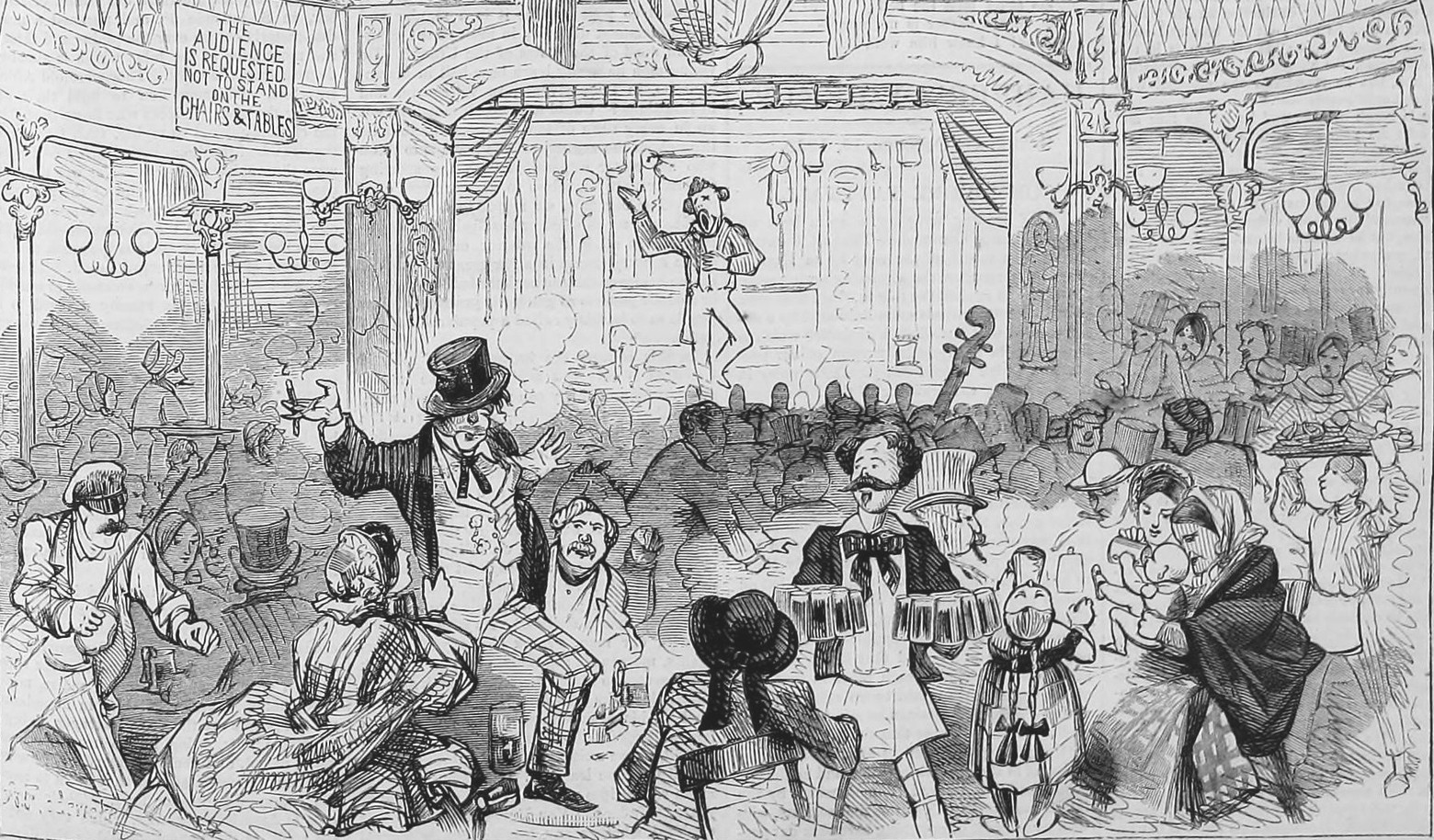
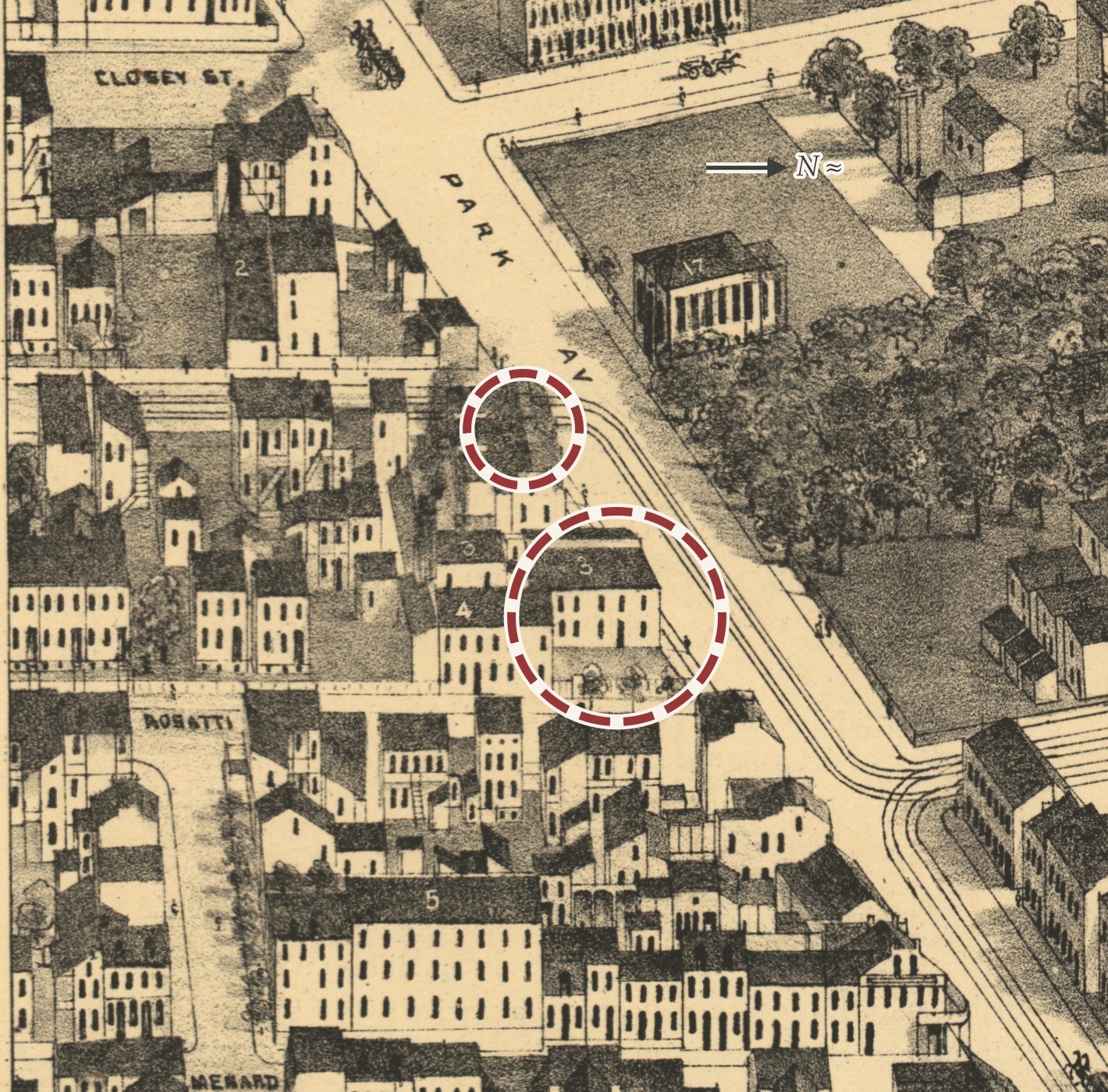
The bar, the brewery and its beer garden stood on the south side of Park Avenue, on the block between Rosatti Street (now Eleventh Street) and Twelfth Street (now Tucker Boulevard). That was the edge of the Lafayette Park district.3 Schnerr’s Garden had a dance hall, and Kargau remembered that the conduct there was “at times improper, so that the police had to interfere.” He wrote that the garden closed during the sixties; its last season was very probably 1869, when Charles kept it as the Park Avenue Gardens (see below).4
The saloon years are easier to follow in order. In brief:
- April 1866. Charles opens Schnerr’s brewery saloon, at Park Avenue and Twelfth Street, with an opening lunch on 16 April. Constantine Schnerr runs the brewery as agent for its creditor, the brewer Edward Buse.5
- 1867. The directory lists him at the saloon, 1206 Park Avenue, living on the premises. In August he runs a picnic from the brewery to Laclede Station.6
- Early 1868. The directory lists him as a hired barkeeper to Schnerr, boarding at 1206 Park Avenue.7
- 15 June 1868. He opens a saloon of his own at the south-east corner of DeKalb and Lesperance Streets.8 It is still open in August.9
- 9 November 1868. He opens the Park Avenue saloon and garden, which he has taken over again. His notice of the day before calls it a “Republican victory lunch.”10
- 28 April 1869. Buse leases him the saloon and garden for six months from 1 May, at $35 a month. Buse may take back the garden after four months.11
- May and June 1869. Free band concerts are given at “Charley Konson’s Park Avenue Gardens.”12 He borrows $150 on 14 May and $300 on 1 June, pledging the lease and fittings.13
- Mid-May 1869. About three weeks after the lease, Buse’s creditors ask the federal court to declare him bankrupt. The brewery is offered for sale on 19 July and sold to Horace Holton.14
- 31 July 1869. A notice in the Westliche Post is headed “Schnerr’s Brauerei-Saloon, 12. Str. und Park Avenue” (Schnerr’s brewery saloon, Twelfth Street and Park Avenue). Its writer tells friends and acquaintances “daß ich obigen Saloon auf’s Neue übernommen habe” (that I have taken over the above saloon again). It is signed “C. Konson, Agent.”15
- 7 August 1869. A Westliche Post advertisement offers a large extra lunch on Sunday morning “zur Feier der Sonnenfinsterniß” (to celebrate the solar eclipse) “in Schnerr’s Brauerei-Saloon an Park Ave.,” with a free concert in the evening. It is signed “Charles Konson, Agt.” and “Frank Brauneiß.”16
- September 1869. A court report of 16 September lists him among men charged with selling liquor without a license. His case is dropped.17
- 1 November 1869. The six-month lease runs out. No record shows that it was renewed.18
- 18 January 1870. He buys a full set of barroom fittings on credit for $200. Where he used them is not known.19
- 1870. The directory lists Frank Brauneis at the Park Avenue saloon. Charles is not listed.20
- 1871. The directory lists him as a conductor on the St. Louis Railroad. The saloon years are over.21
The Mississippi Blätter of Sunday 15 April 1866 printed this advertisement on page 9, given here in English:22
Grand opening lunch in Schnerr’s brewery saloon, corner of Park Avenue and 12th Street, on Monday morning, 16 April. Excellent beer, wine and other drinks. Karl Johnsen commends himself to your kind custom.23
On 29 April the Neuer Anzeiger des Westens printed a second notice on page 5, given here in English:24
Schnerr’s Brewery Saloon and Garden! Excellent bock beer on tap today. We invite the whole public to treat themselves to a rare pleasure. Chas. Ganhson.25
The man named in both notices is probably Charles, whom the 1867 directory lists at the same saloon.26 The two notices use the two names he was recorded under. The enlistment clerk recorded him as Johnsen, close to Johnson, the English form of the name, and Ganhson falls between Gannsen and Johnson.27
Schnerr’s brewery
The saloon Charles kept belonged to a brewery. Lager beer had come to St. Louis with the Germans.28 A German guidebook of 1859 judged Missouri liberal about Sunday pleasures, “so long as the pious are not disturbed.”29 In 1880 the city’s twenty-three breweries employed 1,335 people and made beer worth $4,535,630.30
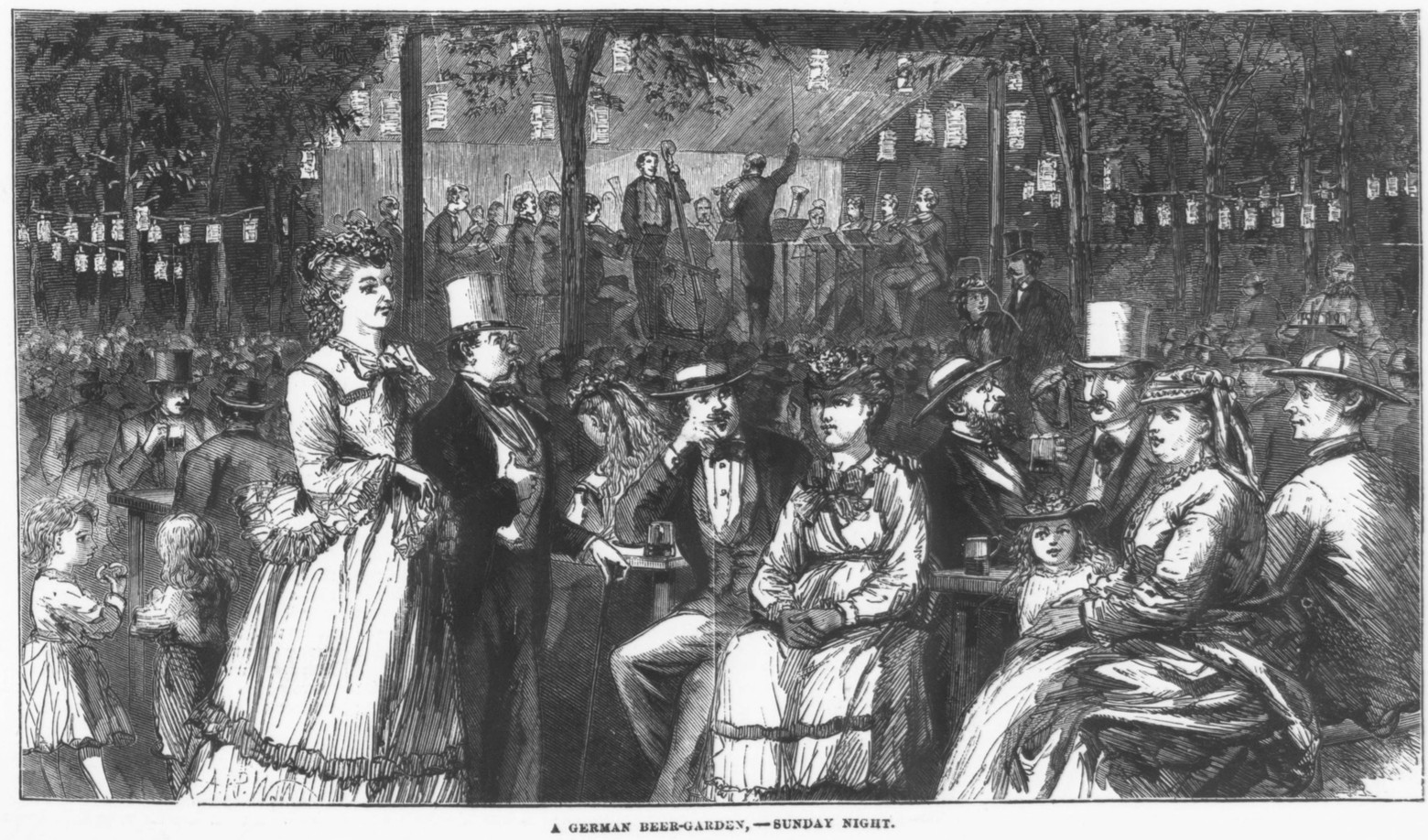
Schnerr’s had once been a large brewery: in 1860 it was one of forty in the city and made 3,500 barrels of lager and 2,500 of common beer.32 By the time Charles kept its saloon the brewery was failing. Schnerr was sued again and again for debt in 1864–67, and by 1865 he ran the business as agent for his creditor, the brewer Edward Buse.33
The 1867 directory is the first to list Charles there: “Gannssen Charles, saloon, 1206 Park av. r. same.”34 The same directory lists “Johnson Charles, brewer, r. 1501 Closey.” This line is very probably his; the same address appears in a family record of October 1867, given below.35 In 1867 the family lived on Closey Avenue, now part of Thirteenth Street.36
The picnic at Laclede Station
In the summer of 1867 Charles organized a picnic from the brewery. The Westliche Post of Friday 23 August 1867 printed his advertisement, and printed it again the next day. In English it reads:37
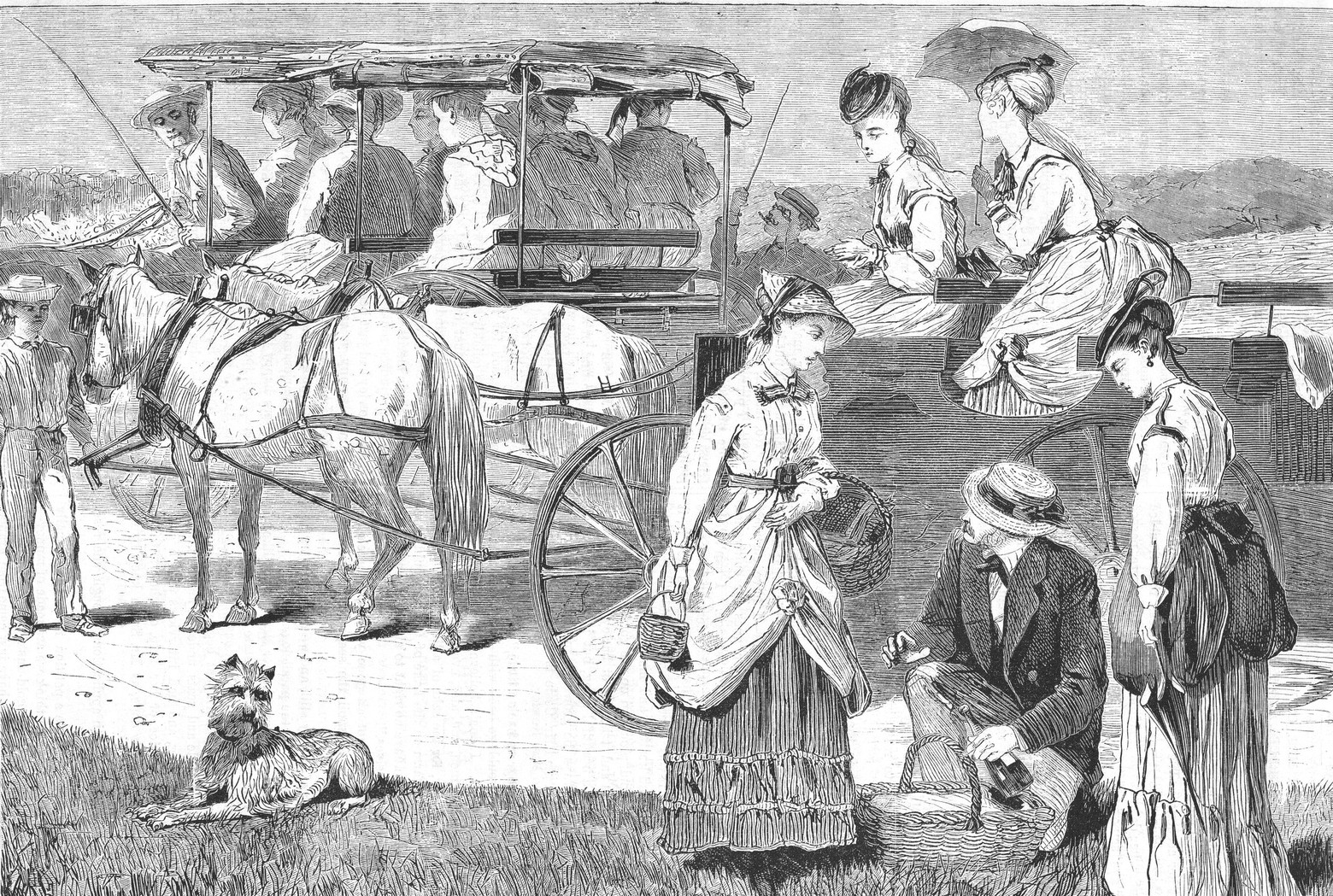
Grand picnic at Laclede Station, next Sunday, 25 August. Omnibuses leave at 7 o’clock sharp in the morning from Pinkepank’s, corner of 7th Street and Park Avenue, then from Schnerr’s brewery, 12th Street and Park Avenue. Tickets at $1 are to be had in Pinkepank’s barroom and from the organizer, Charles Gannsen, at Schnerr’s brewery.38
It is the earliest notice proven to be his, and the first to print the name as Gannsen.39 Laclede Station lay on the Pacific Railroad west of the city, and horse-drawn omnibuses took the guests out into the county. The picnic, like the beer garden, was a German Sunday outing.40
Charles advertised in the German papers, as other German saloonkeepers did. Saloons in immigrant districts usually served one nationality: their language, newspapers and games, and the holidays they kept, were those of the keeper’s people.41 Corner saloons were the meeting places of the men of a neighborhood, and grocery stores often sold beer by the pail. A saloon was respectable enough that a father could send his daughters for a pail of beer. The girls looked forward to the free pretzel that the saloonkeeper or his wife handed them.42 Who drank at Charles’s bars is not recorded.
The city was filling with newcomers again. Nearly six thousand German immigrants arrived in St. Louis in 1866, and more came in 1867. The office of the German Society, the aid society met in Chapter 3, was in the basement of the Tivoli on Elm Street. It “was surrounded from morning to night by men who sought work.” The winter of 1868 brought great distress in the city, and in that year more than fourteen hundred people received the society’s relief.43
The trade Charles had entered kept growing. A decade later the city had more than twenty-five hundred saloons and drinking halls. One guide of 1878 said that beer had once been “almost exclusively” a German drink. By then Americans, Irish, Swedes, Italians and French drank lager too, and so did women “in all classes of society.”44
Saloons could be political ground too. In May 1866, while German Radical Republicans (the party’s hard-line wing) marked the anniversary of Camp Jackson at the courthouse, supporters of President Andrew Johnson met at the New York Saloon across the street. They cheered for Jefferson Davis and for the president. The Westliche Post told Germans to form ward clubs to guard their meetings.45 In 1868 the anniversary, 10 May, fell on a Sunday. The Post said the German festival “proceeded with the greatest order.” The English Missouri Republican called it “a drunken carousal which drowned out the sound of the church bells.”46 Another paper, the Daily Press, mocked the radical German writers, picturing one at work, his soul “inspired with Winkelmeyer’s lager, (good sound Radical beer).”47
St. Louis had several German dailies, among them the Anzeiger des Westens, founded in 1835, and the Westliche Post, founded in 1857. The Post’s Sunday edition was the Mississippi Blätter.48 Besides the news, they printed advertisements for German saloons, beer gardens and picnics, and the death notices, “Todesanzeigen,” that families paid for. For a working family of the time, these columns are often the only place its own words survive. Charles’s notices in the German papers of the 1860s begin with the saloon openings of 1866 and the picnic of 1867. Each one is signed with one of the forms of his name.49
Two days after the picnic advertisement, on Sunday 25 August 1867, the Neuer Anzeiger des Westens printed a notice from Robert Roentgen, a notary who handled soldiers’ claims at an office opposite the courthouse. He asked many people to call there, among them “Herr Charles Gannsen.” In English the notice reads:50
Notice. The following persons are requested to call on me to receive bounties, pensions, pay or other news that have arrived in their respective affairs: … Mr. … Charles Gannsen … Robert Roentgen, Notary, 410½ Market Street, one flight up, opposite the Courthouse.51
This was probably Charles: the spelling is his own and the notice is about soldiers’ claims, but it gives no address.52 The money waiting for him was possibly the $75 of his bounty still owed when he left the army.53 Or it was possibly the extra bounty that Congress voted in July 1866 for discharged three-year men.54
The death of George
Charles and Auguste’s first son, George (baptized Friedrich Wilhelm), died at four in the morning on Wednesday 30 October 1867, after a long illness. The family then lived at 1501 Closey, between Park Avenue and Carroll Street.55 At nine that morning the weather table kept by the optician Jacob Blattner read 40°F and “Cloudy.” By noon it read “Clear.”56 The next day, Thursday, the Westliche Post printed his parents’ notice. It set the funeral for two that afternoon, from the house.57 Both parents signed it. In English it reads:
Died — Yesterday morning at 4 o’clock, after a long illness, our dear son George, aged 1 year, 5 months and 10 days. The funeral takes place this afternoon at 2 o’clock from our home, No. 1501 Closey, between Park Avenue and Carroll Street, to which friends and mourners are kindly invited.
The grieving parents, Charles Gannsen, Augusta Gaunsen [?], née Kreichelt.58
It is the earliest family notice known in his name.59
The George of the notice and the Friedrich Wilhelm baptized in September 1866 were the same boy, with the same parents and the same home. The lot register records the boy buried on 31 October as “George Gansen, 1 yr.”60 The notice’s age fits his baptismal birth date within a month, and the couple had no other child in those years. “George” was very probably the name he went by at home. It possibly came from his grandfather Georg Kreichelt, one of his godparents.61
The city’s own register of deaths confirms the date. Its page for the week ending 1 November 1867 lists, under the English form of the name, “30 [October] · George Johnson · St. Louis · 1501 Closey Av. · Marasmus · 1 [year] 5 [months] · St. Mark.” Marasmus means wasting away, a severe loss of weight.62 The English-language papers printed only the totals.63
The church did not record the funeral: the St. Marcus pastor’s burial register has no entry for the child.64 Pastor Wall, who had married the parents and baptized the boy, had died that April.65
The family lot
For his son’s burial Charles bought a family plot at the St. Marcus cemetery, now called Old St. Marcus: Block 10, Lot 7. The cemetery’s handwritten lot register lists it under “Gansen, Charles” to its last entry, and the boy was the first buried there.66
The German Evangelical congregations kept their own burial grounds. St. Marcus opened its cemetery in 1856, far out on the Gravois Road (now Gravois Avenue) southwest of the city, on twenty-eight acres bought that January.67 By the time it closed, as many as twenty thousand people had been buried there.68
Charles’s own deed for the lot survives with the family, dated 1 November 1867, the day after the burial. The sellers were Jacob Westermann and Jacob Becker, trustees of the German Evangelical St. Mark Church at Jackson (now Third) and Soulard Streets. For twenty dollars they conveyed to “Charls Gannsen” the “family burial Lot No. 7, as designated on the Plate of the Cemetery or Graveyard of said church, called St. Mark Cemetery … To hold for the purpose of a family burial, and for none other forever.” Twenty dollars was more than a month’s pay for a private, the rank he had left the army with.69 The same day the two trustees signed the deed before Levi Block, justice of the peace.70 The deed spells the surname Gannsen, as he signed his enlistment papers, but the name is in the hand of whoever filled in the printed form, not in Charles’s own.71
Charles had bought ground his family could keep. In much of Europe a grave was rented for a term of years and then reused, and the family lot held for good never became the rule. In America the holder owned his lot. Many working families could afford only a single grave, in a row at the edge of the cemetery, so their dead lay apart from one another.86
The second saloon, 1868
Auguste’s family also had dealings in beer. On 18 April 1868 a “Kall [Karl?] Kausen, cor. Park Ave & 12,” probably Charles, was called to court as a witness for the brewer Edward Buse, Schnerr’s creditor. Buse was suing the grocer Georg Kreichelt, Charles’s father-in-law, over a beer bill. The witness was served but did not appear, and the judge found for Kreichelt.87
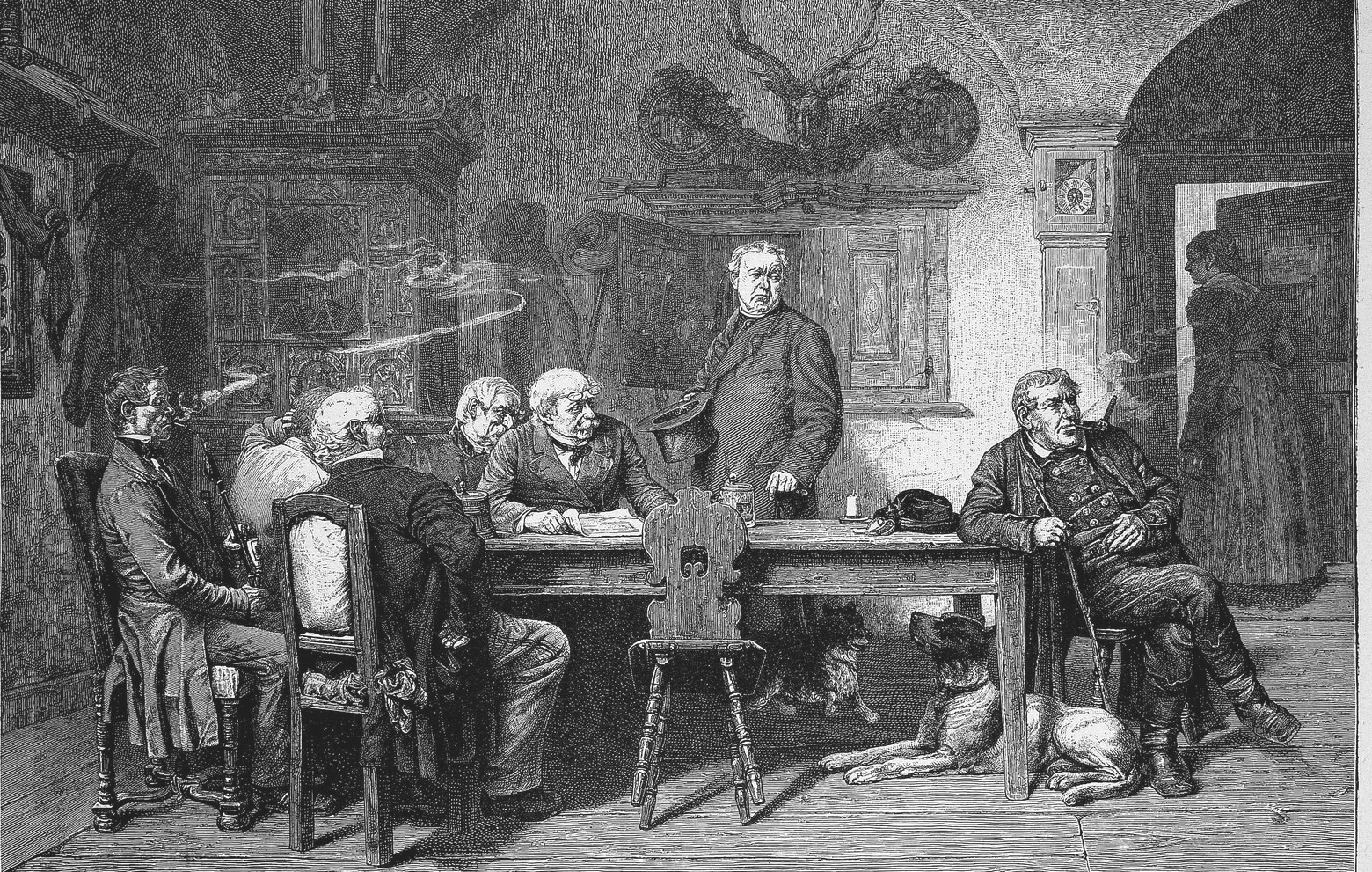
On 7 June 1868 the couple’s second child, Maria Josephine, was baptized at St. Marcus by Pastor Braschler, and the register again spelled the family name Gonnson.88 She was probably the first of the family’s children baptized in the new brick church, dedicated in August 1867 on the corner where the wooden church had stood.89 Her grandfather Georg Kreichelt was one of her four sponsors (see the chapter “The Godparents and Witnesses, 1866–1881”).90 Kargau thought the new church “not an imposing building,” but it held the large congregation, and its basement had rooms for a school of several classes. Wall, who had died at Easter 1867, did not live to see it (see Chapter 7).91
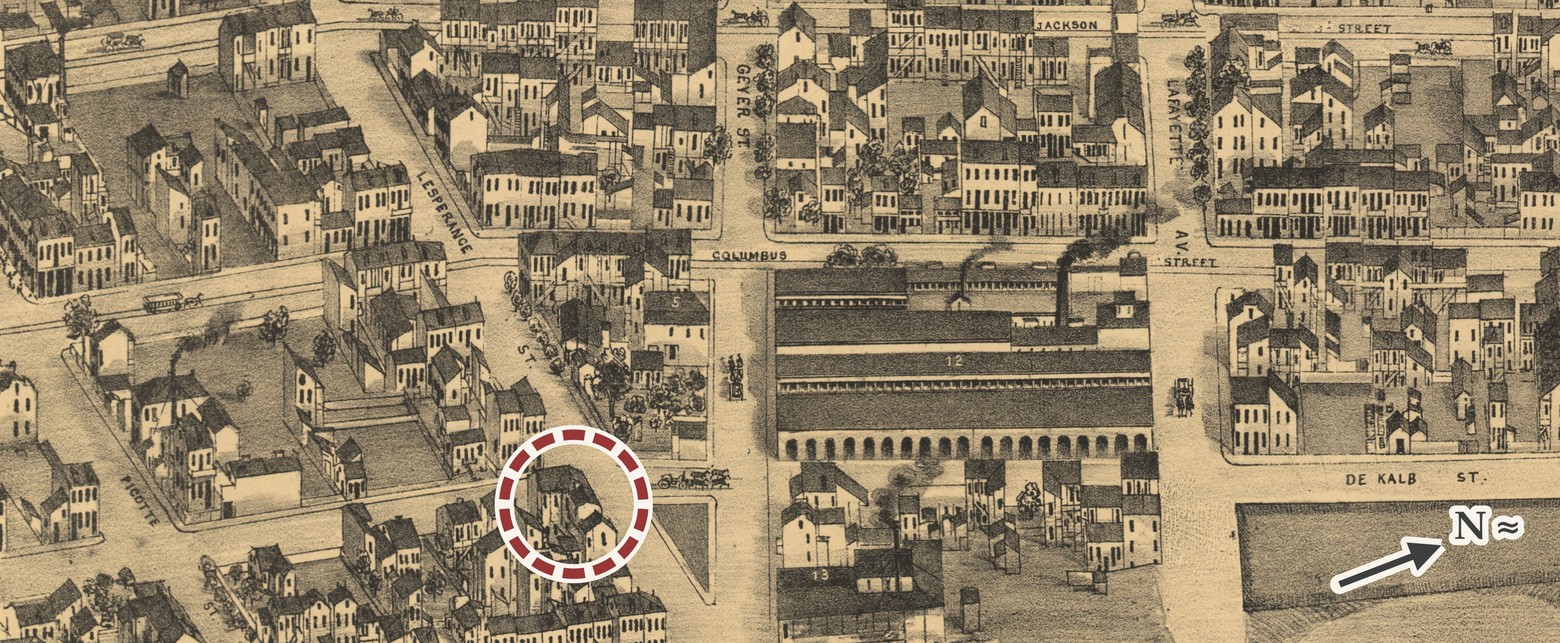
A week later Charles opened a saloon of his own. The Mississippi Blätter printed this advertisement on 14 June 1868, and the Westliche Post repeated it on Monday 15 June. In English it reads:92
Grand opening lunch, Monday, 15 June 1868, at Charles Gansen’s, south-east corner of DeKalb and Lesperance Streets, Weber’s house. Excellent music, fine beer, good wine and cigars of the first quality are provided to satisfy visitors. Please do not fail to call on Monday at Charles Gansen’s.93
A historian of the working-class saloon of the early 1900s found that when a bar opened or changed hands, the whole neighborhood soon knew and came in to size up the new keeper.94 Charles announced his own opening in two papers.
Two days after the opening, on 17 June 1868, “Carl Gansen” bought a bay horse and a one-horse spring wagon from Georg Kreichelt for $100. That was the whole bounty promised to a three-year volunteer of 1862.95 On 27 June he sold them back for $115, held in trust for the use of his mother-in-law Henriette alone. The horse and wagon were kept at the south-east corner of DeKalb and Lesperance Streets, the corner of the new saloon. These are his first known bills of sale, and the signature on the recorded copies is a clerk’s.96
“Weber’s house” was the building of Philip Weber. He bought the corner lot before the war, and his family held it for thirty-five years.97 Weber kept the saloon there himself in other years; Abraham Walter kept it in 1867 and 1868.98 A Philipp Weber witnessed Charles’s wedding, but that witness was probably a barber of the same name (see the chapter “The Godparents and Witnesses, 1866–1881”).
The bar was still open in August: on Sunday 16 August 1868 the Mississippi Blätter printed a short notice headed Kindtaufsfeier, a christening party. In English it reads:99
On Monday, 17 August, a little dance will be held at my place, to which I cordially invite all friends and acquaintances. Charles Jansen, corner of DeKalb and Lesperance Streets.101
It is the same corner as the June opening, and the notice does not say whose child was baptized. It was very probably Maria Josephine’s, ten weeks after her baptism: no other child of the family or its circle was baptized at St. Marcus or Holy Ghost that summer.102 Bar custom made such days good for trade: a man who had a birth, a wedding or a funeral to mark was expected to buy a drink for everyone in the bar. Each man he treated was expected to buy a round in his turn. The custom was already old by the 1870s.103
That same August the city police listed every barroom in the city, and who kept it, for the City Collector. The Missouri Democrat printed the whole list, 1,264 bars, on 8 September 1868.104 Under the district south of Chouteau Avenue it has the line “Jansen Chas, 2000 DeKalb.”105 In the city’s house numbers, 2000 DeKalb was the south-east corner of DeKalb and Lesperance Streets.106 The list does not name Philip Weber. The keeper was very probably Charles: the corner, the month and the spelling Jansen all match his christening notice.107 This is the last record of the DeKalb Street bar.
The 1868 directory also spells his name Jansen. It very probably lists him as a hired barkeeper at Schnerr’s, boarding at the saloon (figure 8.10). So at Schnerr’s he was at times a hired man and at times the man who ran the saloon.108 Living where one worked was usual in the breweries of the time. According to a 1910 history of the brewery workers, brewery hands of the 1860s earned $20 to $25 a month and “were boarded and lodged by the employer.”109
Citizen, 1868
On 21 October 1868 Charles was naturalized in the St. Louis Court of Criminal Correction, as a discharged soldier under the Act of 17 July 1862. The Act let a non-citizen soldier of twenty-one or more with an honorable discharge apply after one year in the country. He did not need the declaration of intention that others had to file years before (see the chapter “Reduced to the Ranks and Mustered Out, 1865”).110 The entry is his.111 The court recorded him as a native of Prussia, which was legally correct for a man from Kurhessen after Prussia took it over in 1866.112 The court’s index card lists him as “Gausen, Charles.”113
He became a citizen two weeks before the presidential election of 3 November 1868.114 After the war the Radical Republicans controlled Missouri, and the St. Louis Germans were a large, organized group among them.115
The Republican Ulysses S. Grant ran against the Democrat Horatio Seymour.116 In St. Louis Grant won 13,716 votes to Seymour’s 11,519, and his best wards were the German ones. The amendment to give Black men the vote, told above, lost in the city 16,429 to 8,078.117
Five days after the vote, on Sunday 8 November, the Mississippi Blätter printed a bigger notice. Its headline read Großer republikanischer Sieges- und zugleich Eröffnungs-Lunch!: a grand Republican victory lunch, and an opening lunch as well. Grant had won.118 In English the notice reads:119
To my friends and acquaintances: I hereby give notice that I have taken over the beer saloon and garden at the corner of Park Avenue and 12th Street and will open it on Monday, 9 November. Good drinks and the like are provided, above all No. 1 old lager beer from Schnerr’s brewery, which is surpassed by none in the city. Respectfully, Charles Johnson.120
This Charles Johnson was very probably Charles, going back to Schnerr’s. The notices of 1866 had placed Schnerr’s brewery saloon at this corner, and in April a court summons had been served on “Kall [Karl?] Kausen” there.121 The beer was Schnerr’s. The 1869 directory and the April 1869 lease, below, give him the same saloon. In 1867 the city’s register of deaths had already recorded the family as Johnson.122
It is the first known notice in the name Charles Johnson, and the only notice of his that touches on politics. Saloons and party politics went together. Keepers often lent their back rooms to political clubs, and in later decades many were ward politicians themselves.123 No record shows Charles in any party club.
Konson’s Park Avenue Gardens, 1869
The 1869 directory lists him at the saloon as “Ganssen Carl” (figure 8.12), and the same name is in its list of saloons.124 That directory also lists “Johnson Charles, saloonkeeper, r. 1503 Closey,” possibly him.125
On 28 April 1869 Edward Buse leased “Schnerr’s Saloon” and its beer garden to “Charles Konson.” The premises lay near the south-west corner of Park Avenue and Rosatti Street. The lease ran for six months from 1 May 1869 at $35 a month, “for the purpose of carrying on a beer saloon.”127 “Konson” is very probably Charles. The lease covers the house that the 1869 directory gives to him. St. Marcus recorded the family name as “Gonnson,” and no other Charles Konson has been found in the St. Louis directories of 1864–72 or in a full-text search of the city’s records.128
Besides the rent, the lease gave him two unusual duties. In the words of the recorder’s copy, he agreed:129
… to watch the brewery and the appurtenances thereto belonging during said term for the purpose to prohibit any and all persons from committing any damage to the same, and also to deliver up peaceably the possession of said Beer Garden after the expiration of four months from the 1st day of May A.D. 1869 if needed for building purposes by the said party of the first part …
The duty to watch the brewery is the first watchman’s job on Charles’s record. The brewery was possibly idle then.
The garden had music. On 13 May 1869 the St. Louis Evening Post printed this notice:130
FREE CONCERT. Lovers of good music should not fail to attend the concerts at Charley Konson’s Park Avenue Gardens, which take place every Sunday afternoon at 3 o’clock, and at 7 o’clock P.M. during the week. A full band in attendance. Free to all.
Concerts were what drew a crowd to a German garden. In the sixties Union Park, which Kargau called the finest concert garden in South St. Louis, had music every Sunday from May to October and on weekdays too. Staehlin’s Garden on Carondelet Avenue gave concerts on Sunday afternoons and evenings.131 The city had more musicians than work. Militia companies marched to music, and lodges and societies held parades. The gardens gave concerts at least on Sundays, and from autumn to spring there was dance music to play. Even so, Kargau wrote, it “did not suffice to support the increasing number of musicians that flocked to St. Louis from everywhere.” Some St. Louis players went on the road with small traveling theater troupes.132 Winter was the dance season. Albert Mahler’s orchestra played the dance music thought the best in the West, and after Mahler’s death, under Ernest Spiering, it played almost every evening of the winter months “till far into the night.”133
Sunday was the beer garden’s busiest day, and Missouri law forbade selling liquor on Sundays.134 In August 1859 the city’s voters turned down Sunday sales, 7,544 votes to 5,543. A week after the law took effect, the council let saloons open on Sunday until nine in the morning and after three in the afternoon, outside church hours. The question of beer or no beer on Sundays was raised again in 1866.135 But the city’s 1866 ordinance made an exception for “gardens and grounds laid out and improved as places for public resort,” as long as they sold no spirits.136 That exception made Charley Konson’s Sunday concerts legal.137
According to Kargau, Missouri had a temperance movement in “the latter part of the sixties,” the years when Charles kept his bars. The city’s tavern keepers made up a Reform Society, he wrote, and “did everything in their power to avert disaster to their business.” Its delegates went to a national convention of tavern keepers in Cincinnati.138
The day after the concert notice, Charles started to borrow money to stock and furnish the garden. Brewers began to back saloons in earnest only after 1880, and no brewer is known to have lent him money.139 His landlord, Edward Buse, was a brewer, though. In November 1868 Charles had promised “No. 1 old lager beer from Schnerr’s brewery.”140 By a deed of trust of 14 May 1869, a kind of mortgage, he pledged the lease and the fittings to Christian Pinkepank for $150. Pinkepank had sold the tickets for Charles Gannsen’s picnic in 1867.141 A second deed of trust, on 1 June 1869, pledged them to Francis A. Mueller for $300.142 The trustee was Charles Mehl, who in 1866 had helped make an estate inventory that lists a debt of “Charles Gansen & Co.,” possibly Charles’s.143 The deeds list what a beer garden of 1869 contained: “a stage with sceneries,” twenty-four benches, five tables, seven dozen beer tumblers, a barroom stove, two faucets, two dozen wine glasses, four decanters, a clock and four pictures.144 They describe a German beer garden with a stage for amateur theater.
The city guide of 1878 told of summer Sundays in the beer gardens. In some of them thousands of men, women and children sat at tables “sipping beer, eating pretzels, smoking, talking, and listening at the band,” it said.145 By then one of the city’s best bands gave concerts in Lafayette Park twice a week in summer, and thousands came to hear them.146
The brewery itself was failing in the spring of 1869.147 Three weeks after the lease, Buse’s creditors asked the federal court to declare him bankrupt, and his assignee and a trustee advertised “Schnerr’s Brewery” for sale at the courthouse on 19 July 1869. Their notice describes the place Charles had rented:148
The above property is what is commonly known as “Schnerr’s Brewery.” The buildings are complete for a brewery; there are six or more large cellars or beer caves, a large stable, and a dwelling house on Rosatte [Rosatti] street … This property and buildings cost about $60,000.
Horace Holton bought the ground for $24,000. The deed to him from the trustee and the assignee is dated 19 July 1869, the day of the sale, and was recorded on 24 September.150 The brewery behind the garden was sold in the middle of the lease, which probably explains the lease’s two unusual duties.151
The garden was part of a larger German social life: German St. Louis had Turner societies, singing clubs, mutual-aid societies, shooting clubs, and societies for men from the same part of Germany.152 No record shows Charles in any of these societies.153
The license and the court
A bar still needed a license: a dram-shop, which sold hard liquor, paid $25 for six months, and a beer-house paid $10.154 On 16 September 1869 the Missouri Republican, reporting the day’s business in the Court of Criminal Correction, listed a run of men charged with selling liquor without a license:
… Peter Schmidt, selling liquor without license; continued to Sept., for defendant. William Heede, same; same disposition. F. J. Miltenberger, same: discharged at defendant’s cost. Herman Kohman, same; same disposition. John W. Howard, same; same disposition. Charles Gausen, same; nol. pros. …
“Charles Gausen” was probably Charles. The same court’s index had listed him as Gausen when he became a citizen the year before. His case was dropped (“nol. pros.,” short for nolle prosequi), so no fine was entered.155 The lease Buse gave him ran for six months, from 1 May to 1 November, the same term as a city license. Under the ordinance, a beer saloon, the purpose the lease named, needed only a beer-house license.156 No license in his name appears in the city register’s own license books for 1854–74, which fits a man charged with selling without one.157
Rent and loans, not the license, were the heavy costs: $210 in rent for the six months and $450 raised on the two deeds of trust,158 against a license of at most $25.159
The bar of 1870
Where Charles kept his bar in 1870 is not known. By then the directory listed Frank Brauneis at the Park Avenue saloon.160 On 18 January 1870 “Charles Kanson/Kansen,” probably Charles, bought a complete set of barroom fittings from Jacob Orlemann for $200 on credit. The set included a counter, ice chests, a pigeon-hole table, tables and chairs.161 A pigeon-hole table was like a billiard table, but it was scored by driving balls into numbered holes in a wall at one end.162 Orlemann and his wife came from the Palatinate and Rheinhessen and had married at St. Marcus in 1857.
The deed leaves the address blank. But nearly the same fittings had been sold on 18 October 1869 to Rose Carstens for “a barroom situated [at] the North West corner of Main & Bates Streets.” Her loan fell due on 18 January 1870, the day Charles bought them.163 The 1869 directory lists a saloon at “1403 Main cor. Bates.”164 Bates Street ran from the levee to Broadway, on the north riverfront.165 But from about 1 February 1870 the north-west corner lot, 1401 North Main, was the Union Car Works’ car shop and office.166 So the fittings do not place the bar.167
On 22 May 1870 the third child, Friedrike Catharina Carolina Amalia, known as Kate, was baptized at St. Marcus by Pastor Braschler, entry 6644, and this time the register spelled the family name Gansen.168
In these five years the records, proven and probable together, show him both as a hired barkeeper and as a saloonkeeper. They spell his name eleven ways, from Johnsen and Ganhson in the notices of 1866169 to Konson and Kanson in 1869–70 (see “The Name He Signed”).
The records show that he kept saloons only in 1866–70, and possibly for a few months in 1880 (see the chapter “Jackson Street and the Cotton Press, 1877–1884”).170 Most small saloons are known only from such records. Their keepers left few papers. A historian of Chicago’s saloons found that a first line in a city directory, and in some cases a notice of closing or judgment in a trade paper, were often all a saloon left behind.171 Charles’s bars are known from directories, newspaper notices and the deeds for his debts.
Why did the saloons not last?
The order of events in 1869 matters. Charles took his lease on 28 April, for six months. Three weeks later his landlord’s creditors asked the federal court to declare Buse bankrupt, and in July the brewery behind the garden was put up for sale. The lease ran out on 1 November, and no record shows that it was renewed. By 1870 another man kept the Park Avenue saloon, and no record says why Charles left it. The sale, the end of the lease and his debts all point the same way.172
The saloons probably failed for lack of money and through bad luck. Failure was common in the trade: an expert of the 1890s wrote that more saloonkeepers failed in business than men of any other trade, and many saloons closed after only a few months.173 Charles never owned the buildings.174 The $450 he borrowed against the lease and fittings was a heavy load on top of a rent of $35 a month.175 A keeper’s money also went out across the bar: regular customers expected to drink on credit, while his own landlord and suppliers wanted to be paid on time.176 The fittings of 1870 were bought on credit, and nearly the same set had been sold to another keeper only three months before.177 The records show what he was up against. They say nothing about how well he ran the bars.
Notes
177 notes
- Mississippi Blätter (St. Louis, Missouri), Sun 15 Apr 1866, p. 9, col. 3; Neuer Anzeiger des Westens (St. Louis, Missouri), Sun 29 Apr 1866, p. 5, image 576047921, image 642733008. [MB66] [NADW66]
- Edwards’ St. Louis Directory, 1867, p. 359, image 1349, p. 457, image 1447; St. Louis directory, 1868, p. 414, https://
www . The 1868 line is p. 414, image 375 (https://.familysearch .org/ ark:/ 61903/ 3:1:3QHK-2QZY-Y4S7 www : accessed 29 October 2026). Mississippi Blätter (St. Louis), 14 Jun 1868, p. 9; Mississippi Blätter (St. Louis), Sun 8 Nov 1868, p. 9; City of St. Louis, deed records, Book 382 pp. 392–393, lease of 28 Apr 1869; St. Louis Deeds of trust, 18 Jan 1870, Vol. 400. [D1867] [D1868] [MB68] [MB68P] [LEASE69] [DOT70].familysearch .org/ ark:/ 61903/ 3:1:3QHK-6QZY-TKMT - Edwards’ St. Louis Directory, 1867, p. 359, image 1349, p. 457, image 1447; Edwards’ Eleventh Annual Directory of the City of St. Louis for 1869, p. 337; City of St. Louis, deed records, Book 382 pp. 392–393, lease of 28 Apr 1869; Edwards’ Eleventh Annual Directory, City of St. Louis, for 1869, Street and Avenue Guide, p. 96, “CLOSEY, from 1312 Park av. south to Geyer av.,” p. 97, “HAMTRAMCK, from 1218 Park av. south to Russell av.,” and p. 98, “ROSATTI, from 1112 Park av. south to Crittenden”; Internet Archive, Directory_St_Louis_1869 (https://
archive : accessed 8 November 2026; p. 97, 16 November 2026). Read in the images; Glen Holt and Tom Pearson, St. Louis Streets Index, pp. 40, 45, 53. Page 40, “Eleventh Street”: in Soulard, sections of it “were named Rosatti, Menard and Stoddard before 1883.” Page 123, “Tucker Boulevard”: Twelfth Street became Tucker Boulevard in 1979. [D1867] [D1869] [LEASE69] [GUIDE69] [STLSTR].org/ details/ Directory_St_Louis_1869 - Ernst D. Kargau, The German Element in St. Louis, p. 136, p. 152. Kargau gives no years for the police trouble, and no record ties Charles to it. St. Louis Brews places Schnerr’s Brewery at 1206 Park Avenue, “southwest corner of Rosati Street and Park Avenue,” from about 1859 to about 1868, and says Schnerr ran a saloon and lived on the premises. From the Daily Missouri Republican of 30 May 1860 it ranks the brewery thirteenth in the city, with 6,000 barrels a year; the Mississippi Handels-Zeitung figures given in the text below total 6,100. Pages 9 and 223. The directories list Schnerr as “brewer and saloon, 122 Park av.” in 1866 and at 1206 Park, the same property under the new numbers, in 1867 and 1868. Henry Herbst, Don Roussin and Kevin Kious, St. Louis Brews, pp. 9, 223; Edwards’ St. Louis Directory, 1866, p. 724, https://
www ; Edwards’ St. Louis Directory, 1867, p. 359, image 1349, p. 457, image 1447; St. Louis directory, 1868, p. 414. [KARGAU] [STLBREWS] [D1866] [D1867] [D1868].familysearch .org/ ark:/ 61903/ 3:1:3QHK-2QZY-YH49 - Mississippi Blätter (St. Louis, Missouri), Sun 15 Apr 1866, p. 9, col. 3; Neuer Anzeiger des Westens (St. Louis, Missouri), Sun 29 Apr 1866, p. 5, image 576047921, image 642733008; Missouri State Archives, Missouri Judicial Records database: suits against Constantine Schnerr, 1864–1867: Herman Heinze (1864, record 828633), Henry A. Homeyer (1864, debt on a note, Law Commissioner’s Court case 55, box 91, folder 37, record 829070), William Lucas (1864, debt on a note, record 829192) and Adolphus Weber (replevin of garden tables and benches, 1865–66, record 704160); Schnerr, “to use of Edward Buse,” v. Thomas S. Allen et al. (1866, record 703865); Edward Buse v. Charles Roth, on notes assigned by Schnerr (1865, records 829661 and 829662); Bank of the State of Missouri v. Schnerr & Wenger (1867, revival of an 1862 judgment for $2,368, record 707083) (https://
s1 : accessed 11 November 2026; each record at https://.sos .mo .gov/ Records/ Archives/ ArchivesMVC/ JudicialRecords s1 followed by its number); Missouri Democrat (St. Louis; title “St. Louis Globe-Democrat”), 20 Jan 1866, p. 4, “Collector Taussig and the Brewers. The Cases of Constant Schnerr and Others. Card from Collector Taussig”: E. A. Rollins, Commissioner of Internal Revenue, to Taussig, 21 Dec 1865, and Taussig to William W. Grover, U.S. District Attorney, 2 Jan 1866: “I report to you for prosecution Edward Buse, Constantine Schnerr, agent, brewer of this city,” and “Mr. Buse, and Mr. Schnerr, his agent” ( image 571016850); imaged, (https://.sos .mo .gov/ Records/ Archives/ ArchivesMvc/ JudicialRecords/ Detail ?id = www : accessed 13 October 2026). Read in the image; the two passages read a second time independently, 11 November 2026. The two notices are probably his; they are signed “Karl Johnsen” and “Chas. Ganhson.” [MB66] [NADW66] [MSA] [TAUSSIG66].newspapers .com/ image/ 571016850/ - Edwards’ St. Louis Directory, 1867, p. 359, image 1349, p. 457, image 1447; Westliche Post, 23 Aug 1867, p. 2., https://
www . Both confirmed. [D1867] [WP67A].newspapers .com/ image/ 641135271/ - St. Louis directory, 1868, p. 414. Very probably his; the entry reads “Jansen Charles.” [D1868]
- Westliche Post (St. Louis, Missouri), 15 Jun 1868, p. 9, image 640592645, p. 2, image 640596759, https://
www . [WP68].newspapers .com/ image/ 640592645/ - Mississippi Blätter (St. Louis), 14 Jun 1868, p. 9; Mississippi Blätter (St. Louis), Sun 16 Aug 1868, p. 9; “Whisky—Wine—Lager. Who Keeps the Barrooms and Where They Are Located. Reported by the Police for the Benefit of the City Collector,” Missouri Democrat (St. Louis, Missouri; title “St. Louis Globe-Democrat”), 8 Sep 1868, p. 4. The opening and the August notice are confirmed; the police list of August is very probably his. No later record of this bar is known. [MB68] [MB68K] [BAR68]
- Mississippi Blätter (St. Louis), Sun 8 Nov 1868, p. 9. Very probably his; the notice is signed “Charles Johnson.” [MB68P]
- City of St. Louis, deed records, Book 382 pp. 392–393, lease of 28 Apr 1869. The lease is confirmed; its “Charles Konson” is very probably Charles. [LEASE69]
- St. Louis Evening Post, Thu 13 May 1869, p. 4., image 1300830252. [EP69]
- City of St. Louis, deeds of trust, 14 May 1869, pp. 539–540, images 315–316. Deed of trust, 1 June 1869, Vol. 388, pp. 70–71 (IGN 8115149, image 75). Both confirmed. [DOT69]
- Missouri Democrat ( “St. Louis Globe-Democrat”), 21 May 1869, p. 4. The Missouri Democrat, 1 July 1869, page 3 ( image 571028322); 25 September 1869, page 4 (image 571030645). Confirmed. [BUSE69]
- Westliche Post (St. Louis), Sat 31 Jul 1869, p. 2, col. 5, image 640764692. Very probably his (see 7 August below). The issue is dated 31 July 1869, and the printer’s code “31jla” at the foot of the notice agrees. The initial reads C; E is a less likely reading. The notice concerns the saloon only; it does not say whose agent he was. [WP69JUL31]
- Westliche Post (St. Louis), Sat 7 Aug 1869, p. 2, col. 8, image 640764991. Very probably his. The first name is printed in full; the saloon and the spelling are those of his lease of 28 April and of “Charley Konson’s Park Avenue Gardens”; and Frank Brauneiß, who signs with him, was listed at the saloon in 1870. The issue is dated 7 August 1869, and the printer’s code at the foot of the notice begins “7au.” The advertisement is written as a joke. It does not say whose agent he was or what part Frank Brauneiß had. The 1870 directory spells the name Brauneis. [WP69AUG07]
- “The Courts — Court of Criminal Correction,” The St. Louis Republican ( title “The St Louis Republic”), Thu 16 Sep 1869, p. 2. Probably his; the court report reads “Charles Gausen.” [REP69]
- City of St. Louis, deed records, Book 382 pp. 392–393, lease of 28 Apr 1869. [LEASE69]
- St. Louis Deeds of trust, 18 Jan 1870, Vol. 400; St. Louis Deeds of trust, 18 Oct 1869, Vol. 391 p. 478 (p. 479 is another deed) (IGN 008115150, img 599, https://
www : accessed 8 November 2026), Rose Carstens; barroom at NW corner Main & Bates. Westliche Post, 14 Oct 1869, p. 2 ( image 640944548, https://.familysearch .org/ ark:/ 61903/ 3:1:3Q9M-CSV7-Y828 www : accessed 8 November 2026), notice offering the tavern at the north-west corner of Main and Bates, “No. 1401,” for sale or rent; read in the image, 31 Oct 2026. Both date from October 1869. They do not show where the fittings were used in 1870; from about 1 February 1870 the corner lot was the Union Car Works’ car shop (see UCW70). Probably his; the deed reads “Charles Kanson” or “Kansen.” [DOT70] [CARST69].newspapers .com/ image/ 640944548/ - Edwards’ Annual Directory of the City of St. Louis, for 1870, p. 172, “Brauneis Frank. saloon, 1206 Park av. r. same.” (FamilySearch image group number (IGN) 109296989, image 147), and Edwards’ St. Louis Business Directory, saloons, p. 1074, “Branneis Frank, 1206 Park av.” (image 1073); imaged, FamilySearch (https://
www ), by the image group numbers and images given. Read in the images, 1 Nov 2026. The two lists spell the name differently: the alphabetical list prints “Brauneis” (p. 172), the business list “Branneis” (p. 1074). This book uses Brauneis. [D1870].familysearch .org - Edwards’ St. Louis Directory, 1871, p. 352, image 1512. Confirmed. [D1871]
- Mississippi Blätter (St. Louis, Missouri), Sun 15 Apr 1866, p. 9, col. 3. — Probable. [MB66]
- German text, heading and signature: “Großer Eröffnungs-Lunch — in — Schnerr’s Brauerei Salon … Zu geneigtem Zuspruch empfiehlt sich Karl Johnsen.”
- Neuer Anzeiger des Westens (St. Louis, Missouri), Sun 29 Apr 1866, p. 5, image 576047921, image 642733008. [NADW66]
- The German text is on the research website page “The Family in the Newspapers.”
- Edwards’ St. Louis Directory, 1867, p. 359, image 1349, p. 457, image 1447. [D1867]
- Declaration of Recruit, Volunteer Enlistment and surgeon’s certificate, 2 Dec 1862, St. Louis. [ENL62]
- J. Thomas Scharf, History of Saint Louis City and County (Philadelphia, 1883), vol. 2, p. 1330. [OCC-SCHARF]
- Siegmar Muehl, “Shock of the New: Advising Mid-Nineteenth-Century German Immigrants to Missouri,” Yearbook of German-American Studies 33 (1998): 85–102, at 85, 87 and 91, https://
journals . Page 94. [MUEHL98].ku .edu/ ygas/ article/ view/ 19140 - Audrey L. Olson, St. Louis Germans, 1850–1920, pp. 213–20, pp. 215–16. An old saying was applied to the city: “First in shoes, first in booze, and last in the American League.” [OLSON]
- Ralph Keeler and A. R. Waud, “St. Louis. I. A General View of the City,” Every Saturday (Boston: James R. Osgood & Co.), 14 October 1871, pp. 377, 380–82: the wood engraving “A German Beer-Garden,—Sunday Night,” p. 377, signed “A.R.W…” at the lower left (the rest is unclear in the scan) and listed among the illustrations “On the Mississippi. By A. R. Waud” in the contents, p. 362; “The engraving on page 377, represents one of the better gardens on Sunday night,” p. 382. Internet Archive, sim_every-saturday-a-journal-of-choice-reading_1871-10-14_3_94 (vol. 3, no. 94) (https://
archive : accessed 12 November 2026). Read in the page images. Published in the United States in 1871; public domain. The engraving, titled “A German Beer-Garden,—Sunday Night,” illustrates Ralph Keeler and A. R. Waud’s first article on St. Louis. The article calls it “one of the better gardens on Sunday night” (p. 382). [EVSAT71].org/ details/ sim _every -saturday -a -journal -of -choice -reading _1871 -10 -14 _3 _94 - J. Thomas Scharf, History of Saint Louis City and County (Philadelphia, 1883), vol. 2, p. 1330, p. 1332. That was out of a city total of 122,400 barrels of lager and 85,500 of common beer. The figures come from a table printed by the German business paper Mississippi Handels-Zeitung and reprinted by Scharf. [OCC-SCHARF]
- Missouri State Archives, Missouri Judicial Records database; Missouri Democrat (St. Louis; title “St. Louis Globe-Democrat”), 20 Jan 1866, p. 4. In October 1865 Schnerr swore in court that the chairs, garden tables, benches and counter seized from him in a suit belonged to Buse. From 9 October a customer took beer almost daily from what he called “Schnerr’s brewery,” and Buse billed him for it in Buse’s own name. St. Louis Circuit Court, February term 1866, Case Files – Civil, continued from the Law Commissioner’s Court, December term 1865: (1) no. 1201, Adolphus Weber v. Constant Schnerr, replevin, Box 65, Folder 17, microfilm C58166, PDF pp. 7–8, marshal’s return, writ executed 3 Oct 1865 (the same page filmed twice, upright and inverted), p. 11, Schnerr’s sworn answer, 30 Oct 1865 (the property “belonged to, and was rightfully in the possession of Edward Buse at that time”), and p. 15, judgment for the defendant; (2) no. 1202, Edward Buse v. Adolph C. Weber, replevin, Box 65, Folder 18, same film, PDF pp. 9–10, Buse’s petition for the same goods, sworn 3 Oct 1865; Missouri State Archives, Missouri’s Judicial Records, records 704160, 702918 and 320709 (https://
www and https://.sos .mo .gov/ Images/ Archives/ Judicial2/ c58166_B0065F0017 .pdf www : accessed 11 November 2026). Read in the images twice independently, 11 November 2026; St. Louis Circuit Court, October term 1867, Case Files – Civil, no. 7012, Edward Buse v. Christopher Niemann, debt on account, Box 241, Folder 22, microfilm C60516: PDF pp. 7–8, account “Mr. Christoph Niemann, Bot. of Edward Buse,” 19 Sep 1867, beer delivered from 9 Oct 1865, $999; PDF p. 9, Niemann’s answer (beer bought in 1865 and 1866 “from a brewery called and known as Schnerr’s brewery”; the clerk’s S looks like an L, and the database index reads “Lehnerr’s”); Missouri State Archives, Missouri’s Judicial Records, records 707200 and 326424 (https://.sos .mo .gov/ Images/ Archives/ Judicial2/ c58166_B0065F0018 .pdf www : accessed 11 November 2026). Read in the images twice independently, 11 November 2026. [MSA] [TAUSSIG66] [REPL65] [NIEM67].sos .mo .gov/ Images/ Archives/ Judicial2/ c60516_B0241F0022 .pdf - Edwards’ St. Louis Directory, 1867, p. 359. — Proven. [D1867]
- Edwards’ St. Louis Directory, 1867, p. 359, image 1349, p. 457, image 1447; “Neue Anzeigen” [New notices], Westliche Post (St. Louis, Missouri), Thu 31 Oct 1867, p. 2, death notice of the son George; Missouri State Archives, “Register of Deaths, St. Louis City/County, 1867–1868,” microfilm C10368, week ending 1 Nov 1867 (printed form headed “Report of Interments”), row “30 [Oct] · George Johnson · 1501 Closey Av. · Marasmus · 1 [yr] 5 [mos] · St. Mark.”, image 11. — Very probable. No other Charles Johnson is known at that house. [D1867] [WP67B] [CDR67]
- Glen Holt and Tom Pearson, St. Louis Streets Index, pp. 40, 45, 53. Page 121, “Thirteenth Street”: in Soulard the street “was named Morton, Summer and Closey at various times before 1883.” Edwards’ Eleventh Annual Directory, City of St. Louis, for 1869, Street and Avenue Guide, p. 96. The 1869 street guide shows it running south from 1312 Park Avenue to Geyer Avenue. [STLSTR] [GUIDE69]
- Westliche Post (St. Louis), Fri 23 Aug 1867, p. 2. — Proven. [WP67A]
- German text, heading and signature: “Großes Picnic an Laclede Station … bei dem Unternehmer, Charles Gannsen, in Schnerr’s Brauerei.”
- Westliche Post, 23 Aug 1867, p. 2. [WP67A]
- Westliche Post, 23 Aug 1867, p. 2. [WP67A]
- Jon M. Kingsdale, “The ‘Poor Man’s Club’: Social Functions of the Urban Working-Class Saloon,” American Quarterly 25, no. 4 (October 1973): 472–89, at 474, 479, 484 and 487; JSTOR, https://
www , read through Utah Valley University Library, 1 and 2 Nov 2026; quotations checked in the page images. The evidence is mostly from about 1890–1915. Page 487. [KINGSDALE73].jstor .org/ stable/ 2711634 - Audrey L. Olson, St. Louis Germans, 1850–1920, pp. 213–20, pp. 213–14. [OLSON]
- Ernst D. Kargau, The German Element in St. Louis, p. 136, p. 208. Kargau calls it the German Immigration Society, its name from 1859 to 1884 (p. 206). No record shows that Charles asked the society for help. [KARGAU]
- J. A. Dacus and James W. Buel, A Tour of St. Louis, pp. 46, 478–79, 481, 549–50, pp. 478–79. [DACUS78]
- Kristen Layne Anderson, Abolitionizing Missouri, pp. 148–50, 188–92, p. 148. [ANDERSON16]
- Kristen Layne Anderson, Abolitionizing Missouri, pp. 148–50, 188–92, p. 149. [ANDERSON16]
- Kristen Layne Anderson, Abolitionizing Missouri, pp. 148–50, 188–92, pp. 149–50. [ANDERSON16]
- Karl J. R. Arndt and May E. Olson, German-American Newspapers and Periodicals, 1732–1955 (Heidelberg: Quelle & Meyer, 1961), entries for St. Louis: Anzeiger des Westens, Westliche Post, Mississippi Blätter, Amerika, Der Friedensbote; Geo. P. Rowell and Co.’s American Newspaper Directory (New York: Geo. P. Rowell & Co., 1869), p. 59, “Missouri,” St. Louis: Neuer Anzeiger des Westens (printed “Never Anzeiger”), every morning except Monday, weekly and Sunday, German, Democratic, established 1837, Carl Daenzer editor and publisher, “claims daily 5,000, weekly 4,000, Sunday 7,000 circulation”; Westliche Post, every morning and weekly, German, Republican, Sunday Mississippi Blätter, established 1857, Carl Schurz and Emil Preetorius editors, “claims daily 9,000, weekly 7,000, Sunday 10,000 circulation”; Missouri Republican, “weekly circulation about 15,000”; Internet Archive, geoprowellcosame1869newy (https://
archive : accessed 4 November 2026). Read in the page image, 4 November 2026. In 1869 the Westliche Post, a Republican paper, claimed a daily circulation of 9,000 copies. The Democratic Neuer Anzeiger des Westens, which carried his notices of 1866, claimed 5,000. These are the papers’ own figures; the directory prints them as claims. On Sundays the Post’s Mississippi Blätter claimed 10,000 and the Neuer Anzeiger 7,000. The English Missouri Republican gave its weekly circulation as about 15,000. [ARNDT] [ROWELL69].org/ details/ geoprowellcosame1869newy - Mississippi Blätter (St. Louis, Missouri), Sun 15 Apr 1866, p. 9, col. 3; Neuer Anzeiger des Westens (St. Louis, Missouri), Sun 29 Apr 1866, p. 5, image 576047921, image 642733008; Westliche Post, 23 Aug 1867, p. 2. His later notices of the 1860s, his son’s death notice of 1867 and the grand opening, christening dance and victory lunch of 1868, are given below at their dates. “Neue Anzeigen” [New notices], Westliche Post (St. Louis, Missouri), Thu 31 Oct 1867, p. 2, death notice of the son George; Westliche Post (St. Louis, Missouri), 15 Jun 1868, p. 9, image 640592645, p. 2, image 640596759; Mississippi Blätter (St. Louis), Sun 16 Aug 1868, p. 9; Mississippi Blätter (St. Louis), Sun 8 Nov 1868, p. 9. [MB66] [NADW66] [WP67A] [WP67B] [WP68] [MB68K] [MB68P]
- Neuer Anzeiger des Westens (St. Louis), Sun 25 Aug 1867, p. 5, “Aufforderung” of Robert Roentgen, Notar. [NADW67]
- The German text is on the research website page “The Family in the Newspapers.”
- Neuer Anzeiger des Westens (St. Louis), Sun 25 Aug 1867, p. 5, “Aufforderung” of Robert Roentgen, Notar. — Probable. [NADW67]
- Compiled Service Record cards, Charles Gannsen, Battery B, 2nd Missouri Light Artillery, National Archives microfilm M405, roll 327. [CSR]
- Neuer Anzeiger des Westens (St. Louis, Missouri), Sun 25 Aug 1867, p. 5, image 576050225. [NADW67]
- “Neue Anzeigen” [New notices], Westliche Post (St. Louis, Missouri), Thu 31 Oct 1867, p. 2, death notice of the son George. — Proven. [WP67B]
- “Meteorological Observations.—Corrected daily by Jacob Blattner, Optician,” table for “St. Louis, Oct. 30, 1867,” Missouri Republican (St. Louis; indexed as The St Louis Republic), Thu. 31 Oct 1867, p. 3, col. 5 ( image 666812633, https://
www : accessed 11 November 2026). Read twice, independently, in the page image, 11 Nov 2026. [REP67W].newspapers .com/ image/ 666812633/ - “Neue Anzeigen” [New notices], Westliche Post (St. Louis, Missouri), Thu 31 Oct 1867, p. 2, death notice of the son George. [WP67B]
- German text, heading and signature: “Starb — Gestern Morgen um 4 Uhr … Die betrübten Eltern Charles Gannsen, Augusta Gaunsen [?], geb. Kreichelt.”
- “Neue Anzeigen” [New notices], Westliche Post (St. Louis, Missouri), Thu 31 Oct 1867, p. 2, death notice of the son George. — Proven. [WP67B]
- Old St. Marcus Cemetery lot register, vol. 1. [LOT]
- “Neue Anzeigen” [New notices], Westliche Post (St. Louis, Missouri), Thu 31 Oct 1867, p. 2, death notice of the son George. The baptism gives his birth as 20 June 1866. The couple had no other child between the January 1866 wedding and February 1868. The notice and the city register both give “5 months,” one month too many, but the notice’s “10 days” fits the 20th exactly. Friedrich Wilhelm Gonnson, p. 164; Missouri State Archives, “Register of Deaths, St. Louis City/County, 1867–1868,” microfilm C10368, week ending 1 Nov 1867 (printed form headed “Report of Interments”), row “30 [Oct] · George Johnson · 1501 Closey Av. · Marasmus · 1 [yr] 5 [mos] · St. Mark.”, image 11. — Proven. [WP67B] [FW] [CDR67]
- Missouri State Archives, “Register of Deaths, St. Louis City/County, 1867–1868,” microfilm C10368, week ending 1 Nov 1867 (printed form headed “Report of Interments”), row “30 [Oct] · George Johnson · 1501 Closey Av. · Marasmus · 1 [yr] 5 [mos] · St. Mark.”, image 11. An index once gave his death as 26 October. That date came from the wrong line of the same sheet. It belongs to William Mish, aged twenty, the first name on the sheet, who died at the City Hospital on 26 October. — Proven. [CDR67]
- Missouri Republican (St. Louis), 3 Nov 1867, p. 3, weekly “Mortuary Report” for the week ending 1 Nov 1867: 129 deaths in the city, six from marasmus; no names (, https://
www , accessed 6 November 2026). The Missouri Republican’s weekly “Mortuary Report” for the same week counted 129 deaths in the city, six of them from marasmus, and named no one. [REP67-MORT].newspapers .com/ image/ 666812687/ - St. Marcus Evangelical Church (St. Louis, Missouri), burial register vol. 1, A.D. 1867, pp. 103–105. Its 1867 entries 614 to 616 run from 22 to 31 October without him. Either the pastor did not hold the funeral or he did not record it. — Proven (negative search). [BUR67]
- Albert Schory, Geschichte der Deutschen Evangelischen Synode von Nord-Amerika (St. Louis, 1889), pp. 13–17. [SCHORY]
- Old St. Marcus Cemetery register books, ca. 1856–1960, vol. 1., https://
www , https://.findagrave .com/ memorial/ 249141012 stlouis , https://.genealogyvillage .com/ Buecher6 .htm www . — Proven. [LOT].findagrave .com/ memorial/ 133739433 - St. Louis deed records, vol. 170, pp. 121–122: deed of 3 Jan 1856, Benjamin M. Runyan and Mary E. his wife to John Guttrod [?], Jacob Westermann, George P. Lieby [?], Rudolph Hoge [?], Caspar Müller and George Buttner [?], trustees of the German Evangelic Church congregation of the southern part of the city of St. Louis, lot 1 of Francis P. Blair Jr.’s subdivision of the Tanner farm, 28.18 acres, bounded west by the New Gravois Road, for $8,700, subject to articles 1 to 5 of the congregation’s “Regulations”; acknowledged 19 Jan 1856 before Josiah H. Clear [?], notary public; filed and recorded 21 Jan 1856, C. Keemle, Recorder. FamilySearch image group number (IGN) 8114494 (film 531801), image 415; imaged, FamilySearch (https://
www : accessed 11 October 2026), by the image group numbers and images given. Read in the image; Glen Holt and Tom Pearson, St. Louis Streets Index, pp. 40, 45, 53. Page 53, “Gravois Avenue”: “It was named Gravois Road until 1881.” [DED56] [STLSTR].familysearch .org - Chris Naffziger, “Old St. Marcus Cemetery,” Saint Louis Patina (https://
stlouispatina , 22 Jul 2026): about 1,000 graves moved to New St. Marcus “out of a potential 20,000”; the city bought the ground in 1977; read online 31 Oct 2026. [STLPATINA].com/ old-st-marcus-cemetery/ - Act of 6 Aug 1861, ch. 63, sec. 1, 12 Stat. 326, ch. 145. [PAY]
- Deed, Jacob Westermann and Jacob Becker. The deed was kept among the papers of Charles’s grandson Henry Johnson. A later pencil note on the back, “Hy Johnson / 7117 Minnesota,” gives his address. — Proven. [DEED67]
- Deed, Jacob Westermann and Jacob Becker. The sale was made under the cemetery’s founding deed, recorded at the Recorder’s Office in Book 170, page 121. Another note on the back of the deed reads “Charles Gann[sen] / Lot No 7 / First Addition / Block 10.” [DEED67]
- Allgemeine Auswanderungs-Zeitung, 16 Apr 1858, p. 4, p. 68; Coin legends of the Kurhessen silver groschen of 1841–1847 (“30 einen Thaler”) and heller of 1842 (“360 einen Thaler”), as cataloged by Numista (nos. 33983 and 47381) (context). [AAZ58F] [COINS]
- Johannes Köster, letters to his wife Christiane Köster (née Gunkel) and children at Kassel, and one to Frau Casselman, Kassel, 6 Nov 1858 – 2 Dec 1862: typed transcription, 55 pages, made within the Köster family, with the 1937 index of names in the letters (images 0033–0035) and seven original leaves of the letter of 24 Apr 1859 (images 0113–0119). Letter of 24 April 1859, second sheet, typescript p. 9, image 0062. [KOESTER]
- Act of 6 Aug 1861, ch. 63, sec. 1, 12 Stat. 326, ch. 145. [PAY]
- Act of 22 July 1861, sec. 5; M405 roll 327 (roll image 1560), Gannsen file: Battery muster-out roll, St. Louis, image 228767518, p. 2. [DOSSIER] [CSRMO]
- Act of 6 Aug 1861, ch. 63, sec. 1, 12 Stat. 326, ch. 145. [PAY]
- Deed, Jacob Westermann and Jacob Becker. [DEED67]
- St. Louis bills of sale, 17 and 27 Jun 1868. [BOS68]
- City of St. Louis, deed records, Book 382 pp. 392–393, lease of 28 Apr 1869. [LEASE69]
- St. Louis Deeds of trust, 18 Jan 1870, Vol. 400. [DOT70]
- Charles Gannson (Private, Battery B, 2nd Missouri Light Artillery, Civil War), pension application no. Inv. 749,432, certificate no. 684,507; Case Files of Approved Pension Applications of Veterans Who Served in the Army and Navy Mainly in the Civil War and the War with Spain, 1861–1934; Civil War and Later Pension Files; Record Group 15: Records of the Department of Veterans Affairs; National Archives, Washington, D.C.; digital copy of the file supplied to the author by the National Archives, imaged at https://
charles-research : accessed 30 October 2026. Mail-order copies ordered by the author, first a partial file, order F21-314123835E, submitted 14 February 2017 and delivered electronically, and then the complete file, order F41-523680269E, submitted 8 September 2019 and sent by mail. Charles was a sergeant from 7 November 1863 until 15 March 1865. Page 9, pension certificate of 18 November 1891. St. Louis Post-Dispatch, 4 Jun 1893, p. 26, image 137711071. [PEN] [PD93].netlify .app/ pension-file .html - Federal Reserve Bank of Minneapolis, “Consumer Price Index, 1800–,” annual averages, 1967 = 100 (https://
www : accessed 14 November 2026). The series joins Ethel D. Hoover’s index for 1851–1890, Albert Rees’s cost-of-living index for 1890–1912 and the Bureau of Labor Statistics’ Consumer Price Index from 1913. The bank notes that figures before 1913 “should be considered estimates.” Index values used: 1858, 26; 1859, 27; 1862, 30; 1863, 37; 1867, 42; 1868, 40; 1869, 40; 1870, 38; 1893, 27; 2025, 967.5. [XTR-CPI].minneapolisfed .org/ about-us/ monetary-policy/ inflation-calculator/ consumer -price -index -1800 - - Federal Reserve Bank of Minneapolis, “Consumer Price Index, 1800–,” annual averages. [XTR-CPI]
- Act of 22 July 1861, sec. 5. [DOSSIER]
- Coin legends of the Kurhessen silver groschen of 1841–1847 (“30 einen Thaler”) and heller of 1842 (“360 einen Thaler”). [COINS]
- David Charles Sloane, The Last Great Necessity: Cemeteries in American History (Baltimore: Johns Hopkins University Press, 1991), 3 (“American versus European Cemeteries”: in European cemeteries graves were rented for a term and the permanent family lot never became the norm; American lot-holders owned their lots) and 84 (family lots and single graves; single graves sold to individuals in separate sections); Internet Archive (https://
archive : accessed 5 November 2026); read in the page images. Sloane, pp. 3 and 84. His examples of single graves come from the rural cemeteries of the East, where in 1860 a single grave for an adult could cost $8. [SLOANE91].org/ details/ lastgreatnecessi0000davi - St. Louis Circuit Court, 1868, case no. 9422, p. 20, pp. 17–23. — Probable. The other three witnesses from the corner were Schnerr and two of his men, Wilhelm Neuberg and Karl Wegmann. Kausen is probably the brewery’s other barkeeper, the “Jansen Charles” of the 1868 directory. No Karl or Charles Kausen is listed in Edwards’ city directories of 1868–70. A bar hand whom the 1868 directory left out cannot be ruled out. [SUB68]
- St. Marcus baptism register 1868, p. 224, entry 5857/173, image 372. The entry is no. 5857/173. [MJ]
- J. Thomas Scharf, History of Saint Louis City and County, vol. 2, p. 1732. St. Louis Genealogical Society, “St. Marcus UCC” (https://
stlgs : accessed 6 November 2026); St. Marcus baptism register 1868, p. 224, entry 5857/173, image 372. [SCHARF] [STLGSM] [MJ].org/ ?p =20907 - St. Marcus baptism register 1868, p. 224, entry 5857/173, image 372. [MJ]
- Ernst D. Kargau, The German Element in St. Louis, p. 136, p. 201. Kargau gives 1867 for both Wall’s death and the dedication, which agrees with the dates above. [KARGAU]
- Mississippi Blätter (St. Louis), 14 Jun 1868, p. 9; Westliche Post (St. Louis, Missouri), 15 Jun 1868, p. 2, image 640596759. — Proven. [MB68] [WP68]
- The German text is on the research website page “The Family in the Newspapers.”
- Jon M. Kingsdale, “The ‘Poor Man’s Club’: Social Functions of the Urban Working-Class Saloon,” American Quarterly 25, no. 4., p. 484. [KINGSDALE73]
- Act of 22 July 1861, sec. 5. [DOSSIER]
- St. Louis bills of sale, 17 and 27 Jun 1868. — Proven. [BOS68]
- City of St. Louis, Recorder of Deeds. Deed, Johann Reis and wife Elizabeth to Philipp Veber [Weber], 15 Aug 1857: the west half of lots 103–104, Block 4, Lesperance’s Addition (City Block 722), 48 ft “on the east side of Fulton now De Kalb street,” bounded north by Lesperance Street, $2,425 (Deeds Vol. 193 p. 140; FamilySearch, “Deed records of the city and county of St. Louis, Mo., 1804-1901,” image group number (IGN) 008114479, image 103, accessed 7 November 2026). Mortgages by “Philip Veber alias Weber” and wife Elizabeth on the same lot: 1860, Vol. 244 pp. 327–328, released 1863; 1866, Vol. 311 pp. 373–374, “with all the buildings and improvements thereon,” released 21 Aug 1873. Deed of trust, 7 Mar 1883, for the use of Elizabeth Weber (Vol. 696 pp. 310–311; Vol. 699 pp. 190–191). Sheriff’s partition sale, Rapp v. Weber et al., 12 Jul 1892, of the lot to Michael L. Weber for $14,010 (Vol. 1097 pp. 276–277; IGN 008312668, image 487, accessed 7 November 2026). The grantor index (W) for 1857–1879, read page by page, shows no sale of the lot outside the family. Read in the images, 31 Oct–1 Nov 2026; the 1857 lot description reread in the image, 11 Nov 2026. The deeds of 1860, 1866 and 1883 also call the street Fulton, now DeKalb. This was not the Fulton Street of the 1870s that Dry’s plate 5 letters several blocks to the west: that street was the southern extension of Eighth Street, “known as Fulton Street” until 1883 (Glen Holt and Tom Pearson, St. Louis Streets Index [St. Louis: St. Louis Public Library, 1994], from source material gathered by Norbury L. Wayman, p. 39, “Eighth Street (N-S)”; PDF, https://
rbsc : accessed 11 November 2026). He bought the lot at the south-east corner of DeKalb and Lesperance Streets in 1857. He mortgaged it “with all the buildings and improvements thereon” in 1866, and that mortgage was not released until 1873. The Weber family held the corner until 1892. — Proven. [WEBDEED].slpl .org/ STL_STREETS_(A-Z) .pdf - St. Louis city directories, Ancestry, “U.S., City Directories, 1822–1999”. Philip Weber kept it in 1861 and 1863 and again from 1869 to 1872. [GPWSAL]
- Mississippi Blätter (St. Louis), Sun 16 Aug 1868, p. 9. — Proven. [MB68K]
- Mississippi Blätter (St. Louis), 14 Jun 1868, p. 9; Richard J. Compton and Camille N. Dry, Pictorial St. Louis, https://
tile . Plate 5 of Pictorial St. Louis, surveyed in 1875, seven years after the opening; the crop shows the lower left of the plate. The view looks west from the river, so north is to the right and a little up the page; the arrow is approximate. The plate letters both streets: Lesperance runs diagonally down from the upper left, and DeKalb crosses the lower part of the view. The dashed circle marks the south-east corner, the one the advertisement names. The plate does not identify the building on that corner, and a drawing of 1875 cannot show which building stood there in 1868. [MB68] [PICT75].loc .gov/ storage-services/ master/ gmd/ gmd416m/ g4164m/ g4164sm/ gpm00001/ pa00009m .tif - The German text is on the research website page “The Family in the Newspapers.”
- St. Marcus Evangelical Church (St. Louis, Missouri), baptism register 1868, pp. 223–232, Nos. 5849–5955 (1 Jun–30 Aug 1868), FamilySearch image group number (IGN) 007769183, images 371–376; Holy Ghost Evangelical Church, baptism register vol. 7, pp. 249–257 (Jun–Aug 1868), IGN 007858219, images 706–710; imaged, FamilySearch (https://
www ), by the image group numbers and images given; citing “St. Marcus Evangelical Church records, 1847-1981,” microfilm of originals at the Eden Archives in St. Louis, Missouri. Read in the page images, 2 Nov 2026; no other baptism of the family or its circle. — Very probable. [KIND68].familysearch .org - Madelon Powers, Faces Along the Bar: Lore and Order in the Workingman’s Saloon, 1870–1920 (Chicago: University of Chicago Press, 1998), 34, 65, 67, 69, 94, 101–2 and 208–9; Internet Archive, https://
archive , borrowed and returned 2 Nov 2026; quotations checked in the page images. Its evidence dates mostly from about 1890 to 1915. Pages 94 and 101–2. [POWERS98].org/ details/ facesalongbarlor00powe - “Whisky—Wine—Lager. Who Keeps the Barrooms and Where They Are Located. Reported by the Police for the Benefit of the City Collector,” Missouri Democrat (St. Louis, Missouri; title “St. Louis Globe-Democrat”), 8 Sep 1868, p. 4. [BAR68]
- As in note 104. [BAR68]
- St. Louis city directories, Ancestry, “U.S., City Directories, 1822–1999”. [GPWSAL]
- Mississippi Blätter (St. Louis), Sun 16 Aug 1868, p. 9. — Very probable. [MB68K]
- St. Louis directory, 1868, p. 414. — Very probable. The 1867 and 1869 directories give the same house to him as its keeper. St. Marcus also recorded the family as Jansen in 1874 and 1881. The only other Charles Jansen found, a bartender of 1866, has no tie to the house. [D1868]
- Hermann Schlüter, The Brewing Industry and the Brewery Workers’ Movement in America (Cincinnati: International Union of United Brewery Workmen of America, 1910), p. 93; Internet Archive, brewingindustryb00schl (https://
archive : accessed 16 November 2026). A history published by the union; its figures come mostly from New York and the East. Read in the page image. Page 93. Schlüter describes the men who made the beer, not barkeepers, and gives no figures for St. Louis. [SCHLU10].org/ details/ brewingindustryb00schl - Act of 22 July 1861, sec. 5; Act of 17 July 1862, ch. 200, §21, 12 Stat. 597 (naturalization of discharged soldiers). The St. Louis dram-shop license fees of 1867–70 and any Sunday-closing enforcement of those years have not been established from the city ordinances. [DOSSIER] [NAT62]
- St. Louis Register of Voters, Ward 9, book of the 1896 series, G page, line 22, “Gansen Charles,” 168 Sidney. The register of voters of about 1900 lists “Gansen Charles” at 168 Sidney Street, the lot where Charles lived in 1900, beside his son. It gives his papers as October 1868, Court of Criminal Correction. The city’s naturalization index has no other entry under any of his names, Johnson included. [VOTE]
- St. Louis Court of Criminal Correction, naturalization, 21 Oct 1868, p. 126; St. Louis Naturalization Record Indexes 1844–1876, image 4805. [NAT68] [NATCARD]
- St. Louis Naturalization Record Indexes 1844–1876, p. 126. — Proven. [NATCARD]
- St. Louis Register of Voters, Ward 9, book of the 1896 series, G page, line 22, “Gansen Charles,” 168 Sidney; St. Louis Naturalization Record Indexes 1844–1876, p. 126. The court’s index card reads “Gausen, Charles — Vol. 10, Page 126 — C.C.C. — Prussia — 10-21-68.” It leaves the address, age and witnesses blank. The loose papers filed with the court’s naturalization book, which possibly give his birthplace, are on film that can be seen only at the Family History Library and have not been read. — Proven. [VOTE] [NATCARD]
- James Neal Primm, Lion of the Valley, pp. 276–78. The 1865 state convention abolished slavery in Missouri. Its new constitution required every voter, lawyer, teacher, and minister to swear an “ironclad” oath that he had never aided the rebellion. The oath kept tens of thousands of men from the polls, among them many who had stood by the Union. Kristen L. Anderson, “German Americans, African Americans, and the Republican Party in St. Louis, 1865–1872,” Journal of American Ethnic History 28, no. 1, p. 34. Many Germans, led by Carl Schurz of the Westliche Post, came to oppose keeping the vote from these men. The historian Kristen L. Anderson found that most German voters stayed with the Republicans at the polls in 1868. But they voted against the party’s measures, among them that year’s amendment to give Black men the vote. Alison Clark Efford, German Immigrants, Race, and Citizenship in the Civil War Era (New York: Cambridge University Press, 2013), pp. 175, 180. In 1870 they joined the Liberal Republican revolt, which elected B. Gratz Brown governor and gave the vote back to the former rebels. Kristen Layne Anderson, Abolitionizing Missouri, pp. 148–50, 188–92. Pages 190–92, her table numbered 6.5. In St. Louis Brown took 13,900 votes to McClurg’s 3,989, nearly 78 percent, and more than 90 percent in the German wards of the south side. James Neal Primm, Lion of the Valley, p. 285. Brown’s election as governor by 40,000 votes; no St. Louis returns. Kristen L. Anderson, “German Americans, African Americans, and the Republican Party in St. Louis, 1865–1872,” Journal of American Ethnic History 28, no. 1, pp. 34–35 and 45. [PRIMM] [ANDERSON08] [EFFORD] [ANDERSON16] [PRIMM] [ANDERSON08]
- Ken Drexler, “Presidential Election of 1868: A Resource Guide,” Introduction, Library of Congress Research Guides (https://
guides : accessed 12 November 2026): “Republican Ulysses S. Grant defeated Democrat Horatio Seymour in the presidential election of 1868”; results table (Grant 214 electoral votes, Seymour 80) citing Presidential Elections, 1789–2008 (Washington, D.C.: CQ Press, 2010), 136, 226. [ELEC68].loc .gov/ presidential -election -1868/ introduction - Kristen Layne Anderson, Abolitionizing Missouri, pp. 148–50, 188–92. Pages 188–90, her tables numbered 6.2 and 6.3, from the Missouri Republican, 5 November 1868. Anderson’s text and her table numbered 6.2 give different ward percentages for the amendment, so none are used here. [ANDERSON16]
- Ken Drexler, “Presidential Election of 1868: A Resource Guide,” Introduction. [ELEC68]
- Mississippi Blätter (St. Louis), Sun 8 Nov 1868, p. 9. — Very probable. [MB68P]
- The German text is on the research website page “The Family in the Newspapers.”
- Mississippi Blätter (St. Louis, Missouri), Sun 15 Apr 1866, p. 9, col. 3; Neuer Anzeiger des Westens (St. Louis, Missouri), Sun 29 Apr 1866, p. 5, image 576047921, image 642733008; St. Louis Circuit Court, 1868, no. 9422, Buse v. George Kreichelt, subpoena of 18 Apr 1868 for “Kall [Karl?] Kausen, cor. Park Ave & 12.” [MB66] [NADW66] [SUB68]
- Edwards’ Eleventh Annual Directory of the City of St. Louis for 1869, p. 337; Missouri State Archives, “Register of Deaths, St. Louis City/County, 1867–1868,” microfilm C10368, week ending 1 Nov 1867 (printed form headed “Report of Interments”), row “30 [Oct] · George Johnson · 1501 Closey Av. · Marasmus · 1 [yr] 5 [mos] · St. Mark.”, image 11. [D1869] [CDR67]
- Madelon Powers, Faces Along the Bar, pp. 65 and 69. [POWERS98]
- Edwards’ St. Louis Directory, 1869, p. 337, p. 1092, p. 440, image 1318. — Proven. [D1869]
- Edwards’ St. Louis Directory, 1869, p. 337, p. 1092, p. 440, image 1318. — Possible. The trade is his and the house is next door to his own, but the line comes from the same canvass that lists him at 1501, and the common name could belong to a neighbor. No other Charles Johnson in the saloon trade appears in the directories of 1867–72, and none of their saloon lists has a Charles Johnson; the 1869 list gives the saloon only to “Ganssen Carl.” Edwards’ St. Louis Directory, 1869, p. 337, p. 1092, p. 440, image 1318; St. Louis city directories (Edwards’, Gould’s), 1860–1904, every volume searched under every known spelling of the surname. [D1869] [D1869] [DIRS]
- These are his first and third directory entries: Edwards’ Directory for 1867, p. 359, “Gannssen Charles, saloon, 1206 Park av. r. same,” and for 1869, p. 337, “Ganssen Carl, saloon, 1206 Park av. r. 1501 Closey.”
- City of St. Louis, deed records, Book 382 pp. 392–393, lease of 28 Apr 1869. It was signed before the notary Charles F. Blattau and recorded on 7 May 1869. — Proven. The lease puts the saloon in City Block 402, and the 1875 Pictorial St. Louis and today’s block layout agree. The 1869 street guide numbers Park Avenue from 1112 at Rosatti Street to 1218 at Hamtramck Street, the Twelfth Street line. By those numbers 1206 lay on the brewery’s own block, at its Twelfth Street end. Whipple’s 1876 map numbers the same stretch 12 to 18 lower, probably because the numbers had been changed by then. Which end of the block held the bar room is not known. St. Louis deeds of trust, Vol. 391 p. 478 (FamilySearch image group number (IGN) 008115150, image 599, https://
www ; volume confirmed from the reel’s target card, image 323, https://.familysearch .org/ ark:/ 61903/ 3:1:3Q9M-CSV7-Y828 www : accessed 4 November 2026); Edwards’ Eleventh Annual Directory … for 1869, p. 285, “Drum John, saloon, 1403 Main cor. Bates, r. same,” and its “Street and Avenue Guide,” p. 95: the numbering ordinance (“the odd numbers shall apply to the north and west sides of the streets”) and “BATES, from 1401 n. Levee to 1400 Broadway” (Internet Archive, Directory_St_Louis_1869, https://.familysearch .org/ ark:/ 61903/ 3:1:3Q9M-CSV7-YD3K archive and https://.org/ details/ Directory_St_Louis_1869/ page/ 285 archive : accessed 11 November 2026; page numbers as labeled by Internet Archive; read in the page images); Compton and Dry, Pictorial St. Louis (1875), plate 26 (Library of Congress, https://.org/ details/ Directory_St_Louis_1869/ page/ 95 www : accessed 8 November 2026); City Block 402. These place the saloon of 1869 and the Carstens barroom of October 1869; they do not show where the fittings were used in 1870, when 1401 Main was the Union Car Works’ (see UCW70); Oliver & Whipple’s Fire Insurance Map of St. Louis, Mo., 1876, vol. 1, plate 16; Edwards’ Eleventh Annual Directory, City of St. Louis, for 1869, Street and Avenue Guide, p. 96. [LEASE69] [BLOCK402] [WHIP76] [GUIDE69].loc .gov/ item/ rc01001392/ - St. Louis deed records, Book 382 pp. 392–393 (lease of 28 Apr 1869, Buse to “Charles Konson”) and deeds of trust of 14 May and 1 Jun 1869, compared with the 1867–1869 directories (Konson/Kausen identification). The lease is in IGN 8099520, image 239; the deeds of trust are Vol. 378 pp. 539–540 (IGN 8115131, images 315–316) and Vol. 388 pp. 70–71 (IGN 8115149, image 75); imaged, FamilySearch (https://
www : accessed 9 October 2026 for the lease and 8 October 2026 for the deeds of trust); Edwards’ Eleventh Annual Directory of the City of St. Louis for 1869, p. 337; St. Marcus baptism register 1868, p. 224, entry 5857/173, image 372; Westliche Post, 23 Aug 1867, p. 2; City of St. Louis, deeds of trust, 14 May 1869, pp. 539–540, images 315–316. — Very probable. [KONSON] [D1869] [MJ] [WP67A] [DOT69].familysearch .org - City of St. Louis, deed records, Book 382 pp. 392–393, lease of 28 Apr 1869. [LEASE69]
- St. Louis Evening Post, Thu 13 May 1869, p. 4., image 1300830252. — Proven. [EP69]
- Ernst D. Kargau, The German Element in St. Louis, p. 136, pp. 150 and 152. The Union Park bands were Sauter’s, Kellermann’s, Waldauer’s and Vogel’s. Kargau names no band for Schnerr’s garden, and neither does the 1869 notice. [KARGAU]
- Ernst D. Kargau, The German Element in St. Louis, p. 136, p. 163. No record names the musicians who played at Charles’s garden. [KARGAU]
- Ernst D. Kargau, The German Element in St. Louis, p. 136, pp. 173–74. Kargau gives no years for either leader. [KARGAU]
- James Neal Primm, Lion of the Valley, pp. 206 and 369. Helen Davault Williams, “Social Life in St. Louis from 1840 to 1860,” Missouri Historical Review 31, no. 1. Sunday rules had long set Germans against the city’s nativists. As early as 1853 a citizen complained that beer houses and saloons stayed open on the Sabbath. For most of them, he wrote, it was “their most successful day.” Robyn Burnett and Ken Luebbering, German Settlement in Missouri, pp. 63 and 83. In 1855 the Know-Nothing mayor, Washington King, enforced Sunday closing in German beer gardens and Irish pubs. [PRIMM] [WILLIAMS36] [BURNETT96]
- Audrey L. Olson, St. Louis Germans, 1850–1920, pp. 213–20, pp. 219–20. [OLSON]
- J. G. Woerner, ed. A Digest of the Charter and the Revised Ordinances of the City of St. Louis (St. Louis, 1866), art. IX, pp. 574–576. Misdemeanor ordinance, art. II, secs. 10–12, pp. 489–490. [OCC-DIG1866]
- St. Louis Evening Post, Thu 13 May 1869, p. 4., image 1300830252. [EP69]
- Ernst D. Kargau, The German Element in St. Louis, p. 136. Kargau gives no year and names no member, so the page does not show whether Charles belonged. [KARGAU]
- Perry R. Duis, The Saloon: Public Drinking in Chicago and Boston, 1880–1920 (Urbana: University of Illinois Press, 1983), 21, 25, 27, 46 and 74; Internet Archive, https://
archive , read 2 Nov 2026; quotations checked in the page images. Pages 21 and 25. [DUIS83].org/ details/ saloonpublicdrin00duis - City of St. Louis, deed records, Book 382 pp. 392–393, lease of 28 Apr 1869; Mississippi Blätter (St. Louis), Sun 8 Nov 1868, p. 9. [LEASE69] [MB68P]
- Westliche Post, 23 Aug 1867, p. 2. [WP67A]
- City of St. Louis, deeds of trust, 14 May 1869, pp. 539–540, images 315–316. Deed of trust, 1 June 1869, Vol. 388, pp. 70–71 (IGN 8115149, image 75). — Proven. [DOT69]
- City of St. Louis, deeds of trust, 14 May 1869, pp. 539–540, images 315–316; St. Louis Probate Court, estate file of Christian Götting & Co., inventory of 25 Aug 1866, image 181. See the chapter “Marriage, 1866.” [DOT69] [GOTT66]
- City of St. Louis, deeds of trust, 14 May 1869, pp. 539–540, images 315–316. [DOT69]
- J. A. Dacus and James W. Buel, A Tour of St. Louis, pp. 46, 478–79, 481, 549–50, p. 481. [DACUS78]
- J. A. Dacus and James W. Buel, A Tour of St. Louis, pp. 46, 478–79, 481, 549–50, p. 46. [DACUS78]
- Missouri Republican (St. Louis, Missouri), 29 Jan 1869, p. 4, “Sheriff’s Sale as Trustee,” John McNeil, sheriff and trustee: deed of trust of 29 Sep 1859, Book 225 p. 450, Constance Schnerr and wife to William Wilckens, trustee, the north-east part of City Block 402 (118 ft 3 in on Park Avenue, to the west line of Rosatti Street), lots 15–17 and north half of 14, block 2, Soulard’s addition, with “all the brewery vessels, casks, barrels, kegs, vats,” sale 22 Feb 1869 ( image 666857026; repeated to 22 Feb); 6 Apr 1869, p. 4, and 24 Apr 1869, p. 4, Circuit Court No. 2, “C. Schnerr vs. Ed. Buse” (images 666861718, 666862773); imaged, (https://
www , https://.newspapers .com/ image/ 666857026/ www : accessed 13 October 2026). Read in the image. [REP69S].newspapers .com/ image/ 666861718/ - Missouri Democrat ( “St. Louis Globe-Democrat”), 21 May 1869, p. 4. The Missouri Democrat, 1 July 1869, page 3 ( image 571028322). — Proven. [BUSE69]
- City of St. Louis, deed records, Book 382 pp. 392–393, lease of 28 Apr 1869; St. Louis deeds of trust, Vol. 391 p. 478; Oliver & Whipple’s Fire Insurance Map of St. Louis, Mo., 1876, vol. 1, plate 16; Edwards’ Eleventh Annual Directory, City of St. Louis, for 1869, Street and Avenue Guide, p. 96. Plate 26 of Pictorial St. Louis, surveyed in 1875, six years after the lease; detail. The view looks west, so north is to the right; the arrow is approximate. Rosatti Street (now Eleventh) is lettered at the lower left and Closey Street (now Thirteenth) at the upper left. The street between them, with the horse-car tracks, is Hamtramck (later Twelfth Street, now Tucker Boulevard). The larger circle is the corner of the brewery block named in the 1869 lease; key no. 3 inside it is Griesedieck’s malt house. The smaller circle is the Twelfth Street corner of the same block, where the 1869 street guide places No. 1206 Park Avenue, the saloon’s address in the directories of 1867 and 1869. The drawing cannot show which building stood on either corner in the 1860s. [LEASE69] [BLOCK402] [WHIP76] [GUIDE69]
- City of St. Louis, deed records, Book 394, pp. 140–142: deed of 19 Jul 1869, Albert Todd, trustee, and Herman A. Haeussler, assignee of Edward Buse, bankrupt, to Horace Holton, the north-east part of City Block 402 (118 ft 3 in on Park Avenue by 175 ft 4 in on Rosatti Street), sold at the Court House door on 19 Jul 1869 for $24,000; acknowledged 22 Sep and recorded 24 Sep 1869 (FamilySearch image group number (IGN) 8115152, images 109–110); imaged, FamilySearch (https://
www : accessed 16 November 2026), by the image group number and images given. Read in the image; second independent read 16 Nov 2026 agrees; Missouri Democrat ( “St. Louis Globe-Democrat”), 21 May 1869, p. 4. The Missouri Democrat, 1 July 1869, page 3 ( image 571028322); 25 September 1869, page 4 (image 571030645). [DEED69H] [BUSE69].familysearch .org - St. Louis deeds of trust, Vol. 391 p. 478. By 1875 the brewery’s block held A. Griesedieck’s malt house and home. Oliver & Whipple’s Fire Insurance Map of St. Louis, Mo., 1876, vol. 1, plate 16. Whipple’s 1876 insurance map marks the same malt house, with its kiln, on Park Avenue, and gives Closey Street as “now Thirteenth.” [BLOCK402] [WHIP76]
- Audrey L. Olson, St. Louis Germans, 1850–1920, pp. 213–20; Robyn Burnett and Ken Luebbering, German Settlement in Missouri, pp. 63 and 83. Bands, orchestras and singing societies gave concerts in the gardens, and plays were staged there. The owners often served beer, wine and sausages. Ernst D. Kargau, St. Louis in früheren Jahren, pp. 298–99. The South St. Louis Turnverein, the Turner society of Charles’s part of the city, was founded in the 1860s. Kargau, pp. 298–99, dates its founding to 12 September 1869, by members of the older St. Louis Turnverein, which had opened a gymnastics school on the south side in 1865. The society’s fiftieth-anniversary book (1914) counts from 1864. Missouri Historical Society, Socialer Saengerchor Records, 1866–1880. The Missouri Historical Society holds the papers of several home-region societies (Landsmannschaften). None of them was for Hessians. [OLSON] [BURNETT96] [OLSON] [KARGAU93] [MHSSOC]
- Missouri Historical Society, Socialer Saengerchor Records, 1866–1880. [MHSSOC]
- J. G. Woerner, ed. A Digest of the Charter and the Revised Ordinances of the City of St. Louis (St. Louis, 1866), art. IX, pp. 574–576. [OCC-DIG1866]
- “The Courts — Court of Criminal Correction,” The St. Louis Republican ( title “The St Louis Republic”), Thu 16 Sep 1869, p. 2. — Probable. [REP69]
- City of St. Louis, deed records, Book 382 pp. 392–393, lease of 28 Apr 1869; J. G. Woerner, ed. A Digest of the Charter and the Revised Ordinances of the City of St. Louis (St. Louis, 1866), art. IX, pp. 574–576; Missouri Historical Society, Dexter P. Tiffany Collection (A1634): box 41, folders 1–3, dram-shop licenses 1855–61 and 1866; box 44, folder 7, merchants’ licenses 1867, 1870, 1871, 1874 (finding aid, https://
mohistory : accessed 18 November 2026; the licenses not read). The tax collectors sent monthly lists to the city register, the official who kept the license books. Those lists would show which kind of license he took out, and when. Some licenses of 1866 and merchants’ licenses of 1867 and 1870 survive in the Dexter P. Tiffany Collection at the Missouri Historical Society. [LEASE69] [OCC-DIG1866] [OCC-TIFFANY].org/ collections/ item/ A1634 - Missouri Historical Society Archives, A1359 Saint Louis (Mo.) City Register, Records 1823–1913: vol. 27, tavern and dram-shop licenses 1854–67; vol. 28, dram-shop and peddlers’ licenses 1857–68; vol. 29, dram-shop and peddlers’ licenses 1862–74 (unindexed, not digitized). Searched for Gannsen and its variant spellings by Dennis Northcott, Associate Archivist, email of 17 Oct 2026: no entry found. The books, at the Missouri Historical Society, have no entry under Gannsen or any of its spellings. The Society also searched its dram-shop licenses for him in October 2026 and found none. The city tax books of 1869–71, on film that can be seen only at the Family History Library, have not been read. [MHSLIC]
- City of St. Louis, deed records, Book 382 pp. 392–393, lease of 28 Apr 1869; City of St. Louis, deeds of trust, 14 May 1869, pp. 539–540, images 315–316. Deed of trust, 1 June 1869, Vol. 388, pp. 70–71 (IGN 8115149, image 75). [LEASE69] [DOT69]
- J. G. Woerner, ed. A Digest of the Charter and the Revised Ordinances of the City of St. Louis (St. Louis, 1866), art. IX, pp. 574–576. [OCC-DIG1866]
- Edwards’ Annual Directory of the City of St. Louis, for 1870. [D1870]
- St. Louis Deeds of trust, 18 Jan 1870, Vol. 400. — Probable. [DOT70]
- E. M. Wheelock, Reports of Cases Argued and Decided in the Supreme Court of the State of Texas, vol. 33 (Austin: Tracy, Siemering and Company, 1872), 331–33, F. Wolz v. The State, Tyler Term 1870, statement of the case: a witness describes the table in a back room in Harrison County, Texas; “The table was played on by using balls and a cue or stick” (p. 332) (https://
www : accessed 6 November 2026). The source is from Texas, not St. Louis. [WOLZ].google .com/ books/ edition/ Reports _of _Cases _Argued _and _Decided _in _t/ vuwaAAAAYAAJ ?gbpv =1 &pg =PA332 - St. Louis Deeds of trust, 18 Oct 1869, Vol. 391 p. 478 (p. 479 is another deed); St. Louis Deeds of trust, 18 Jan 1870, Vol. 400. [CARST69] [DOT70]
- St. Louis deeds of trust, Vol. 391 p. 478. Edwards’ 1869 directory, p. 285. The volume of the Carstens deed (Vol. 391, p. 478) has been confirmed from the microfilm reel’s own label card. The 1869 directory puts 1403 North Main at the corner of Bates, and the street guide’s numbering puts it on the west side, the north-west corner. — Proven. [BLOCK402]
- St. Louis deeds of trust, Vol. 391 p. 478. Edwards’ 1869 directory, “Street and Avenue Guide,” p. 95. [BLOCK402]
- “Removals,” notice of the Union Car Works, Missouri Democrat (St. Louis; title “St. Louis Globe-Democrat”), Fri. 4 Feb 1870, p. 4: “Office of the Union Car Works to car shop, 1401 Main street, corner of Bates,” H. M. Woodward, treasurer; insertion code “fe1 7t,” first inserted 1 February ( image 571013608); and “Removal,” Missouri Republican (St. Louis), Thu. 3 Feb 1870, p. 3: the office “has been removed to 1401 N’th Main, cor. Bates sts.” (image 666856023); imaged, (https://
www , https://.newspapers .com/ image/ 571013608/ www : accessed 12 November 2026). Read twice, independently, in the page images, 12 Nov 2026; the Democrat’s house number is clear, and the Republican’s is faint. The Westliche Post of 14 October 1869 offered the tavern at the north-west corner of Main and Bates for sale or rent as “No. 1401”; the third digit is ink-filled, and two readers agree on 1401. North Main Street was renamed First Street in 1881. Glen Holt and Tom Pearson, St. Louis Streets Index, pp. 40, 45, 53. Page 45, “First Street”: Main Street was “changed to First Street by city ordinance in 1881.” [UCW70] [STLSTR].newspapers .com/ image/ 666856023/ - St. Louis Deeds of trust, 18 Jan 1870, Vol. 400; St. Louis Deeds of trust, 18 Oct 1869, Vol. 391 p. 478 (p. 479 is another deed). [DOT70] [CARST69]
- St. Marcus Evangelical Church (St. Louis, Missouri), baptism register 1870, p. 285, entry 6644/141. [KATE]
- Mississippi Blätter (St. Louis, Missouri), Sun 15 Apr 1866, p. 9, col. 3; Neuer Anzeiger des Westens (St. Louis, Missouri), Sun 29 Apr 1866, p. 5, image 576047921, image 642733008. [MB66] [NADW66]
- St. Louis city directories (Edwards’, Gould’s), 1860–1904, every volume searched under every known spelling of the surname. [DIRS]
- Perry R. Duis, The Saloon, p. 46. [DUIS83]
- City of St. Louis, deed records, Book 382 pp. 392–393, lease of 28 Apr 1869; Missouri Democrat ( “St. Louis Globe-Democrat”), 21 May 1869, p. 4. The Missouri Democrat, 1 July 1869, page 3 ( image 571028322). Edwards’ Annual Directory of the City of St. Louis, for 1870; City of St. Louis, deeds of trust, 14 May 1869, pp. 539–540, images 315–316. No release or trustee’s sale of the deeds of trust of 1869 and 1870 has been found. Their margins are blank, as was usual for deeds on furniture and fittings, and no sale notice has turned up. A trustee’s sale would show that he lost the business; a release, that he paid the debt. [LEASE69] [BUSE69] [D1870] [DOT69]
- Ron Rothbart, “The Ethnic Saloon as a Form of Immigrant Enterprise,” International Migration Review 27, no. 2 (Summer 1993); Jon M. Kingsdale, “The ‘Poor Man’s Club’: Social Functions of the Urban Working-Class Saloon,” American Quarterly 25, no. 4. Rothbart, page 349; Kingsdale, page 474. Turnover was already high by 1880. That year the mayor of Chicago reported that he transferred nearly twenty saloon licenses a week, about a thousand of the 3,090 he issued (page 74). Perry R. Duis, The Saloon. [ROTHBART93] [KINGSDALE73] [DUIS83]
- City of St. Louis, deed records, Book 382 pp. 392–393, lease of 28 Apr 1869. [LEASE69]
- City of St. Louis, deeds of trust, 14 May 1869, pp. 539–540, images 315–316. Deed of trust, 1 June 1869, Vol. 388, pp. 70–71 (IGN 8115149, image 75). [DOT69]
- Ron Rothbart, “The Ethnic Saloon as a Form of Immigrant Enterprise,” International Migration Review 27, no. 2 (Summer 1993); Madelon Powers, Faces Along the Bar. Rothbart, page 348; Powers, page 67. [ROTHBART93] [POWERS98]
- St. Louis Deeds of trust, 18 Jan 1870, Vol. 400; St. Louis Deeds of trust, 18 Oct 1869, Vol. 391 p. 478 (p. 479 is another deed). [DOT70] [CARST69]
Also on this page
About the pictures
The printed captions of these pictures were shortened on 25 October 2026. Their full text is kept here.
His first and third directory entries, with the lines around them: Edwards’ St. Louis Directory for 1867, p. 359, “Gannssen Charles, saloon, 1206 Park av. r. same”, and Edwards’ Eleventh Annual Directory for 1869, p. 337, “Ganssen Carl, saloon, 1206 Park av. r. 1501 Closey”. 1867: FamilySearch (familysearch.org), U.S. City Directories collection, film 109296997, image 1349. 1869: Internet Archive, Directory_St_Louis_1869, leaf 282. Public domain.
The city’s weekly Report of Interments for the week ending 1 November 1867, in two strips from the two pages of the opening: (a) the left-hand page, “30 [October] · George Johnson · St. Louis · 1501 Closey Av.”; (b) the facing page, with the cause of death, “Marasmus”, the age, 1 year 5 months, and the cemetery, “St. Mark”. The rows of the two pages do not line up exactly on the film. St. Louis Board of Health, Report of Interments, week ending 1 Nov 1867. Missouri State Archives death-records microfilm, via Ancestry, “Missouri, U.S. Death Records, 1850–1931”, St. Louis 1867–1868, image 11. Public record.
Charles’s deed to the family lot, 1 November 1867. Below, the deed: the trustees Jacob Westermann and Jacob Becker of the German Evangelical St. Mark Church convey to “Charls Gannsen”, for twenty dollars, “family burial Lot No. 7” at St. Mark Cemetery. Above, the acknowledgment before Levi Block, Justice of the Peace, the same day. The paper is torn and cloth-taped along its folds.
St. Marcus Evangelical Church, the brick church of 1866–67 at Third (then Jackson) and Soulard Streets, with its domed tower, where the children were baptized: Maria Josephine in 1868, Kate in 1870, Auguste in 1872, Louise in 1874, Erwin Carl in 1875 and Bertha in 1881. The corner-stone was laid on 12 August 1866 and the church dedicated on 4 August 1867, so the eldest child, George, born in June 1866 and baptized that September, was christened while it was still being built. The photograph is undated. Courtesy of Eden Theological Seminary Archives (file R02045).
The notary Robert Roentgen’s “Aufforderung”, Neuer Anzeiger des Westens, 25 August 1867: persons asked to call at his office to receive bounties, pensions or pay that had arrived for them, among them “Herr Charles Gannsen”. The excerpt shows the heading, the line naming “Herr Charles Gannsen” and Roentgen’s signature.
The Sunday law and the license in full
This part of the printed chapter was shortened on 26 October 2026. Its full text is kept here.
The beer garden’s best day was Sunday, and Sunday was the day the law watched. Missouri law forbade the sale of liquor on Sundays. From the 1850s onward temperance reformers and nativist politicians tried at intervals to have the law enforced against the German saloons and gardens, while the German papers and voters fought them. [PRIMM] [WITK]
The city’s misdemeanor ordinance, as compiled in 1866, made it an offense to keep open on Sunday “any dram-shop, or any store, shop, or other place of business”. It fined anyone who sold distilled liquor on that day, “in any quantity”, from ten to fifty dollars. But it exempted from the Sunday closing “the owners or lessees of gardens and grounds laid out and improved as places for public resort, for refreshment and recreation”. [OCC-DIG1866] A lessee of a beer garden could therefore open his garden on Sunday afternoon and sell beer in it, so long as he sold no spirits. The keeper answered for order on his premises. The fine was twenty-five to two hundred and fifty dollars if he allowed “noisy, riotous, and disorderly conduct” when he could have prevented it, or sold a drink to a man already drunk. On a Sunday it was fifty to five hundred. [OCC-DIG1866]
Within these rules Charley Konson’s garden advertised its Sunday concerts. The stage with its scenery, the benches and the beer glasses that he pledged that spring were the fittings of a garden for public resort in the ordinance’s sense. [DOT69] [EP69] Gardens of this kind were still licensed the same way eleven years later. The federal census office reported in 1880 that the city’s ten or twelve large concert- and beer-gardens paid “no license, other than the ordinary dram-shop license”. [OCC-SSC1880]
Every move from barkeeper to keeper had a cost in licenses. The city’s revenue ordinance, as compiled in 1866, forbade anyone to sell wine, spirits or beer “without a license first obtained … as a dram-shop keeper, tavern keeper, or keeper of a beer-house”. A dram-shop keeper might sell any liquor “in any quantity less than a quart, to be drunk at the place of sale”. A beer-house keeper might sell only fermented liquor, and was forbidden to give away wine or spirits “under any pretense whatever”. A dram-shop license cost twenty-five dollars and a beer-house license ten. The collector of the ward issued each for six months, “in the tenement designated in the license”. It could not be assigned or transferred, though a keeper could move his business to another building within the term. The collectors reported to the city register every month the names of the persons licensed and “the name of the street and the number of the house”. [OCC-DIG1866]
The penalties were graded. Selling without a license cost “not less than twenty dollars” for a first offense and not less than fifty for a second. On a third conviction the license was forfeited, and the man could never be licensed again. [OCC-DIG1866] On 16 September 1869 the Missouri Republican, reporting the day’s business in the Court of Criminal Correction, listed a run of men charged with selling liquor without a license:
Sources for this section
- PRIMM James Neal Primm, Lion of the Valley: St. Louis, Missouri, 1764–1980, 3rd ed. (St. Louis: Missouri Historical Society Press, 1998). Context only.
- WITK K. Witkiewicz, "'Damned Dutch': St. Louis Germans in the Civil War Era", University of Florida Journal of Undergraduate Research 10:3 (2010). Context only.
- OCC-DIG1866 J. G. Woerner, ed. A Digest of the Charter and the Revised Ordinances of the City of St. Louis (St. Louis, 1866): revenue ordinance, art. IX, “Taverns, Dram-Shops, and Beer-Houses”, §§1–14, pp. 574–576; misdemeanor ordinance, art. II, §§10–15, pp. 489–490 (Sunday trading, the exemption for gardens, disorder on licensed premises). Internet Archive, digestofcharterr00sain, read in the full text. Context only.
- DOT69 City of St. Louis, deeds of trust, 14 May 1869, Vol. 378 pp. 539–540 (to Christian Pinkepank, $150), and 1 Jun 1869, Vol. 388 pp. 70–71 (to Francis A. Mueller, $300): a stage with sceneries, 24 benches, 5 tables, 7 dozen beer tumblers, a barroom stove, 2 faucets, 2 dozen wine glasses, 4 decanters, a clock and 4 pictures.
- EP69 St. Louis Evening Post, 13 May 1869, p. 4, “Free Concert … Charley Konson’s Park Avenue Gardens” (Newspapers.com image 1300830252).
- OCC-SSC1880 U.S. Census Office, Report on the Social Statistics of Cities, Part II: The Southern and the Western States (Washington, 1887), “Saint Louis, Mo.”, p. 583 (concert- and beer-gardens). Internet Archive, B-001-014-026. Context only.
More of the chapter, as printed until 11 November 2026
Schnerr and Buse in the courts, 1864–1869
This passage of the printed chapter was shortened on 11 November 2026 so that the chapter stays with Charles (engagement read of build 28). The text that stood in the book is kept here; the bracketed keys are those of the book’s sources.
By the time Charles kept its saloon the brewery was in trouble. Schnerr was sued again and again for debt in 1864–67. The brewer Edward Buse was owed money and took over Schnerr’s affairs. [MSA] By 1865 the business ran in Buse’s name, with Schnerr as his agent. In January 1866 the federal tax collector William Taussig published the papers of a case against “Edward Buse, Constantine Schnerr, agent, brewer of this city.” The charge was under-reporting how much beer they brewed. It also covered a false tax report for November 1864, when thirty barrels went to New Orleans untaxed. Buse had offered to pay the tax and a $1,000 penalty to settle, then refused to pay. [TAUSSIG66]
Sources for this section
- MSA Missouri State Archives, Missouri Judicial Records database: suits against Constantine Schnerr, 1864–1867, several “to use of Edward Buse”; Bank of the State of Missouri v. Schnerr & Wenger (https://s1.sos.mo.gov/Records/Archives/ArchivesMVC/JudicialRecords : accessed 10 October 2026).
- TAUSSIG66 Missouri Democrat (St. Louis; Newspapers.com title “St. Louis Globe-Democrat”), 20 Jan 1866, p. 4, “Collector Taussig and the Brewers. The Cases of Constant Schnerr and Others. Card from Collector Taussig”: E. A. Rollins, Commissioner of Internal Revenue, to Taussig, 21 Dec 1865, and Taussig to William W. Grover, U.S. District Attorney, 2 Jan 1866 (Newspapers.com image 571016850); imaged, Newspapers.com (https://www.newspapers.com/image/571016850/ : accessed 13 October 2026). Read in the image.
The brewery's last months, 1869
This passage of the printed chapter was shortened on 11 November 2026 so that the chapter stays with Charles (engagement read of build 28). The text that stood in the book is kept here; the bracketed keys are those of the book’s sources.
The brewery itself was failing that spring. In January 1869 the sheriff, acting as trustee, advertised the brewery land for sale under an old mortgage of Schnerr and his wife. (They had given the mortgage in 1859.) In April Schnerr was suing Buse in the Circuit Court. [REP69S] On 20 May, three weeks after the lease, Buse’s creditors asked the United States District Court to declare him bankrupt. He fought them and lost. By 14 June Herman A. Haeussler was managing his property for the creditors. Haeussler and the trustee Albert Todd then advertised “Schnerr’s Brewery” for sale at the courthouse on 19 July 1869. (The sale was under a second mortgage of 1859, for a loan of $15,000.) The machinery, brewing pans, beer wagons, and malt mill were to be sold on the premises the next day. Their notice describes the place Charles had rented: [BUSE69]
Sources for this section
- REP69S Missouri Republican (St. Louis, Missouri), 29 Jan 1869, p. 4, “Sheriff’s Sale as Trustee,” John McNeil, sheriff and trustee: deed of trust of 29 Sep 1859, Book 225 p. 450, Constance Schnerr and wife to William Wilckens, trustee, the north-east part of City Block 402 (118 ft 3 in on Park Avenue, to the west line of Rosatti Street), lots 15–17 and north half of 14, block 2, Soulard’s addition, with “all the brewery vessels, casks, barrels, kegs, vats,” sale 22 Feb 1869 (Newspapers.com image 666857026; repeated to 22 Feb); 6 Apr 1869, p. 4, and 24 Apr 1869, p. 4, Circuit Court No. 2, “C. Schnerr vs. Ed. Buse” (images 666861718, 666862773); imaged, Newspapers.com (https://www.newspapers.com/image/666857026/, https://www.newspapers.com/image/666861718/ : accessed 13 October 2026). Read in the image.
- BUSE69 Missouri Democrat (Newspapers.com “St. Louis Globe-Democrat”), 21 May 1869, p. 4, “Bankruptcy Matter” (image 571045014); 15 Jun 1869, p. 1, notice of Herman A. Haeussler, assignee of Edward Buse, bankrupt, dated 14 Jun 1869 (image 571045503); 1 Jul 1869, p. 3, “Trustee’s Sale of Brewery Property,” deed of trust of 27 Sep 1859, Book 230 p. 133, Constantine Schnerr and Theresa his wife to Albert Todd, trustee, note of $15,000, sale 19 Jul 1869, Albert Todd, trustee, and Herman A. Haeussler, assignee, 26 Jun 1869, and “Read Assignee’s Notice,” sale of machinery on the premises 20 Jul 1869 “by order of the United States District Court” (image 571028322); 25 Sep 1869, p. 4, real-estate transfers, “C. Schnerr et al. to Horace Holton, lot in city block 402 … 24,000 00” (image 571030645); imaged, Newspapers.com (https://www.newspapers.com/image/571045014/, https://www.newspapers.com/image/571045503/, https://www.newspapers.com/image/571028322/, https://www.newspapers.com/image/571030645/ : accessed 2 November 2026). Read in the image.
Supplements
Records, images and data on this website that go with this chapter.